Wednesday, 26 January 2022

Odourless

It's weird having virtually no sense of smell. It means I'm blissfully unaware of nasty smells, but also frustratingly unaware of beautiful ones.

Jenny is always asking me if I smell something or other, to which I invariably reply that I can't smell a thing. Everyone around me is swooning over some delicious scent, and I'm wondering what all the fuss is about.

I used to work with a local councillor who several people told me wasn't too hygienic and had an unpleasant body odour. He drove me to a meeting once and even in such close proximity I couldn't smell anything unusual.

There's a coastal walk at the end of Belfast Lough where apparently the accumulated seaweed "absolutely reeks", but I can't detect anything out of the ordinary (which is handy because it greatly improves the walk). 

Jenny sometimes asks me if a newly-washed towel smells a bit off, but I regularly tell her it smells fine to me. I can only assume it really does smell off and she's not just imagining it.

Unfortunately beautiful smells usually pass me by, so I'm missing out on quite a lot. Roses and other flowers, coffee, freshly-cooked food, perfumes, shampoos, melting chocolate, newly mown grass, paint, scented candles, to name but a few (though I can generally smell perfume if someone is soaked in it).

I can't rely on my sense of smell to tell me if I need a shower or clean clothes, but luckily my sweat is quite pleasant (so I'm told) so I'm unlikely to embarrass myself with an undetected stink.

Luckily I have Jenny to alert me if the house is on fire and I haven't noticed anything untoward. If I was on my own, I might have been incinerated by now.

I wonder what it's like to have a normal sense of smell?

Saturday, 22 January 2022

Wandering mind

I'm not good at concentrating. At the best of times my concentration is probably about 75 per cent of what it should be. My attention wanders constantly as I'm easily distracted.

Whether it's TV, the media, books, or when I'm talking to other people, I'm just not focusing 100 per cent. Which means there are all sorts of details I don't take in, and consequently a lot of details I don't remember.

I daresay a psychologist might diagnose me with ADHD, but most of the relevant symptoms are ones I don't experience. Like excessive talking, acting without thinking, and interrupting conversations.

I don't think it's an age thing. My concentration wasn't any better when I was young. I would easily get the wrong end of the stick because some important detail had escaped me.

I must say my poor concentration has seldom been a hindrance. It hasn't stopped me having a great life. It hasn't stopped me doing demanding jobs. I just have to make allowances for it (and envy those whose concentration is a lot better).

It can be a problem with TV dramas, where Jenny keeps reminding me of crucial details I've somehow missed. "Don't you remember, she's the one who discovered the body in the first episode?"

Somehow I doubt I could radically improve my concentration, even with special mental exercises. It would take a miraculous overhaul of my brain to achieve gimlet-like concentration.

Of course I'm not alone. Plenty of people have poor concentration, as I repeatedly discover when some politician blatantly misconstrues a document they've just read because they haven't read it properly.

I wonder how many crime dramas I've unwittingly misconstrued?

Tuesday, 18 January 2022

Food for thought

I'm reading a fascinating book by the American nutritionist Michael Pollan, who says all nutritional and dietary advice should be viewed with great scepticism as we actually know very little about what happens to food inside the human body.

The typical food item contains so many substances, many of them not yet even identified, that it's pretty hazardous trying to predict what that food will do to us after we eat it.

Also, every person has a unique metabolism that processes food in a unique way. So how a food will affect my body is quite different from how it affects someone else's body.

One person will get fat and develop heart disease, while another person eating the same food will stay thin and have a healthy heart.

Food is far more complex than nutritionists make out, but if they admitted how little they know about food and what it does to our bodies, their reputations would plummet.

One splendid example of ill-informed pronouncements was the advice to cut down on saturated fats to avoid heart disease. When people did so, the incidence of heart disease in fact rose. The advice turned out to be based on guesswork and supposition rather than solid evidence.

I must say I generally ignore nutritionists' advice, as I know that advice can change radically from year to year, often totally reversing the previous accepted wisdom. I just try to eat a healthy range of foods, including as many raw foods as possible.

One thing many nutritionists agree on is that what's known as the Western diet - lots of processed food, foods full of sugar and fat, food lacking vital vitamins and minerals - is wreaking a huge toll of chronic illnesses like diabetes and heart disease. So I also try to avoid such foods.

Common sense is probably more reliable than the latest dietary dictum.

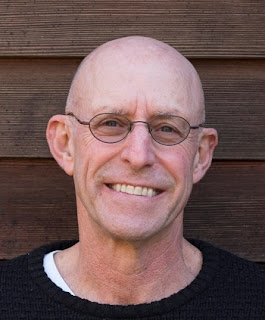
Pic: Michael Pollan

Friday, 14 January 2022

Unwelcome words

I keep up as best I can with all those linguistic changes to avoid offending one group or another in society, but sometimes I'm taken by surprise to learn that a particular word I'd never even thought about is highly offensive and needs to be replaced.

There's currently a big furore over the word "midget". Dr Erin Pritchard, a lecturer in disability studies, who herself has achondroplasia, a growth-stunting condition, says the word is offensive to short people and has a very derogatory origin in Victorian freak shows.

The outcry started after Marks and Spencer announced they were rebranding their sweet Midget Gems as Mini Gems to avoid offence. Several other companies have said they're considering doing the same.

Predictably enough, dozens of trolls have pitched in, saying it's wokery gone mad, or politically correct nonsense, or language policing, or just someone looking for something contentious to complain about.

Well, no, it's not just wokery gone mad. If a lot of people are so offended by a specific word that they avoid using it, then we should take note and avoid using it ourselves. How hard is it to make a simple change that would make other people more comfortable?

Dr Pritchard explains that the word's origin automatically dehumanises people like herself. "It was a word popularised during the Victorian freak show, where many disabled people, including people with dwarfism, were oppressed and exploited. When people scream the name at you in the street, it is only right that it is removed."

Yes, there are plenty of examples of "wokery gone mad" but this isn't one of them. This is a sensible request to phase out a disparaging word with a shameful history. Is that so hard to understand?

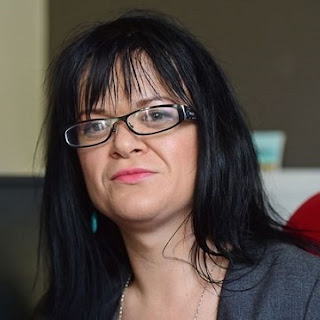
Pic: Doctor Erin Pritchard

Monday, 10 January 2022

Not a patriot

I'm not a patriot. By that I mean I'm not going to defend my country to the last and make out that everything it is or does is wonderful. That's just idiotic. Britain does some things well and does other things very badly.

To gloss over the failures and pretend they don't exist, and to magnify the successes even if they're simply the basics of a properly-run country, seems to me a cock-eyed way of looking at things.

But don't misunderstand me. When I say I'm not a patriot, that doesn't mean I slag off Britain and how it's run at every opportunity. It just means I take a realistic view of my country, with all its faults, and I don't mindlessly defend it like some blinkered fanatic.

When I say I'm not patriotic, what that means is:

  • I couldn't care less about the union jack
  • I couldn't care less about the national anthem
  • I'm not distraught if Britain doesn't win some big sports event
  • I don't wildly exaggerate Britain's achievements
  • I'm not at all proud of my country
  • I don't dismiss all other countries as inferior
  • I don't think the British are all fine, upstanding, law-abiding citizens
  • I don't believe the British have some unique cultural or spiritual quality
  • I don't believe Britain is the "cradle of democracy"
  • I don't see what's so special about the "village pub"
There's nothing wonderful about this very average country.  Alongside those with dazzling talents and abilities, there are many more with modest skills who're simply going through the motions till retirement - that is, if they can even afford to retire, when the state pension is so scandalously low*.

Not so much a wonderful country as a country staggering on chaotically from day to day.

* The basic state pension is £179.60 ($243.91) a week.

Thursday, 6 January 2022

Cake célèbre

A decision today by the European Court of Human Rights means that the notorious "gay cake" case still hasn't been resolved.

In 2014 Gareth Lee asked Ashers, a Belfast bakery, to make him a cake with a slogan supporting gay marriage (which at that time was still illegal). The bakery refused, saying the slogan conflicted with their religious beliefs. So Mr Lee started a legal action for discrimination.

The case has made it way slowly through various courts, finally reaching the European Court of Human Rights, which ruled today that Mr Lee's case was inadmissible because he hadn't exhausted all options in UK courts.

It's not clear if Mr Lee will now abandon his legal action or soldier on in some way.

A lot of people have wondered why he bothered to take legal action in the first place. If Ashers refused to bake his cake, why didn't he just find another bakery that had no such objection? Why make such a big issue out of someone else's beliefs not aligning with his own?

He's spent huge amounts of time and money pursuing his legal action, when there was a very simple solution to Ashers' objection - just take his custom elsewhere.

Mr Lee seems to have a very large bee in his bonnet about a bakery that wouldn't supply exactly what he wanted. Perhaps he should kill the bee and put an end to his ridiculous obsession with trouncing Ashers.

It's not even a case about homophobia. Ashers have explained that they have nothing against homosexuals, only the particular slogan Mr Lee wanted on his cake.

After all, if someone wanted to buy a cake with a slogan supporting Adolf Hitler and Nazism, shouldn't the bakery have a right to refuse? I think so.

Pic: Gareth Lee

Saturday, 1 January 2022

The honest truth

A woman from North Carolina has caused huge controversy with her new book on marriage, in which she lists all her husband's faults and says marriage requires you to blot out certain aspects of your spouse to stay happy.

Heather Havrilesky says that "after 15 years of marriage, you start to see your mate clearly, free of your own projections and misperceptions." Her husband Bill "is exactly the same as a heap of laundry: smelly, inert, almost sentient but not quite" until he has had his coffee each morning.

If Jenny was that frank about my shortcomings, I'd die of embarrassment. And I wouldn't dream of broadcasting all her shortcomings. But she claims Bill has read her book three times, and loves it. He approves of her brutal honesty, has a great sense of humour about himself, and "doesn't lose sleep over what other people think". I must say I find it hard to believe he can be that un-bothered.

Not many people would be that candid publicly about their spouse's failings. There's a sort of unwritten rule that you stress all the benefits of your marriage while skipping over the less desirable aspects. Moaning about your spouse is reserved strictly for the ears of close friends only.

Is that good or bad? If everyone hides the downside of their marriage, these must be a lot of people hearing all these glossy accounts and thinking their own marriage must be a dismal failure. Wouldn't it be better if we were all more honest and admitted that marriage isn't necessarily the joyous idyll we imagined on our wedding day? That making a marriage last over the long term is hard work?

Anyway, I won't be putting pen to paper any time soon. My marital secrets will stay exactly that - secret.

Pic: Heather Havrilesky

Sunday, 26 December 2021

Begone, Mr Grumpy


I don't want to become one of those miserable old geezers who're convinced the world is going to pot, nobody does their job properly any more, there are fraudsters everywhere you look, young people have no respect for their elders, motorists drive like maniacs, and good taste is a thing of the past. I want to see the world through a positive lens rather than finding fault with everyone and everything.

If you don't watch yourself, it's easy to slip into habitual pessimism, especially when the media love to focus on disasters and cock-ups rather than most people's uneventful daily lives. Or if you have such a rose-tinted view of the past that today's world seems like a steady decline from once-impeccable standards.

So hopefully I'm still abiding by my pledges against grumpiness (originally drawn up in 2012):

  • I won't moan and groan
  • I won't become a grumpy old man
  • I won't let the world's problems get me down
  • I won't make mountains out of molehills
  • I won't let petty irritations annoy me
  • I won't complain about my bodily deficiencies
  • I won't denigrate other people's lives
  • I won't tell other people what to do*
  • I won't rant and rave
  • I won't demonise young people
  • I won't be cynical
  • I won't be paranoid
  • I won't see the worst in people
  • I won't be nostalgic
  • I won't believe everything was better in the old days
  • I won't think that I know best
  • I won't think life's conspiring against me
  • I won't be offended by bad manners
  • I won't be offended
  • I won't over-react
Of course Jenny might say I'm not as sanguine as I make out, that there's a grumpy old man lurking just under the breezy exterior. Well, if Mr Grumpy does make an appearance, I'm sure she'll silence him pretty promptly.

*except politicians and bankers, obviously

Tuesday, 21 December 2021

Reluctant adult

A lot of children want desperately to be adults. They find childhood totally frustrating - always being told what to do, prevented from doing things, treated like idiots, not understanding what the grown-ups are talking about.

They passionately want to be adults so they can do what they want, make their own decisions, understand life a bit better, not be constantly watched.

Not me. I can't remember ever yearning to be an adult or chafing under all the parental restrictions. I think I wanted to be a child forever, always looked after and never having any adult worries.

Even though my childhood was far from ideal, with a bad-tempered father and a dreadful boarding school,  I must have concluded that all things considered perpetual childhood would be the ideal state.

Maybe it was because so many of the adults I came across seemed to have numerous worries and burdens and didn't seem very contented with their lot in life. My parents themselves had been on the verge of divorce at one point and other adults had to cope with huge mortgages, nasty bosses, serious illnesses and endless bills. I could stay a child and avoid all those frightening problems.

I didn't see adulthood as a land of opportunity, more as a land of increasing encumbrances and obstacles. The drawbacks seemed to greatly outweigh the benefits. How often did I hear an adult saying how much they enjoyed being an adult? Not often enough for my liking.

Of course now I've been an adult for so long I can better appreciate the benefits and make light of the encumbrances. But I guess there's still a small part of me that thinks childhood was really rather idyllic and why couldn't I have been a self-indulgent, irresponsible teenager a little longer?

Friday, 17 December 2021

High risk

I always wonder what it's like to live with someone in a high risk occupation, or who enjoys high-risk pastimes. Does it terrify them or do they just take it in their stride?

I imagine they must be always scared stiff that their partner will sooner or later have a serious accident and end up either dead or disabled. It would be hard to take it in your stride when there's a very real risk that today might be their last day ever. And if you have children then the possibility of their losing their father is an added worry.

I had a friend once whose husband was a police officer, and I don't think she ever lost her terror of his dying on the job. He worked in a city where acts of violence were common and many police officers had been injured or killed.

The number of high-risk occupations is large. Police, fire fighters, the military, construction, bomb disposal officers, jobs involving hazardous materials, working in a covid ward. Plus the high-risk pastimes like sky-diving, rock-climbing, bungee-jumping and potholing. So there must be many anxious partners out there, trying to suppress their fears and just carry on with their daily life.

Do they try to persuade their partners to do something less risky or do they accept that they love what they do so much they couldn't possibly give it up?

Luckily neither Jenny or I have had high-risk jobs or pastimes. I wonder how I would have coped if Jenny had been a police officer, say. I suspect the answer is not very well. I would have had feverish imaginings of her being caught in some melee involving guns and knives and ruthless criminals. Carrying on with my daily life would have been quite a struggle.

Pic: Israeli police woman

Monday, 13 December 2021

Fleeting glamour

I've changed a lot over the years as I've become more worldly-wise and learnt more about the reality of other people's lives. One thing I realised as I got older is that all those jobs I thought were so glamorous as a kid aren't that glamorous at all. Behind the beguiling facade there's always a lot of hard work and stress and self-doubt.

When I was a kid I used to hanker after seemingly glamorous jobs - brain surgeon, airline pilot, journalist, author, artist, film director, rock musician. They all seemed so exciting, so prestigious, so exotic. Gradually it sank in that the reality was rather different from my imaginings.

Jobs that involve relentless global travel and dreary hotel rooms. Jobs that mean working all hours to finish something. Jobs where the customer is never satisfied. Jobs that attract abuse and hate mail. Jobs requiring scrupulous attention to detail for hours on end. Jobs where you're bullied, patronised or sexually harassed.

Yes, I was a journalist for a few years, but there was little glamour involved. I had to write up such mundane events as golden weddings, church fetes, court hearings or the induction of a new mayor. I had to get quotes from politicians who wanted to keep something under wraps. I had to wait in pouring rain for someone important to emerge from a meeting. Hardly an enviable existence.

There are regular reports of someone in some supposedly glamorous occupation being unable to withstand the pressures - succumbing to drug or alcohol addiction, developing mental disorders or even committing suicide. The glamour can wear off very quickly.

The jobs I did after journalism - bookselling, admin worker - were pretty humdrum. Sometimes I thought, maybe I should be doing something more glamorous? Until I realised all the glamour was an illusion.

Thursday, 9 December 2021

Set in our ways?

It's a common complaint among younger folk that we oldies are set in our ways, incapable of being flexible or "keeping up with the times". Being set in your ways is seen as something very negative, something to be avoided at all costs.

Well, suppose we look at it another way. Suppose we say the problem's not being set in your ways but what ways you're set in.

If the ways you're set in happen to be positive and sensible - progressive politics, open-mindedness, generosity, kindness, respect for others, supporting the vulnerable - what's wrong with that? Let's have more of it.

But if the ways you're set in aren't so positive - drunkenness, misogyny, narcissism, bullying - then yes, that's not so attractive and you need to change.

If being set in your ways means having firm principles that are of benefit to yourself and others, surely that can only be welcomed. If the alternative is not having any firm principles but simply following the latest trend or doing and saying anything that's convenient, what good is that?

In any case, whatever our age, the reality is we're all set in our ways. We're just set in different ways. Oldies may believe in good manners and thriftiness, but the young may be equally fixated on their own little habits - clubbing, recreational drugs, alcohol, smart phones. They just don't see it as being set in their ways.

I don't mind admitting I'm very intransigent when it comes to treating other people decently and making our society more egalitarian. I don't see any problem with that. I'm not going to chuck all my entrenched beliefs out of the window just because they're not fashionable right now. I'm set in my ways and happily so.

Sunday, 5 December 2021

Just suppose


Now here's an interesting mental exercise. Can you imagine a world without celebrities? Without fame? A world where we're all ordinary, anonymous people and nobody is idolised or given special attention? It's almost impossible because the celebrity syndrome is so pervasive.

Just suppose actors and artists and musicians and sportspeople were simply appreciated and their talents recognised, without their being mobbed and obsessed over, without their being accosted and stared at wherever they went, without screaming media headlines when they got divorced or had a baby or wore a risqué dress.

Just suppose nobody cared where Lady Gaga lived or who she lived with or how wealthy she was or what she was wearing or what was her big break or whether she has fibromyalgia or if she gets stage fright or what is her favourite food or what she finds embarrassing. Just suppose people loved her music but had zero interest in her personal life.

Difficult, isn't it? We're so used to this huge stratum of society called celebrities, who get endless attention and adulation simply because they're talented, who're constantly in the media, whose every trivial utterance is treated as if it's the holy grail, that it's almost impossible to imagine their sudden absence. It's easier to imagine the death of the planet than the absence of celebs.

A celeb-free world is a bit easier to imagine here in Northern Ireland where public figures aren't idolised to the same extent as they are in England. In general they're treated as ordinary folk and if they start acting as if they're someone special they're quickly told that they're "losing the run of themselves".

But just suppose there were no celebs. The paparazzi would be out of a job. And the media would have to find some genuine news stories.

Wednesday, 1 December 2021

Marriage wreckers


I was revisiting a long-ago post on why marriages collapse. It can happen very easily. All it takes is a total difference of opinion about some pattern of behaviour. What seems quite normal to one of you is baffling and infuriating to the other. Is it about sex? Money? Housework? Politics? Violence? Weirdness?

With Jenny and I, I think the one thing that would absolutely drive us apart is sexism. Jenny has always been a passionate feminist who expects me to do my fair share of the household tasks and treat her with respect and consideration.

If I suddenly became the stereotype bloke, sprawled on the sofa watching Match of the Day and clutching a bottle of beer, while she scuttled round the house with the hoover and changed the bed linen, she wouldn't put up with that for long. I'd be packing my bags and moving out.

Of course there are some strong runners-up as marriage wreckers. Like politics. Jenny and I are both ardent socialists, but if one of us suddenly became a rabid right-winger, banging on about dangerous vaccines and imaginary viruses, that would be pretty terminal.

Like domestic order. We're both minor neat-freaks, wanting everything in its place and a place for everything. If one of us was always messy, never clearing anything up and leaving a trail of clothing and chocolate wrappers and dirty mugs everywhere they went, the other would be driven totally mad.

Like weirdness. We both have our peculiar habits and opinions, but they're all pretty benign - nothing disturbing enough to horrify the other. Nothing to justify a sudden moonlight flit.

And there's the very obvious contender - one of us having an affair. As it happens, neither of us has bowed to temptation, though we may have toyed with the idea on occasion, when someone utterly delicious caught our eye. But apart from anything else, deceit and subterfuge aren't in my nature.

Anyway, Jenny needn't worry too much about an outbreak of sexism.

Match of the Day? I'd rather pluck out my eyeballs.

Saturday, 27 November 2021

Assisted dying

I strongly support voluntary euthanasia, or assisted dying. So I was interested to hear that politicians on the island of Jersey have approved the principle of assisted dying. Details of the procedures and safeguards will now be worked up, for a draft law in 2023.

I've read so often of people with terrible terminal illnesses, illnesses that cause constant pain, destroy their quality of life, and impose a huge burden on their partners and family, wanting to die but being unable to do so. The stories are quite heart-breaking.

Those who oppose assisted dying always raise the spectre of unscrupulous relatives wanting to get rid of someone and claim their inheritance, but in other countries where it's legal I gather there's scant evidence of such behaviour.

People can be so desperate to die that they arrange it discreetly with their doctor and family, who cover it up by presenting the death as due to natural causes. Or they travel to the Dignitas centre in Switzerland, which enables assisted dying for members of the organisation.

I would hate to be suffering from some appalling terminal illness but be unable to end the misery. I would want to finish with my suffering at the earliest opportunity. I don't see anything commendable about enduring such hardship until the bitter end - which could be decades away.

I wouldn't want Jenny to have to put the rest of her life on hold in order to care for me, with all the messy and distasteful tasks that would involve. Why should she have to make such a sacrifice?

(Assisted dying may in fact be legalised in the rest of the UK. The Assisted Dying bill is currently progressing through parliament, but I've no idea when it would become law. The bill is modelled on legislation that has been in place in Oregon, USA, for 23 years, since adopted by nine other American states plus the District of Columbia, five Australian states and New Zealand)

Tuesday, 23 November 2021

Gender dissenters

I hate gender roles. They put so many arbitrary limits on what you can and can't do. Women should be this and this. Men should be this and this. And if you do something that doesn't fit your allotted gender role, you can get a very frosty reception.

Which is why I really admire those people who deliberately flout their designated role and are prepared to put up with all the negative responses, however upsetting and infuriating.

Like the artist Grayson Perry, who revels in his alter ego Claire, with her flamboyant dresses and bizarre hairdos. Of course he can get away with it because he's a phenomenally successful artist, but even so.

Like Samira Ahmed, who took the BBC to an employment tribunal in a dispute over equal pay, and won.

Like the Pakistani girl Malala Yousafzai, who from the age of 11 campaigned for the right of girls to go to school.

Like Sally Ride, who in 1983 became the first American woman in space when she rode the space shuttle Challenger.

Like women who sport cropped hair, a suit and tie, and chunky footwear. They know the ignorant will assume they're lesbian or "wasting their femininity" but that doesn't put them off.

Like all the women who're determined to pursue careers traditionally reserved for men, and all the men who're happy to be house-husbands.

But these unabashed gender benders are still thin on the ground. The reality is that gender roles are very strictly enforced and you need a thick skin and a lot of bravery to ignore them.

It would be fun if I could wear a dress occasionally, but I don't think east Belfast is quite ready for such wayward behaviour. I'll have to leave it to the celebs and the unrepentant social mavericks.

Friday, 19 November 2021

Worldly wise

One big thing that's changed as I get older is that my passionate youthful idealism has given way to a more realistic view of the world and the realisation that things are a lot more complicated and a lot harder to change than the teenage me naively assumed.

How difficult could it be, I thought, to end poverty or homelessness or sexism or warmongering? Surely if enough people wanted to banish these things, it could be done? Surely if enough people were sufficiently horrified and sickened by what other people were forced to endure, then things would change?

I was forever going to rallies, going to sit-ins, signing petitions, lobbying politicians, and being the stereotype frenzied activist, espousing every worthy cause and predicting a better tomorrow.

I gradually realised as I grew older and more worldly-wise that these problems were much too deeply rooted to be eradicated overnight. They were so embedded in our collective way of life, so taken-for-granted as "just one of those things" ("the poor are always with us") that it would take the most colossal effort to make even the smallest inroads into these long-standing horrors.

I could agitate to the point of exhaustion with little to show for it because so many people were content to live with these problems rather than solving them. Or even worse, they stood to gain from them. The weapons manufacturers. The loan sharks. The privileged males. The landlords charging exorbitant, unaffordable rents.

So now I desist from most political activity and let others summon up their enthusiasm and optimism on my behalf. I still sign petitions and email my MP but that's about it. I anticipate that by the time I've shuffled off my mortal coil the poor will unhappily still be with us.

Monday, 15 November 2021

Sure to survive

It suddenly strikes me that one of the assumptions I make as a relatively privileged person is that I'll survive. And not just that, but survive until a ripe old age. There are millions of people around the world who can't make that assumption.

People caught in a civil war. Refugees trekking across multiple countries. Women trapped in domestic violence. People with severe mental disorders. People caught in famines. And even people living in high-rise flats that turn out to be a major fire risk.

Centuries ago very few people could assume they would survive. Health care and living conditions were so poor that people were lucky to reach their thirties. Many children died at a tender age.

Now living conditions are so improved that the average British lifespan is 81 and there are many centenarians. So I've always taken for granted that I'll survive and very little can jeopardise it.

But many people can't assume that. They have to live from day to day, not knowing if they'll still be alive by tomorrow. Not knowing if a serious health condition will take a turn for the worse. Not knowing if their spouse might attack them. Not knowing if they'll be hit by a bomb. Not knowing if they'll be overcome by suicidal urges.

I have a sense of safety and security and a bright future that many others don't have. Instead of having to concentrate first and foremost on keeping myself alive, I can take my survival as read, sit back and enjoy my comfortable lifestyle.

It's a huge privilege that it's easy to overlook.

Pic - February 2013: a woman in Aleppo, Syria, in the ruins of her house, destroyed by government warplanes, killing 11 members of her family.

Thursday, 11 November 2021

Going private

Many people outside Britain still think of the NHS as the envy of the world, but it hasn't been anything of the sort for several years now. The NHS is seriously underfunded and understaffed and many of its employees are so overwhelmed and so exhausted they're thinking of quitting for less stressful jobs - or they already have.

I've always been a loyal supporter of the NHS and a critic of private medicine, which provides swift treatment if you've got the money, but leaves those who can't afford it at the mercy of a declining public health service.

I'm very conscious that with rapidly lengthening waiting times for both consultations and surgery, there might come a day when I face a choice between waiting indefinitely for the NHS to attend to me or going private and getting the sort of care that should be standard practice.

I don't mean waits of a few weeks or months. I mean years. Some people in Northern Ireland are waiting up to seven years for a medical procedure. Some are waiting over three years for pain management appointments. There were long waits before Covid, but now they're totally off the scale.

So suppose I needed a hip replacement, a knee replacement, cataract surgery or some other operation, and I was told I'd have to wait years? And suppose things would get worse in the meantime? And suppose a private clinic could treat me tomorrow? I would seriously consider going private, despite my socialist principles.

I had to wait 18 months for a routine prostate operation under the NHS. I could have gone private but it wasn't urgent and I wasn't in pain so I was prepared to put up with the long wait.

But I can see myself being forced into some agonising decisions.

Sunday, 7 November 2021

Begone, damn tie

As you know, every so often I like to have a good rant about ties and how pointless they are. I've always avoided wearing them whenever possible, and luckily most of the time I've had jobs where ties weren't required.

In the late sixties I was a local newspaper reporter and I was expected to wear a suit and tie, but since then I've worn a tie so infrequently that when I did so I had to resort to youtube to remind me how to knot it.

I've never understood why wearing a tie for work is supposed to make a man more professional, more trustworthy, and more competent. Women apparently have all these qualities without the need for tie-wearing.

What's more, there are several health and safety reasons for not wearing ties. It seems that a tightly-knotted tie can not only reduce your cerebral blood flow but affect your eyes and aggravate eye problems. They're also said to spread infections in hospitals as ties aren't washed very often. Some British hospitals have banned tie-wearing by their staff altogether. Dangling ties can also get caught in machinery.

Yet I still see men walking into their offices in suits and ties, looking uncomfortable and slightly embarrassed rather than professional. A crumpled suit that probably hasn't been cleaned for a while looks rather less than professional.

There are still elderly gents who feel undressed without a tie. On the hottest days they'll still be in their tie and resist all hints that they might be more comfortable without it. My maternal grandpa was a splendid example.

The longer my tie stays in the drawer, the happier I am.