Showing posts with label safety. Show all posts

Tuesday, 14 May 2024

Reckless males

Once again it's revealed that male drivers are far more likely to have serious accidents than female drivers. It seems they're more aggressive, more impatient and more reckless. Which no doubt all women drivers are well aware of.

Way back in 2022 a Guardian survey discovered that male drivers in the UK are almost three times as likely as women to be involved in accidents that kill or seriously injure pedestrians. French and American surveys confirm this huge difference.

I'm glad to say that although I've been driving on and off for almost sixty years I've never had a serious accident and I certainly haven't injured anyone. I'm probably not quite as cautious or focused as Jenny but I don't take unnecessary risks like dangerous overtaking, going through red lights or using a phone while driving.

A lot of men seem to regard reckless driving as a masculine imperative, while concern for safety and survival take a back seat. Over and over again I encounter other male drivers swerving into my lane without warning, tailgating me or hurtling past me at a crazy speed.

Women seem to be much more safety conscious and more aware of how easily a single hazardous manoeuvre could have disastrous consequences, especially if they're more likely to have children or a baby in the car than a man.

As a French road safety campaign tells men "Conduisez comme une femme". Drive like a woman. But will men take any notice?

Saturday, 10 June 2023

Bonfire madness

It's traditional the day before July 12 in Northern Ireland to have bonfires to celebrate the victory of Protestant King William of Orange over Catholic King James II at the Battle of the Boyne in 1690. Which is fair enough if you really want to commemorate something that happened several centuries ago.

The problem is that the bonfires are getting bigger and bigger because of rivalry between the bonfire-builders, and there is increasing worry that they're too dangerous and their size ought to be limited so nobody gets hurt.

Last year John Steele died after falling from a bonfire stack at Larne*, and local councillors were told six months ago that "they cannot simply ignore the activity and do nothing." Despite the warning, an even taller bonfire stack has now been built in Larne.

It's so high (over 200 feet) that the builders hope to get it into the Guinness Book of Records. They needed elaborate scaffolding to enable them to build it.

It's not the first time bonfires have caused a problem. In 2016 two terraced houses were destroyed and another damaged close to a bonfire in Belfast. It was thought the fire was caused by burning embers blown through the air.

In 2021 a teenager suffered serious injuries after being engulfed in a fireball at a bonfire in north Belfast. He was treated in hospital for burns to his face and body.

There is regular discussion by politicians about bringing in stricter regulations on bonfires, including a maximum height, but nothing much happens for fear of a violent reaction among the bonfire builders and their supporters.

Sooner or later there will surely be another tragedy, followed by more fruitless political discussions.

Update, June 11: The bonfire builders have abandoned their world record attempt and will use the funds raised to support a young girl undergoing cancer treatment. 

Pic: The absurdly high bonfire stack at Larne, close to several houses.

*Larne is on the east coast of Northern Ireland, north of Belfast Lough

Wednesday, 29 March 2023

False impressions

When Jenny and I first moved to Belfast in 2000, a lot of people were puzzled by our decision. Why Belfast, they asked? What was wrong with London? So do you think you'll be staying there for good or might you be moving back to England?

Well, we couldn't understand all the fuss. We'd had holidays in Northern Ireland several times and really liked the country and the people. There were beauty spots everywhere, property was much much cheaper than London, and there wasn't the ubiquitous congestion - on the roads, on the trains, on the buses.

Londoners constantly fed news headlines about terrorism, bombs and paramilitaries assumed we would be dicing with death every time we popped out to the shops. The reality of course is that there are small pockets of violence but 95 per cent of the country is as safe as anywhere in England. Actually crime levels where we live in East Belfast are almost zero compared with crime levels in Islington, North London, where we used to live. In Islington car thefts, muggings and burglaries were routine occurrences.

I mention all this because the new TV drama Blue Lights, which focuses on the police force in Belfast, suggests that Belfast is nothing but a hotbed of violence and disorder that the police struggle to cope with.

In fact the drama is set mainly in a specific area of West Belfast where violence and disorder are indeed a constant feature. But other parts of Belfast, like our own East Belfast neighbourhood, are almost embarrassingly sedate and sleepy. The only sign of violence is a grand old house being noisily demolished.

We would say that our quality of life here is a lot better than in London. The Big Smoke is vastly overrated - and totally unaffordable.

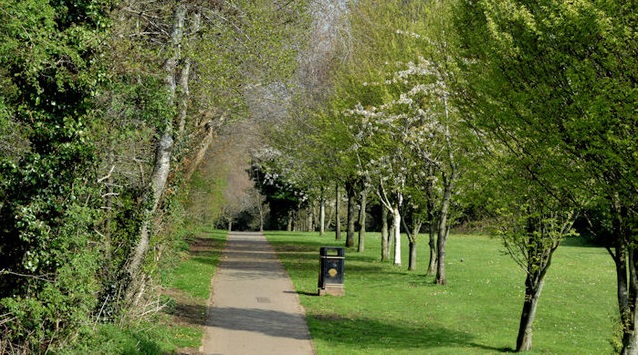
Pic: The lovely Belmont Park, five minutes' walk from our house.

Sunday, 30 October 2022

Falling chimney

Two of you asked me for more details of the falling chimney that almost finished me off.

I was a child at the time (not sure what age). I came home from school one afternoon and as I usually did I walked down the narrow alley between my parents' house and the house beside it and went in through the back door.

A few minutes later there was an almighty crash and I discovered that the chimney had collapsed and fallen into the alley. If I had got home a few minutes later I would have been badly injured or even dead.

An experience like that tends to linger in the back of your mind. When we moved into this house it had a slightly leaning chimney and I was always a bit nervous that it would collapse, despite several roof specialists saying it was structurally sound. We finally had the chimney removed to cure a persistent roof leak and I was relieved that it had gone.

But things like the falling chimney remind me of how we assume safety and security and pretend disasters will never happen. Or we're sure they'll happen to other people and not us. Or we say they're statistically unlikely.

Well, you have to think like that, don't you? If I constantly conjured up all the disasters that might befall me (burglaries, car crashes, internet fraud, muggings) life would become impossible, I'd be a nervous wreck.

In fact the nearest I've ever come to a serious disaster is some hair-raising near misses when I was driving a bit carelessly. If it hadn't been for some quick evasive action by other drivers it could have been nasty.

But hey, I lived to tell the tale.

Friday, 17 June 2022

Unruly shrubs

An 84 year old Essex woman has been told by her local parish council to cut back the shrubs in her front garden as they're obstructing the pavement and creating a health and safety risk. They say they're responding to complaints.

Becky Curtis can't understand what all the fuss is about. She says there's still plenty of room on the pavement and nobody should have any trouble getting past the shrubs.

I can't understand all the fuss either. Why doesn't the council just tell the complainers (surely no more than two or three) that the shrubs aren't an obstacle and they have better things to do than monitor shrub size? This is the proverbial sledgehammer being used to crack a nut.

In out neighbourhood there are loads of privet hedges that encroach on the pavement but nobody ever suggests cutting them back. Even cars parked partly on the pavement are never sanctioned, although they're a genuine hazard to pedestrians.

Parish councils have dozens of important duties. You'd think they would focus on something more essential than a few exuberant shrubs. Some under-employed jobsworth obviously thought this was an excellent way of killing some time.

Mrs Curtis, a longstanding member of Dedham Horticultural Society, is resisting the council's demand with the support of many villagers. She says lots of people compliment her on her front garden.

It's not clear what enforcement action might be taken. Will the council send in some shrub trimmers? Will Mrs Curtis be fined? Will her rubbish bins not be emptied? The mind boggles.

Pic: Becky Curtis and the naughty shrubs

Sunday, 7 November 2021

Begone, damn tie

As you know, every so often I like to have a good rant about ties and how pointless they are. I've always avoided wearing them whenever possible, and luckily most of the time I've had jobs where ties weren't required.

In the late sixties I was a local newspaper reporter and I was expected to wear a suit and tie, but since then I've worn a tie so infrequently that when I did so I had to resort to youtube to remind me how to knot it.

I've never understood why wearing a tie for work is supposed to make a man more professional, more trustworthy, and more competent. Women apparently have all these qualities without the need for tie-wearing.

What's more, there are several health and safety reasons for not wearing ties. It seems that a tightly-knotted tie can not only reduce your cerebral blood flow but affect your eyes and aggravate eye problems. They're also said to spread infections in hospitals as ties aren't washed very often. Some British hospitals have banned tie-wearing by their staff altogether. Dangling ties can also get caught in machinery.

Yet I still see men walking into their offices in suits and ties, looking uncomfortable and slightly embarrassed rather than professional. A crumpled suit that probably hasn't been cleaned for a while looks rather less than professional.

There are still elderly gents who feel undressed without a tie. On the hottest days they'll still be in their tie and resist all hints that they might be more comfortable without it. My maternal grandpa was a splendid example.

The longer my tie stays in the drawer, the happier I am.

Friday, 30 October 2020

Survival instinct

We humans are said to have a survival instinct that keeps us alive in dangerous situations. However daunting the odds, however desperate everything seems, when the chips are down, we'll always struggle to stay alive.

Well, that's debatable to say the least. There are plenty of examples of people who seem to have no survival instinct whatever. People who commit suicide, who are keen on extreme sports, who drive too fast or take unfamiliar drugs. Or for that matter refuse to follow basic safety measures in a pandemic.

People die every day because they give little thought to survival and simply do what they feel like doing.

I wouldn't say I have much of a survival instinct. What I have is more a problem-avoidance instinct. I don't want to do anything that might jeopardise my physical or mental health and make my life a problem for myself and other people around me. I don't want to become a burden or a nuisance or an object of pity.

Not that any possible survival instinct has ever been seriously tested. I've never been trapped in a burning house, kept prisoner in a locked basement or been stranded on a mountain top. I've never had to survive more than busy main roads or too much alcohol or gnawing hunger.

Mind you, the survival instinct isn't just about physical survival. It can also mean mental and emotional survival. Can you survive abusive parents or an aggressive boss or a domineering spouse without crumbling psychologically?

I've survived in that sense several times in my life. So maybe I have a survival instinct of sorts, just not the one people normally think of.

I've been lucky enough never to lose my mind.

Thursday, 15 June 2017

So much loss

The massive fire at Grenfell Tower in West London is shocking and distressing in so many ways. If proper fire control measures had been added to the building, the fire would have remained localised and wouldn't have raged through the 24 storey block.

It's hard to envision what it's like to have escaped the fire but be left utterly devastated. To have lost several members of your family, probably dead in the wreckage. To have lost all your possessions apart from what you're standing up in. To have lost your home. To have lost the sense of safety and security you used to take for granted. To have lost trust in those public bodies responsible for the tragedy.

Above all, I can't imagine what it's like to lose several family members, especially if they were children and especially if you doted on them. The grief and bewilderment and sense of loss must be overwhelming.

I can't imagine losing all my possessions.  My favourite china, rugs, paintings, books, CDs, clothes. All those things I cherish and enjoy every day. All those things that are part of my personality, part of me. All those things that remind me of different stages of my life. All those things that have moved with me from home to home, some of them for 50 years.

How dreadful to lose your home, the place where you can relax and let go, where you can be yourself, where you can hide your bad habits, where you can feel insulated against the horrors and cruelties of the outside world.

And how wary you might become of those public figures who were meant to protect you against disaster. Those people safely nestled in their comfortable suburban houses while your dangerous tower-block went up in flames.

How do they deal with it? How do they cope with such trauma?

Pic: Ines Alves, who fled the inferno and then calmly took a chemistry exam

Sunday, 28 May 2017

Safety first

The mass-murder in Manchester has revived the old debate about security checks and procedures - whether you can stop someone who is bent on carnage, or whether a determined person will dodge every security check going.

A friend of mine (let's call him Dennis) is totally against security checks of any kind. He thinks they seldom catch a would-be terrorist, and mostly all they do is cause long queues and huge annoyance to thousands of people. And if security checks become routine in one area of life, a terrorist will simply adopt a new method.

A former friend of mine (let's call her Esther) thought the opposite. She believed the more security checks the better, that even if they didn't often catch anyone she was happy to face any number of them if they reassured people and made them feel safer. Especially on planes which many people are scared of anyway.

I guess I lean towards Esther's view. Not having any security checks is just an invitation to a terrorist to do whatever he wants because nobody will stop him (and it's usually him). Security checks will never be foolproof because they're always one step behind a terrorist's ever-changing methods, but they do act as a deterrent and they do sometimes catch someone and prevent a horrible massacre.

Security checks are irritating but they're hardly a huge burden. Airport security is tiresome and finickety but it's all over in five minutes. I don't mind having to show photo ID at airports and polling stations. I don't mind having my shoulder bag examined. I don't mind being frisked.

Surely the tedium of security checks is trivial beside much more pressing concerns like political incompetence, greedy landlords, rubbish jobs and wages, extortionate house prices, and a hundred other things. Unfortunately, in today's terrorism-prone world, they're necessary and they're here to stay.

Friday, 18 September 2015

Safety first

It's a strange paradox that although we all want to feel safe and secure and protected, at the same time we do things that are absurdly reckless and dangerous.

We want to feel safe. We want to know that whatever life throws at us, whatever misfortunes we run into, we'll survive the challenges and our lives won't be ruined or ripped apart.

We seek dependable partners, we accumulate money, we buy houses, we surround ourselves with friends, we live somewhere peaceful and civilised, we look for secure long-term jobs, we avoid people we find difficult or disturbing.

At the same time though, we constantly do things that threaten our safety, put our lives at risk, and jeopardise everything we hold dear. There's a part of us that chafes at the endless safety-first approach and yearns for a bit of adventure and excitement and throwing all caution to the winds.

So we find ourselves getting hopelessly drunk, driving at crazy speeds (or both), chain smoking, jaywalking, getting into fights (well, the guys anyway), climbing wobbly ladders, not to mention bungee-jumping, sky-diving, rock-climbing and snorkelling.

I freely admit to driving too fast (on occasion), to jaywalking, to climbing wobbly ladders. And a few other reckless habits. I mean, they're not really THAT dangerous. I haven't come a cropper yet, have I? So there you are then. No need to worry.

Of course the other paradox is that it's often the thrill-seekers, the ones forever putting themselves in danger, who live to tell the tale, while Cautious Clara is unlucky enough to kill herself in a freak accident involving a faulty safety harness.

We all want to be safe. Except when we don't.

Saturday, 29 August 2015

Seriously scary

On the whole I'm a responsible person. I take things seriously, I do what needs to be done, I bite the bullet. I don't procras-tinate or deny or disappear. I don't create messes for others to clear up. I don't blame my mistakes on other people. I don't say "That's someone else's job".

I keep things ticking over. I get the car repaired. I go to the doctor. I pay the bills. I keep the house insured. I do the food-shopping. I don't sprawl on the sofa all day, slurping beer and watching reality TV.

I'm good at all that small-scale responsibility, looking after myself and my partner, keeping the household going. What I'm not good at, what totally terrifies me, is any large-scale responsibility - anything that involves not just me but large numbers of other people. I run from that as fast as I can. I'm sure it would end in colossal disaster.

I could never have been an airline pilot, or a hospital administrator, or a train driver, or a roller-coaster operator, or the manager of a vast public stadium. The stress of knowing I was personally responsible for the safety of hundreds or thousands of ordinary folk would make me a nervous wreck in weeks.

Even being responsible for a large number of staff - a shop or office manager, say - would freak me out. Knowing they depended on me for their income and job satisfaction. Knowing I depended on them to turn up, to do their jobs properly, to not rob the till or insult the customers. I had opportunities to be a bookshop manager but I always resisted them, preferring to be a humble but contented employee.

So yes, I'm good at responsibility chez nous. Good at oiling squeaky doors and unblocking sinks. But responsibility for hundreds of trusting, vulnerable human beings - that's seriously scary.

Thursday, 25 June 2015

Safe and sound

I really take for granted that as a British citizen, as a man, and as a white person, I can generally feel safe and unlikely to be attacked or discriminated against.

Apart from my childhood, which you've all heard about ad nauseam, I've been privileged compared to millions of people across the world who live in constant fear and insecurity, always about to be humiliated or victimised, about to lose their home or their job, or die in some incomprehensible war or religious crackdown.

I can go about my daily life with confidence and optimism, sure that on the whole I'll achieve what I want to achieve, that people will treat me fairly, that I'll be given respect and consideration.

I'm not going to be harassed and insulted by the opposite sex, I'm not going to be stopped for driving while black, I haven't been forced into the exhausting, badly-paid jobs that are reserved for immigrants. I won't be kicked around and exploited because my social status is zero.

When I stop to think about it, I count my blessings that I was born where I was, in the sex and skin that I was, into the family I was, into the neighbourhood I was, and not into totally different circumstances that would have doomed me to a hard, miserable, frantic existence.

I suppose what reminded me of all that is the way immigrants are being treated both in Britain and across the world. The desperation of all those wretched mobs at Calais. The asylum seekers treated with such contempt and cruelty by the Australian government. The torrent of refugees from the bedlam in the Middle East.

I can imagine only too well what they must be feeling, what they must be going through. It's a million miles from my own cushy experience.

I wasn't born with a silver spoon in my mouth, but I was certainly dealt a good hand of cards.

Pic: The Turkish Coast Guard stops a boatload of migrants trying to reach Greece.

Wednesday, 5 February 2014

A yen for risk

I'm fascinated by the way people crave risk as much as they crave safety. Human nature demands this strange contra-diction.

On the one hand we want safety. We want a home, a job, friends and family, things that make us feel protected and secure, things that ward off the horrors and uncertainties of the outside world.

But at the same time we don't want to feel too staid and set in our ways, we want a bit of excitement in our lives, so we also want risk. We drink too much, eat too much, drive recklessly and take dangerous drugs, busily compromising the very same safety and security we're striving for the rest of the time.

Some people go farther. The reliable bank clerk and home-owner who also has a yen for rock climbing, sky diving, bungee jumping or surfing. Or even a fervent desire to work in war-torn countries where they face death every day. They can only take so much safety and security before they crave the exact opposite, something that is physically threatening but gets the adrenaline going like nothing else.

Personally I have a strong yearning for safety, and I steer away from risk. I'm a timid soul who seldom does anything riskier than exceeding the speed limit or standing on a cliff-edge.

If I feel any sense of risk in my life, it's only the vicarious danger oozing from the media, with its screaming headlines about cancer epidemics, plane crashes, multiple pile-ups and mass shootings.

I guess that's one reason we're all such avid news-consumers. It gives us that exhilarating whiff of looming peril that livens up our usually predictable existence. It persuades us we're taking constant risks when in fact we've never been safer.

But I think I'll pass on the bungee-jumping for now, if that's all right with you.

Friday, 2 September 2011

The other 9/11 victims

With the tenth anniversary of 9/11 coming up, there's the usual focus on the almost 3,000 people who died, but little is said about the 20,000 with serious illnesses caused by exposure to toxic dust and debris.

The health hazards of two massive skyscrapers collapsing and poisonous material spewing all over the surrounding area should have been obvious, yet thousands of emergency workers, volunteers, local residents, cleaners and other tradespeople went about their business for weeks with very little protection.

Now thousands are suffering from a range of disabling illnesses including asthma, sinusitis, muscular and intestinal conditions, lung diseases and memory problems. Many are unable to work or live a normal life.

Up to 80,000 people were present in the aftermath and new patients are coming forward all the time with previously undiagnosed disorders. People are expected to fall sick for at least another 20 years.

In hindsight, it seems obvious that everyone should have been evacuated from the area and proper decontamination teams sent in to remove all the toxic residue. Yet the dust and debris - which included asbestos, lead and mercury - was generally treated as a mere nuisance rather than a major health emergency.

Alex Sanchez is just one example of this peculiar oversight. He helped clean dust from numerous buildings in Lower Manhattan. In only two buildings was he given even a face mask. Now he has severe breathing difficulties, headaches, gastric problems and is no longer able to work. His life has been wrecked just as much as for the families of the dead.

The government has set up a $2.9 billion fund for monitoring, treatment and compensation for the 20,000 plus "other" victims. But the question remains - why was this serious health hazard not clearly recognised in the first place?

PS: Some first responders get help, some don't. Ralph and Barbara Geidel have spent close to $100,000 on his medical treatment since 2003, when the former fireman and first responder was diagnosed with tongue and neck cancer. The Zadroga Act, which set up the compensation fund, doesn't cover cancer. Yet a study in The Lancet says firefighters at Ground Zero are 19% more likely to get cancer than those who weren't there. Ralph's brother Gary died in the World Trade Center attack.

Pic: Alex Sanchez

Thursday, 21 January 2010

Useful coppers

Reading about Leah's whole-hearted support for the police reminded me that I support the police pretty strongly myself, a view people might not expect from a fervent socialist.

Well, socialist I may be, but I also believe that if we don't let the police deal firmly with crime and anti-social behaviour, we would quickly decline into an anarchist, anything-goes nightmare.

In the sixties when it was very fashionable among the young to criticise not just police excesses but the police themselves, I can remember me and my friends cheerfully screaming "Pigs, pigs" every time we passed a copper, and thinking we were being deliciously rebellious and right-on.

As the years rolled by, however, I came to realise that there are an awful lot of vicious, heartless, ruthless people out there who need to be kept under control not just to protect everyone else but to protect them from their own self-destructiveness. If the police don't do it, who will?

I'd be the first to admit that the police often make big mistakes and go wildly over the top in their actions. There's a long list of people who've been wrongly arrested, secretly beaten, jumped on for utterly trivial offences, or fitted up. That sort of behaviour seriously discredits the police and needs to be stopped.

But the fact remains that most of the time police are doing an absolutely essential job in keeping criminals in check and enabling the rest of us to feel safer and less vulnerable.

I would like to ask anyone who really thinks the police are unnecessary or useless - what would you put in their place? Vigilantes? Paramilitaries? Private security forces? Lynch mobs? Whatever the alternative, it would be a lot less pleasant than a few bent coppers who get carried away and forget their professional ethics. It would be rough justice indeed.

Sunday, 16 August 2009

Wicked adults

We seem to be fast reaching a point in Britain where adults won't be allowed to have any contact with children unless they're expressly authorised to do so.

We're turning into a totally paranoid society which sees children as permanently threatened by sinister adults intent on molesting or harming them.

Where this raging hysteria has come from, I don't know. Every so often there are dramatic stories of children being attacked, but are they really any more frequent than fifty years ago?

The change in attitudes is extraordinary. When I was a child, I played on the streets for hours every day without the slightest fear of adults, and nothing serious ever happened to me. The only incident I can recall was at the age of ten when a man approached me in a department store, wanting to see my willy. And that was it. So why this sudden widespread alarm?

Anyone having regular contact with children is now vetted for a possible criminal record, and this screening will soon become stricter still with the start of the Vetting and Barring Scheme. You will then need an official permit that confirms you aren't any known threat to children.

Seeing all these precautions, children themselves must be getting terrified of adults and assuming that any adult they don't know might be about to attack them. The reality of course is that the vast majority of adults have no such intentions and seek only to protect and nurture children, just as they did when I was growing up.

But like many adults, when I'm out on my own nowadays and there are children nearby, I take care to avoid them in case the parents start wondering about me. As it is, they often give me suspicious looks, seeing as I have no companion.

The irony is that most child abuse is committed not by total strangers, however heavily vetted they may be, but by people already known to them, including parents and relatives. Yet relatives are always assumed to be safe and benign and incapable of doing harm.

There's something seriously topsy-turvy here.