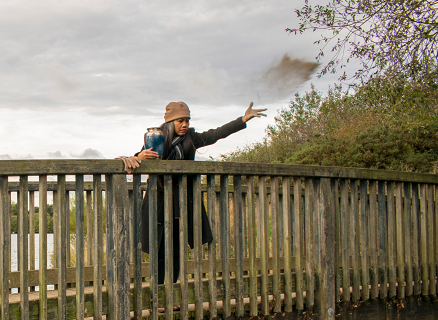
Thursday, 18 January 2024

Unfairly demonised?

I've thought for a while that social workers are often unfairly vilified for failing to prevent someone's death or serious injury. The latest instance is the death of two-year-old Bronson Battersby, who was found dead next to his father Kenneth, who had had a fatal heart attack.

Predictably his mother Sarah has blamed social services for not preventing Bronson's death. She said "If social services had done their job Bronson would still be alive. We have to be able to rely on social workers to keep our children safe."

But when you look at the details of the case, I wonder what else social services could have done.

A Skegness social worker paying her usual weekly visit on January 2 couldn't get any answer and alerted the police, who did nothing. Two days later a repeat visit also went unanswered and again the police were alerted but did nothing. The social worker finally entered the property on January 9 using the landlord's key. And discovered the two bodies.

So the police are obviously at fault for failing to visit the property.

And what about the mother's responsibility? Why wasn't she in the house when Kenneth died and her son needed her? It seems she had rowed with Kenneth and was living temporarily somewhere else. Yet she knew Kenneth had had one heart attack and could have another, meaning he might be unable to look after Bronson.

She blames Social Services for Bronson's death, but as I see it the social worker did what she could to get into the house while the police ignored her. And Sarah herself was absent.

So as I say, I think once again social workers are being unfairly blamed for a tragic death.

Update on January 18: A revealing interview with Sarah here

Update on January 19: Bronson's sister Melanie Battersby told the BBC she believed social services and the police "did what they could within the powers they had and the information they were given"

Sunday, 14 January 2024

Not that special

The world could do with a little more humility right now - meaning accepting that we're not that special and not acting as if we're hugely important or influential.

I see humility as the opposite of pride - which on the contrary is the bigging up of your own or other people's achievements as if they're fantastic.*

Personally I'm more prone to humility than pride. I'm quite self-effacing and I don't see myself as in any way exceptional. I'm just a very ordinary person doing very ordinary things.

If anyone suggests I'm special I promptly deny being any such thing. I'm just a grain of sand on the banks of the Ganges, as the Buddha supposedly put it.

I find it rather odd that people take pride in other people's achievements (especially their children), as if they themselves have achieved whatever it is. They seem to be looking for some sort of reflected glory.

But I wouldn't describe myself as humble, which unfortunately has come to mean grovelling and arse-licking rather than just being ordinary. I prefer to say I'm modest or unassuming.

Many public figures develop a view of themselves as extra-special because of all the attention paid to them by the media and by the general public. They mistake attention for genuine appreciation and respect.

Politicians in particular strut around as if they're the bee's knees and as if the world revolves around them. I hate to break it to them, but they're just temporary public servants who might be replaced at any moment.

* Isn't pride a form of boasting?

Wednesday, 10 January 2024

I blame the parents

There are different opinions about psychological problems in adulthood.

You can trace them back to childhood and blame parental failings.

You can say that blaming your parents is a cop-out and you should just work through your hang-ups.

Or you can say that your parents did their best by the standards of the times and so you shouldn't blame them for their failings.

Personally I take the first approach. It's clear to me that my parents sent me to an entirely unsuitable boarding school that didn't equip me properly for adult life and left me emotionally and intellectually under-developed.

I don't think it's a cop-out to blame my parents if it's quite obvious they made a major error of judgment and there's no way they could pin it on anything else. That error is a reality and should be acknowledged.

I also think referring to the standards of the times doesn't absolve my parents. Whatever the standards of the times, they picked an unsuitable school and they should have noticed I wasn't happy, I wasn't thriving, and the quality of teaching wasn't good enough.

Of course if your parents are still alive, you don't want to upset them by telling them they were deficient parents. So you're likely to hide your criticism and pretend they did a great job. Which simply sweeps everything under the carpet.

Falling back on "the standards of the times" is dangerous, as it can excuse all sorts of negative behaviour - like domestic violence, homophobia and sacking pregnant women. Behaviour should be judged by today's standards and not the standards of 50 years ago, as if the following decades of cultural changes never happened.

Saturday, 6 January 2024

Exercise sceptic


My only regular exercise is a 30 minute daily walk. I've never done anything more systematic than that, and I'm still fairly healthy at the age of 76 - apart from the usual aches and pains that affect us oldies.

  • I don't do yoga
  • I don't do pilates
  • I don't do tai chi
  • I don't have an exercise bike
  • I don't work out
  • I don't aim for 10,000 steps a day
  • I don't do marathons
  • I don't go jogging
  • I don't cycle
  • I don't swim
Mind you, if there was a gym in the immediate neighbourhood I might very well use it, but there isn't. The nearest gym requires a car journey which I would rather not have to make.

I suspect that a lot of exercise regimes don't actually make much difference to your present or future health. It's probably more the case that it makes the person feel good or they like the sense of self-discipline. At any rate that's how an exercise sceptic like me explains my sedentary lifestyle.

I certainly don't need to exercise surplus flesh away. My weight has remained constant for over 40 years at around 11½ stone - the ideal weight for my height of six feet. Strangely I always shed several pounds overnight. It seems that my body uses a lot of calories concocting the weird dreams I'm saddled with.

I suppose that's one benefit of all the cricket and rugby I had to play at school - I left school in good physical shape and not covered in flab, like so many of today's podgy youngsters.

Tuesday, 2 January 2024

Dodgy memories

Since I have such a bad memory, and since so many years have elapsed since the events in question, I've been wondering lately how many of my early memories are reliable. In other words, did they truly happen or has imagination taken over from reality?

  • Was I almost crushed to death by a falling chimney?
  • Did I almost drown at Southend on Sea?
  • Was I almost killed by two speeding cars as I ran across a busy road?
  • Was I really bullied for several years at boarding school (why can't I remember any of the details)?
  • Did a schoolmate really commit suicide?
  • Did I almost suffocate in my first workplace from all the tobacco smoke?
  • Did one workmate really tell me she thought her breasts were too small?
  • Did two of my workmates die of cancer?
  • Did I really sleep with a couple of men?
  • Did I really climb the Eiffel Tower as a teenager?
There's no way of confirming most of these supposed memories. In most cases there were no witnesses, or if there were they're now untraceable. Possibly my sister could confirm one or two of my memories - if she hasn't tweaked them herself.

But after all, most of these memories are 40 or 50 years old, which means plenty of time for them to be embellished or altered or simply invented.

At least I don't deliberately concoct dramatic memories to impress whoever I'm talking to. I don't claim to have met the King or swum the English Channel or climbed Mount Kilimanjaro. My memories, what's left them, are boringly humdrum.

And I didn't climb the Eiffel Tower. You can't climb right to the top for safety reasons. So that memory is definitely dubious.

Friday, 29 December 2023

Family values

Politicians are fond of extolling "family values" and lamenting how they're not as well observed as they used to be.

Well, they might be observed a bit more if anyone could agree what "family values" actually are. The phrase is so vague that everyone gives it a different meaning. The dictionary definition refers to high moral standards and discipline, but other things might be mentioned like decency, loyalty, stability, clean living, and care and affection.

It was understood in the past that "family values" referred to a heterosexual couple, and didn't include gay couples, childless couples or single-parent households, who were beyond the pale. All possible family arrangements are now included in the term, and presumably are deemed capable of family values, whatever they might be.

Perhaps we should forget about "family values", however they're defined, and emphasise something more specific like "parenting values", which people might understand more easily. Or we could call for "civilised values", a term that would include everyone, whether or not they count as a family.

Unfortunately the term "family values" is flung about quite hypocritically by politicians and others. How often some politician who goes banging on about family values turns out to have a mistress, a drug habit, a sexual fetish or something that gives the lie to his (and it's usually his) sanctimonious public utterances. It happens so frequently that whenever a politician mentions family values nowadays, I instantly wonder what he's trying to hide.

"Family values" is just another phrase that's used as a handy smear, to suggest that your political opponents have no such values and are hedonistic rabble lacking moral standards or civilised behaviour.

Certainly Jenny and I never mention family values, which to my mind definitely implies children. But we still aspire to high moral standards.

Monday, 25 December 2023

When Christmas was banned

Not many people know that Christmas was once banned in England. If you tried to celebrate it you could be fined up to five shillings (or £26 in today's currency).

In the 1600s Protestants throughout Europe were suspicious of Christmas celebrations. They were too closely associated with Catholicism, there was no mention of such a thing in the Bible, and they thought the festivities had become too drunken and debauched.

In 1645 Parliament declared that Christmas, Easter and other such festivals were no longer to be observed with special services or celebrations, and an outright ban followed in 1647. The ban was unpopular - there were riots in Kent and elsewhere the same year. But in 1652 the ban was strengthened when shops were ordered to stay open on Christmas Day.

However by 1656 many people were ignoring the ban, and even in London shops stayed shut and festivities continued, with MPs kept awake by the sound of Christmas parties next to their lodgings. An attempt at further legislation quickly failed.

Like many "moral" bans, the ban on Christmas was largely unenforceable, particularly without the machinery of modern government or even a police force.

The ban is especially ironic nowadays, when Christmas celebrations are not just permissible but almost compulsory. If you don't have all the expected trimmings and trappings - presents, decorations, turkey dinner, festive sweaters, festive movies, Christmas cards etc etc - you're clearly some miserable party-pooper who needs to lighten up and get with the programme.

There must be plenty of exhausted parents out there (especially women) who rather like the idea of a ban on Christmas. But it'll have to remain a private dream. Christmas is here to stay.

* Many thanks to the Oliver Cromwell Museum, Huntingdon, Cambridgeshire, for details of the ban

Friday, 22 December 2023

Inherently evil?

Although I still believe that human beings are basically good-natured and kind, and only turn nasty if they've been badly mistreated in some way, there are still many who believe some people are intrinsically evil and nothing can be done to change that.

Yes, there are monsters from middle-class backgrounds, people who've apparently had loving and devoted parents, but their childhood might not have been as healthy as it seems. Their parents may have been so wrapped up in their work or otherwise self-absorbed that they never gave their children the attention they needed.

Like 16 year old William Cornick from Leeds, who murdered his teacher in 2014, and came from a respectable middle-class home. His mother was a human resources manager and his father was a council executive. All those who knew him were baffled that he could have done something so dreadful.

But if you look closely at the background of hardened criminals, you often find a history of ill-treatment. Many serial killers are abused - physically, psychologically, sexually - as children by a close family member.

Children can easily be damaged by their home life. Years of poverty and deprivation, squalid housing, or parents with drug or alcohol issues, can leave a child with a deep-rooted bitterness about the unfairness of life, and that can lead to them lashing out in unpredictable ways.

I just can't believe that some people are inherently evil. It seems like a very cynical and negative view that ignores the huge influence of childhood experience on impressionable young brains. I'm sure good-natured children can easily become vicious and destructive if they're exposed to uncaring parents for long enough.

But perhaps I have a slightly rose-tinted outlook that defies reality.

Monday, 18 December 2023

So much hatred

Why do some people hate other people so much?

I think it's largely because they're unable (or unwilling) to put themselves in the shoes of the person they hate.

How can you hate immigrants when you know something about the circumstances they're fleeing from (civil war, famine, discrimination, economic failure, dictatorship) and how gruelling was the journey to a more civilised country? What would you have done in the same situation as them? Wouldn't you also decide life could be better somewhere else?

How can you hate a bullying employer who maybe has money problems, has mental health issues, has a crumbling marriage, has difficult children, has a parent with dementia? Would you not have sympathy for a person who's facing so much adversity on so many fronts? There but for the grace of God etc.

How can you hate the unemployed when there may be good reasons why they're unemployed - they have a serious illness, they lack the necessary skills, employers are prejudiced against black people or women or ex-prisoners. But the assumption is that the unemployed must be work-shy layabouts.

Of course hatred can be based on many things. It can also be based on jealousy - resentment against those who seem to be having better lives. It rankles intolerably that other people have more luck, or are especially talented, or just know how to climb the greasy pole. But again, are those people having the fabulous lives you credit them with? Or are their private lives a disaster?

You don't have to hate people. You can still dislike them and you can still be annoyed by them. Isn't that enough?

Pic: a work-shy layabout

Wednesday, 13 December 2023

Can I die now?

I'm all in favour of assisted dying, meaning dying at a time of my choosing rather than waiting for my death to occur naturally, perhaps with a terminal illness and after months of agony, incontinence, dehydration and other awful complications.

Baroness Meacher tried in 2022 to change the law to allow assisted dying, but she didn't manage to do it before the end of the parliamentary term, when it fell by the wayside.

The actor Diana Rigg strongly supported assisted dying before she herself died of severe cancer in 2022, after months of miserable suffering. She didn't understand why people were expected to go through such suffering rather than dying at the earliest opportunity.

Of course there are people who fear that a law permitting assisted dying would be exploited by those with bad intentions like wanting to get their hands on someone's money. But they would surely be a tiny minority, and appropriate safeguards would be built into the legislation.

There is clearly widespread support for assisted dying. A 2019 poll of over 5000 UK adults found that 84 per cent supported some form of assisted dying. In which case MPs should stop dragging their feet and legislate for it.

I would hate to have to be looked after for months while I waited in agony for my death to arrive. Being permanently incapacitated for no good reason except "allowing nature to take its course" would be dreadful.

I'd just want to say goodbye to my wrecked and ravaged body.

Pic: Diana Rigg

Saturday, 9 December 2023

Odds and sods

  • I won't leave any great achievements when I die. I shall simply vanish into the ether. I have no problem with that.
  • I'm used to doing things on my own. If other people are hovering, I get flustered (if they're hoovering I get even more flustered).
  • Most cats find me frightening. They rush off when they see me. But some cats are extra friendly and want lots of stroking.
  • I shouldn't judge by appearances but I do. I like to think I can suss someone out. Usually my assumptions are quite wrong.
  • Sometimes I have no patience whatever and get instantly exasperated. At other times I have boundless patience. There's no logic to it.
  • I'm not easily duped or scammed. I have a pretty acute shit-detector that alerts me fast. In fact I'm a bit too sceptical for my own good.
  • How handy it would be if toenails and fingernails stopped growing once they reached their normal size. Why do they keep growing??
  • Flying doesn't scare me. Planes are incredibly well-maintained and very safe. After all, the pilots and crew want to stay alive.
  • I may be six foot, but I don't feel tall unless I look in the mirror. I imagine I'm a similar height to other people.
  • I'm compulsively polite. I hate arguing with people, so I always try to smooth things over with some bland comments.
  • It's strange that I've never seen myself walking down the street. Do I have a funny walk? Do I look like an old codger?
  • If I try to do two things at once I just get confused. I have zero aptitude for multi-tasking.
  • I'm not a drama queen. When people turn some minor incident into a frantic uproar, I just stay calm and dignified.
(You might remember some of these from earlier posts)

Tuesday, 5 December 2023

Politics? No way!

There are many reasons why I always ruled out becoming a politician. It's been suggested a few times that I would be an excellent one, but goodness knows why. The very idea is laughable.

The most compelling reason was the constant clash between what I would want to do, what my constituents would want me to do, and what the party line happened to be.

To have to keep deciding between those three things must be hugely stressful. If for example I thought it was sensible to close a local hospital and transfer all its services to a new and better equipped hospital a couple of miles away, but my constituents wanted the local hospital to stay open, and the party line was something different again, what would I go with?

Then there's the mounting hostility towards politicians generally, for being out of touch with their constituents, pursuing expensive vanity projects and lining their own pockets. Female politicians especially are subject to a never-ending torrent of abuse, personal attacks and death threats. Many politicians have been forced to install elaborate security systems simply for their own safety.

And despite threadbare knowledge of the subjects I would be legislating on or making decisions about, I would have to add my shaky opinions to what might already be some totally misguided measures, with who knows what unforeseen consequences. What do I know about interest rates or planning applications or carbon emissions? No more than the average person-in-the-street.

No, I just couldn't have done it. I wouldn't have lasted six months.

Friday, 1 December 2023

Keeping up appearances

I know I've said this before, but I'm constantly baffled by the extent of people's dislike of their bodies - and their appearance generally.

The market for physical improvements seems to be growing all the time, as people find parts of their body deficient and seek ways of making them perfect.

Botox, fillers, cosmetic surgery, shapewear, hormones, steroids, workouts, you name it. So many people just aren't happy with the way they look, even if their friends say they're fine just as they are. They'll take all sorts of risks to change the offending item - even going abroad to dodgy clinics they've never heard of before.

I've never been bothered by my appearance, and not just because I'm a man and less critical of my body than a lot of women. Apparently men are getting just as self-critical and more and more of them want to improve some body part they're unhappy with.

I suppose one reason I'm quite okay with my body is that my favourite activity is abstract thinking and that tends to exclude any thoughts about my appearance. I'm more likely to disapprove of some politician's nonsensical utterance than the shape of my nose or the size of my bottom.

One exception though - I do dislike facial and body hair and prefer hairless bodies, even though getting rid of the stuff can be an expensive and tedious business that many women object to. I've never understood why so many men grow beards and moustaches under the impression that these masculine adornments are a huge turn-on for women. Well, they might be or they might not.

So I won't be chucking thousands of pounds at some greedy cosmetic surgeon any time soon.

Monday, 27 November 2023

Allergic to Christmas

Most of us find preparing for Christmas pretty straightforward. But spare a thought for people who're allergic to Christmas - or rather allergic to the common ingredients of Christmas food.

Anne Murray, from Lanark, Scotland, is allergic to things like citrus and cinnamon. As she has severe asthma any exposure to these ingredients could kill her without immediate medical treatment.

She almost died in November 2016 when she smelt "pine cones impregnated with citrus" in a garden centre. Fighting to breathe, she grabbed her inhaler and ran out of the garden centre. Two days later she was still struggling to breathe and needed hospital treatment.

"I can't be anywhere near things that smell of Christmas, or eat anything Christmassy like mince pies or stollen cake" she says. "Just smelling a mince pie could kill me."

I assume I can eat whatever I like without falling violently ill. At Christmas especially I want to tuck into anything that's going without having to steer clear. It's tragic that some people can't be so free-and-easy.

Allergies generally seem to be increasing, both in childhood and in adulthood. Many adults are developing allergies they never had in childhood and despite a lot of research the cause is still unknown. There's a wide range of allergens, including soya beans, sesame, and tree nuts like almonds, walnuts and pecans.

Buying any food products must always be risky. You have to assume food labels are 100 per cent accurate about what is or isn't in the product and there are no inadvertent mistakes. Two women died after eating mislabelled food from Pret a Manger, which led to tighter food labelling laws.

It's easy for those of us without allergies* to take for granted our less complicated lives.

*I tell a lie. I have a slight allergy to wheat. If I eat anything containing wheat my nose starts running.

Thursday, 23 November 2023

Lonely or what?

There's still a lot of talk about the "epidemic of loneliness" and what can be done about it. The general conclusion is that lonely people need to get out more and spend more time with other people. But I don't think it's nearly that simple.

My own view of loneliness is quite complex. For me, I would say boredom is more of a problem than loneliness. If I'm totally absorbed in something then I don't feel lonely because I'm just not thinking about other people.

A feeling of loneliness is said to arise if you can't find people who're on the same wavelength as you, but I don't expect people to be on my wavelength. Society is now so fragmented into umpteen tiny groups of like-minded people that the chance of my happening to meet someone I see eye to eye with is pretty slim.

If I'm not on the same wavelength as other people, that makes me feel isolated or unusual but not lonely. But then I was brought up in a family who had very different views to myself, so I'm used to being out on a limb.

What I really need isn't people on the same wavelength but people who can give me useful advice about how to deal with life's problems. That's where I feel a lack. Like someone who can diagnose a faulty washing machine or fill in a complicated application form or just give me a more optimistic view of the horrifying world we now live in.

There's more to loneliness than meets the eye.

Saturday, 18 November 2023

Could I pass?

Fifty six years on, I sometimes wonder if I could still pass the driving test, given all the changes there have been to the Highway Code and given there is now a theory test I never had to contend with.

I just tried a sample theory test and answered 38 out of 50 questions correctly - or 76 per cent. The pass mark is actually 86 per cent, so if I were taking it again I'd need to do some serious swotting. But I suppose for a first try, having never done a theory test before, that's not too embarrassing.

Some of the questions seem to have little to do with driving ability though. Like "How can you avoid wasting fuel?" or "How can you stop your car radio being stolen?" or "Where should you not park?" But you still have to know the answers.

You also have to be familiar with the Highway Code, which runs to 162 pages. I know it's been updated numerous times, to cover things like giving way to pedestrians and allowing for cyclists, so there'd be more swotting required.

As for the practical side, my ability to drive a car might not be what it used to be. I passed my driving test first time but no doubt my standards have slipped a bit since then. There must be a natural tendency to become a bit careless over the years and not drive quite as safely. Dodging traffic lights, speeding, driving too close to another vehicle, risky overtaking. I have to say I'm guilty of all those. So whether I could still satisfy a driving examiner is debatable.

Still, as yet I've never had a serious accident, so I must be doing something right.

PS: I've just discovered there are two parts to the theory test - multiple choice and hazard perception. If you fail one part that's a total fail and you have retake the whole theory test.

Tuesday, 14 November 2023

So much misery

Misery memoirs (recalling the writer's terrible childhood with all its cruelty and abuse) seem to be as popular as ever.

Britney Spears is the latest person to have recalled not only her childhood misery but her adult misery as well. How she was harassed, taunted and belittled by her husband, how her heavy-drinking father had legal control of her life for over 13 years, and so on.

I suppose some people would argue that there's no need to recount all this negativity at such length, that lots of people have been exposed to childhood misery of one type or another, who needs to be told about it yet again?

I disagree. The more we know about the appalling way some people have been treated as a child, the more incentive there is to ensure children grow up with caring and supportive parents who encourage them to make the most of their lives.

Mind you, that's assuming all those misery memoirs are truthful in the first place, and haven't been somewhat embellished and exaggerated to attract more readers.

The English barrister Constance Briscoe successfully defended herself against her mother Carmen's accusations that her "true story of a loveless childhood" was "a piece of fiction".

But Kathy O' Beirne's story of abuse in a Catholic institution, Don't Ever Tell, was denounced as unreliable by her family, while James Frey was discredited for his fictionalised autobiography A Million Little Pieces.

I'm surprised people feel the need to exaggerate their experiences, which are probably horrifyingly awful in the first place. I would say the more misery memoirs we read, the more we know the truth about the dreadful childhoods some people have endured.

Pic: Constance Briscoe

Friday, 10 November 2023

A swamp of pomp

Americans (and others) must be quite bemused by the absurd pomp and ceremony of the British State Opening of Parliament, which took place on Tuesday. But the archaic rituals and traditions are faithfully clung to and nobody suggests it's about time for something much simpler and cheaper.

The essence of what happens is very basic. The King and Queen arrive at Parliament and the King gives a speech announcing what the government intends to do in the next year.

If that's all he did, easy peasy. But along with that goes all the overblown grandiosity that hardly anybody dares to question.

  • The King and Queen travel to Parliament in a horse-drawn golden coach
  • When they arrive, the national anthem is played and a gun salute is sounded in Green Park
  • Sarah Clarke, the Black Rod, has to summon MPs to hear the speech
  • The Serjeant at Arms leads the procession of MPs with a ceremonial mace
  • The King and Queen wear ceremonial crowns and outfits
  • Various other items of royal regalia like the Great Sword of State are used in the state opening
Nobody has the nerve to say, hold on a minute, why all this palaver, why can't the King just rock up at Parliament, give his speech and then nip back to Buck House for a snifter? Job done.

I can't imagine the King himself enjoys all this unnecessary baloney. Probably he gets back to the Palace and says to Camilla "Thank God that's over. All that theatrical rigmarole. Pass the gin, darling."

I long for some amusing glitch in the proceedings. Like the crown falling off the King's head or him having a coughing fit in mid-speech. But no such luck.

Pic: King Charles looks forward to his G and T

Monday, 6 November 2023

Gas guzzlers

When parents drop off their kids at the two nearby schools, more and more of their cars are those massive, gas-guzzling sport utility vehicles (SUVs). Usually there's only two people in them - parent and child - and I wonder why such huge cars are necessary.

SUVs are increasingly popular in the UK, despite being so bad for the environment. By early 2023 more than half of all new car sales in Europe were SUVs or the like. Why oh why?

Jenny and I still have our humble nine-year-old Renault Clio. It gets us from A to B and that's all we need. If we had had children we might have acquired something bigger, but what would be the point?

When I was young, most people drove bog-standard saloon cars, as they were then called, and strangely enough children still got to school and parents got to the supermarket. Nobody hankered after vehicles more suitable to pot-holed rural farm tracks.

My parents didn't even own a car, so I walked to school and back every day. Cheaper and healthier than being driven there.

Clearly the SUV drivers don't care about the enormous carbon emissions, hefty fuel consumption and danger to children (I read that children are eight times more likely to die when struck by an SUV compared with an average passenger car).

What is it with these fashionable monsters?

PS: I realise some of you may actually own an SUV. Do tell me why, I'm always open to debate!

Thursday, 2 November 2023

After death

A lot of people make requests about what should happen after their death. Sometimes their requests are followed to the letter, sometimes they're totally ignored.

Would I follow Jenny's requests after her death? Would she follow mine? I suppose it depends partly on the nature of the requests. Routine ones like scattering ashes in the local park are easy enough to comply with. But I imagine crazy ones like erecting a tombstone in the Outer Hebrides* would be ignored by most relatives.

My mum never made any after-death requests as far as I know. We opted for a simple cremation and that was that. I've never drawn up any after-death requests and neither has Jenny. If I die first (which is likely because I'm ten years older) Jenny can do whatever she wants with my mortal remains. I won't be capable of either approving or disapproving.

Mind you, I do carry an organ donor card that allows the harvesting of any useful organs after I die, so I guess that counts as one after-death request.

If I had a second after-death request, it might be that people think well of me and forgive all my failings. Or even declare me a national treasure. That would be much better than a Scottish tombstone.

It annoys me when people try to read the dead person's mind and say that Aunt Emma would have wanted this or wanted that. Obviously they can't possibly know what she would have wanted so they're probably talking nonsense.

So when Nick dies, how about throwing the wildest party ever? It's what he would have wanted.

* Outer Hebrides - a series of islands off the west coast of Scotland