Showing posts with label abuse. Show all posts

Saturday, 30 May 2026

Body shaming

There seems to be no end to the epidemic of body-shaming and anti-fat abuse. People feel entitled to criticise other people’s physical appearance as much as they like.

Men are less likely to be criticised than women, even men with huge beer bellies, which are very common in Northern Ireland.
 
But women are castigated for any number of supposed physical faults – being fat, being too thin, being ugly, being badly dressed, being dowdy, you name it.
 
Luckily I’ve never been criticised for being fat, as I’ve always been thin and if anything I’m underweight. Being constantly reprimanded for being fat must be infuriating.
 
There’s a general assumption that a woman is fat because she eats too much, though of course that’s not necessarily the case. But the critics don’t care about the actual causes, they just want to be viciously judgmental.
 
There’s also an assumption that a fat woman is less intelligent than a thin woman, which is equally absurd.
 
I admire those women who don’t care over-much how they’re seen by others and just carry on regardless. It takes a lot of determination and self-confidence when other people (mainly men but not always) are happily picking holes in you.

Tuesday, 21 October 2025

Under pressure

School sports days used to be very innocent affairs, known for such harmless activities as egg and spoon races and three-legged races.

But that's all changing now, it seems. Parents are shouting abuse at sports teachers and putting pressure on children to excel. It's got so bad that parents have been banned from attending sports events at a number of South London primary schools due to "concerning behaviours".

Sports days are meant to be fun, not competitive occasions on which children have to be pushed harder and harder.

The sports days I attended at school were the innocent events you would expect. Yes, the egg and spoon race and the three-legged race and the sack race. There was a friendly and good-natured atmosphere and no hint of competitive striving.

I wouldn't have liked being pressured to outdo the other boys. I was never a competitive person so I would have hated it. I would have invented some clever excuse to opt out.

Wednesday, 4 September 2024

Why so abusive?

Why are people so abusive nowadays? Why can't they just deal with an annoying situation calmly, without vilifying someone?

Two customers at our local Caffè Nero this morning were angry that they were having to wait a few minutes for service, mainly because a computer problem meant cards or phone payments couldn't be processed and it was cash only.

The angry customers didn't have any cash and cursed the staff for the inconvenience, although the problem wasn't due to the staff who were coping as best they could and probably feeling just as frustrated as the customers.

People take out their discontent on innocent shop staff, when nine times out of ten a problem has nothing to do with staff but is down to a computer failure or incompetent managers or poor training.

No wonder there's such a constant change of staff at Caffè Nero if that's the way they're treated by a significant number of customers. Why put up with a daily stream of abuse if you can find a job where you're appreciated rather than sworn at?

Jenny and I never ever abuse shop staff (or staff anywhere), even if they're making a real mess of something. We know the pressure they may be under and we're more likely to be friendly and patient and helpful than nasty and arrogant.

And what does that abuse achieve apart from venting your emotions? If the problem isn't caused by the staff, probably nothing except a horrible atmosphere.

Friday, 22 December 2023

Inherently evil?

Although I still believe that human beings are basically good-natured and kind, and only turn nasty if they've been badly mistreated in some way, there are still many who believe some people are intrinsically evil and nothing can be done to change that.

Yes, there are monsters from middle-class backgrounds, people who've apparently had loving and devoted parents, but their childhood might not have been as healthy as it seems. Their parents may have been so wrapped up in their work or otherwise self-absorbed that they never gave their children the attention they needed.

Like 16 year old William Cornick from Leeds, who murdered his teacher in 2014, and came from a respectable middle-class home. His mother was a human resources manager and his father was a council executive. All those who knew him were baffled that he could have done something so dreadful.

But if you look closely at the background of hardened criminals, you often find a history of ill-treatment. Many serial killers are abused - physically, psychologically, sexually - as children by a close family member.

Children can easily be damaged by their home life. Years of poverty and deprivation, squalid housing, or parents with drug or alcohol issues, can leave a child with a deep-rooted bitterness about the unfairness of life, and that can lead to them lashing out in unpredictable ways.

I just can't believe that some people are inherently evil. It seems like a very cynical and negative view that ignores the huge influence of childhood experience on impressionable young brains. I'm sure good-natured children can easily become vicious and destructive if they're exposed to uncaring parents for long enough.

But perhaps I have a slightly rose-tinted outlook that defies reality.

Monday, 7 November 2022

Trashing celebs

One of the hardest things to adjust to if you're an up-and-coming celebrity must be the fact that everyone can write about you and they can be as abusive and malicious and vitriolic as they want, they can spread lies and half-truths and scurrilous accusations, and there's very little the person targeted can do about it.

They can demand a retraction or correction, but won't necessarily get one. They can sue for libel but that's expensive and chancy. They can use an interview to try and scotch the most ludicrous stories and inventions, but people might still believe them anyway.

It's all a bit like trying to hold back floodwaters with a bucket. So much is being written about you on such a colossal scale, it's impossible to react to more than a tiny percentage. The rest you just have to do your best to ignore.

Knowing that so much hostile and trumped-up nonsense is being aimed at you day after day must be a very surreal and unnerving experience.

What feeds this unwanted deluge of commentary is the general assumption that the writers are simply exercising freedom of speech and can therefore say what they like as long as it's legal. And also the assumption that celebs are "fair game" and being subject to venomous criticism goes with the territory.

Then again, some celebs actually welcome everything that's written about them, however derogatory. They just revel in all the attention as it shows that they're famous and controversial and they've caused millions of people to focus on them.

Personally I'm glad absolutely nothing is being written about me and I can enjoy the cosy cocoon of total anonymity.

Thursday, 22 September 2022

Being offended

The big feature of cancel culture (aka polarisa-tion) is that it puts "being offended" into a whole new context. "Being offended" has suddenly become a huge deal, a hazardous minefield to be traversed with difficulty.

When I was young, if someone was offended, it was just a routine human reaction, like being upset or scared or sad or disappointed. If you were offended, you either shrugged it off or asked the person to apologise. And that was that.

Now it's practically a mortal sin to offend someone. Everything you do or say has to be vetted in advance in case it might offend someone. You're meant to know exactly what might cause offence and avoid it.

"Being offended" is no longer enough. The offence must now be "purged". The person concerned must not only apologise profusely, they must be abused and ostracised, punished in some way, even sacked from a job they may have done for decades.

If the offence is a thing, the offending book or article or statue must be banned, destroyed or otherwise removed from the public gaze. Whether the book has literary merit, or the statue has cultural significance, is beside the point.

It's not enough to say, Oh well that book was of its time, you'd expect some dubious references, a bit of racism or sexism, but it's not the end of the world, it's still a great bit of writing and people still enjoy it. Trying to obliterate it is an absurd over-reaction.

Unfortunately the new obsession with "being offended" means that people hesitate to discuss certain sensitive subjects for fear of the reaction and are effectively silenced. How can that be a good thing?

Wednesday, 14 September 2022

Tact shortage

Tact. "Skill and sensitivity in dealing with others or with difficult issues". A word that isn't used much these days, but perhaps it should be. It seems to me our society has become conspicuously tactless.

Many people feel free to blurt out whatever nonsense comes to mind, or to act in a clumsy and thoughtless fashion, regardless of how their words and actions might be perceived by others.

I'm thinking for example of the dozens of employees of Clarence House, the King's current residence, who were abruptly informed by email that they would be sacked. Could they not have been given the news in person?

I'm thinking of all those people who criticise celebrities, picking holes in every aspect of their personalities and their lives, oblivious to how upsetting this might be to those on the receiving end day after day.

Likewise, all the abuse directed at frontline employees who're simply trying to do their job and aren't responsible for their employer's failings - shop assistants, doctors' receptionists, paramedics, call centre staff, delivery drivers.

Then there are the MPs bullying and harassing their personal staff, who are expected to put up with such behaviour by "taking the rough with the smooth".

Some people might say that Brits habitually employ a very British form of tact - not mentioning a subject at all in case they offend someone. They avoid sensitive subjects like religion, politics, the royal family, transgender and relationship breakdowns for fear of the reaction.

But it seems to me that nowadays such diplomatic silence is not so common and people are holding forth on anything they feel strongly about, regardless of how it might go down with their listeners.

Do tell me I'm wrong and there's plenty of tact around - I'm just not noticing it.

Friday, 2 September 2022

Goodbye cycling

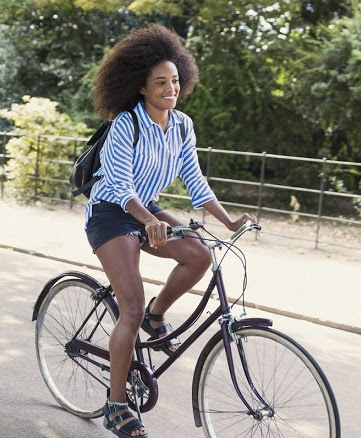
The only time I've cycled regularly was between the ages of 18 and 20 when I didn't have a car and as a local journalist I needed to travel around to interviews and meetings. I've often thought about taking up cycling again but never done so.

Cycling was safe enough when I was a teenager. There were far fewer cars on the road and cyclists weren't routinely insulted and provoked by motorists as they are now. Cyclists were respected and treated as bona fide road users.

A number of things have put me off cycling again. There's the abuse and contempt just mentioned. Why should cyclists have to put up with that?

Then there's the lack of dedicated cycle paths. Mostly you have to cycle on main roads, competing with speeding motorists, massive lorries and parked traders' vans. The risk of an accident is pretty high. For cycling to be totally safe, there would have to be set-apart cycle paths completely separate from roads and vehicles. Unfortunately that would require a lot of spare space next to roads, which in most cases simply doesn't exist. So dicing with death on busy roads it is.

There's also the possibility of theft. The rate of bicycle theft has gone down, but it's still pretty huge - around 150,000 thefts a year in the UK.

If I even float the idea of cycling to Jenny, she says it's far too dangerous and virtually forbids it. I think she's right though, it's very hazardous. I watch wobbling cyclists trying to manoeuvre around heavy traffic and they do look horribly vulnerable. Unlike motorists, they don't have a metal shell around them to provide some protection.

So much as I would love a few energetic cycle rides, I'm not taking it any further.

Saturday, 13 August 2022

Enough is enough

Why do some people think it's okay to force their beliefs or their principles onto others, along with abuse, threats and self-righteous moralising? Where does this creeping authoritarianism come from?

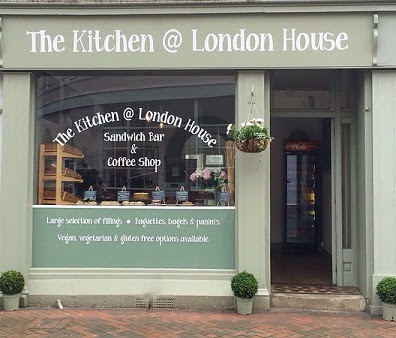
An Isle of Wight restaurant has stopped offering vegan dishes because of "nasty" and "bullying" vegans who constantly complained about what was on offer.

They used to cater for vegans. They had vegan cream teas, even BLT sandwiches with vegan bacon. But they got tired of the "holier than thou" attitude of vegan customers and the abuse directed at restaurant staff.

Now they have no vegan dishes at all. Owner Sally Cooper says it isn't a given that they should adapt their menus to suit the customers. "If you want vegan food, go to a vegan restaurant. If I went to a vegan restaurant and asked for a steak I wouldn't get one, nor would I expect to."

Jenny and I are both vegetarians, and we're sometimes disappointed by the small number of vegetarian options on a restaurant's menu, but we wouldn't dream of telling the restaurant to change its menu for our convenience. If we're not happy, we can always go somewhere else.

We accept that most people are meat-eaters, and very unlikely to change, so of course restaurant menus are going to be meat-based. We just have to work around that situation to cater for our own tastes.

It would be a shame if people concluded that vegans are rude intolerant individuals who just want to force their own dietary preferences onto other people. As anyone with vegan friends could tell you, that's not the case.

Pic: the restaurant in Ventnor, Isle of Wight

Thursday, 5 August 2021

Punch bag

I know I've got a slight bee in my bonnet, but I can't help noticing that a lot of people are getting more aggressive and abusive, and I wonder why that is. Why are they unable to behave in a civilised manner?

The latest victim of all this aggression is the humble Punch and Judy Show. Two Punch and Judy performers on Dorset beaches are having to contend with spectators who don't want to pay, who swear and shout, who dodge the donation box, and generally make a nuisance of themselves.

This never used to be the case, but nowadays it seems that if spectators aren't 100 per cent satisfied, they feel entitled to disrupt the show and make a huge disturbance.

One performer, Mark Poulton, had to post on his Facebook page calling for the abuse to stop. He said "We love making people happy, seeing everyone smile, and enjoying themselves. If you don't wish to pay for the show, please politely decline and move along, please don't hurl abuse at people simply for trying to make a living."

Of course some people would like to end Punch and Judy Shows, which they see as glorifying male violence, and I tend to agree. Or maybe you could write a modernised version with a more assertive July telling Punch to pull his weight or pack his bags.

As a kid I went to quite a few Punch and Judy Shows, and really at that age the political message entirely escaped me. I just thought it was funny in the same way as children's violent cartoons are funny. But I guess that message can seep in unconsciously.

Punch and Judy Shows have always been a traditional part of seaside holidays and it would be sad if they disappeared simply because of the loud-mouthed abuse from a few uncouth (possibly tipsy) bystanders.

Pic: Take that, Punch, you nasty little man

Thursday, 6 May 2021

Letting rip

I'm baffled by people who get some sort of kick out of criticising total strangers - people they've never met, maybe never heard of up till now, people they know nothing whatever about, people who have nothing to do with their own lives.

They don't care how insulting or hurtful or ignorant their criticism might be. They don't care what effect they're having on the people concerned. They don't care if what they're saying is a complete fabrication. They think it's perfectly okay to put the boot in whenever they feel like it.

I try to avoid such gratuitous attacks on people. I'm no fan of the royal family, but I don't lay into them at every opportunity*. I just ignore them. Naturally I'm aware of all the scandals involving public figures, but I don't promptly add my vitriolic comments to the usual social media pile-on. I mind my own business.

My mother was fond of making disparaging remarks about homosexuals. I used to ask her why she was so obsessed with a group of people totally unconnected with her own life, whom she'd never met, who didn't affect her life in any way, but she wouldn't listen.

There are plenty of people whose views I disagree with, whose personal behaviour appals me, whose mad ambitions alarm me, but I don't feel the need to publicly hurl abuse at them or tear them to bits. I have much more interesting things to do.

It's now routine for public figures, especially women, to get torrents of unrelenting hatred day in and day out. Why should anyone have to live with this kind of permanent denigration? I'm certainly not going to add to it.

*the racist and misogynistic abuse heaped on Meghan Markle is quite shocking.

Saturday, 9 September 2017

Celebrity blues

I'm fascinated by the downside of celebrity. The negative stuff you don't usually hear about when everyone's going on about the wealth, the luxury houses, the lucrative job offers, the fawning service wherever you go. The reality behind the apparent opulence and easy living is seldom so glamorous.

Gemma Collins, hugely famous star of the TV series The Only Way is Essex, has revealed some of the things that piss her off.

Complete strangers calling her a fat cunt or saying her car's being stolen. People who think she sits around all day doing nothing. Endless abuse about her weight. Fits of anxiety. Everybody wanting a bit of her. "People want all from you, absolutely everything. And everyone's got an opinion about you. I get so much criticism now."

"I don't hate my life, I'm not sitting here going I don't want to be famous. But it's come at a price, hasn't it? I just want to do my job, be entertaining and get paid like any normal person, but people think they own you. It's like bear-baiting."

She seems a remarkably resilient person who can cope with all the shit and just carry on. She's not going to let it get to her. But other less resilient souls like Amy Winehouse and Janis Joplin struggled to adjust to the hot-house pressures of fame, and finally went under.

That must be the worst thing, everyone latching onto you, treating you as public property and seeing you as fair game for whatever they want to throw at you. Criticism, abuse, harassment, death threats, sexual overtures, begging letters, stalkers, you name it. If you object, they argue that if you deliberately put yourself in the limelight, then you deserve everything you get. They don't believe celebrities are entitled to a peaceful private life like the rest of us.

No way would I want to be a household name. It would be a bed of nails.

Pic: Gemma Collins

Saturday, 17 September 2016

A torrent of abuse

I make no apologies for returning to the subject of political abuse, which has reached horrifying levels and deeply worries me as it's a deliberate attempt to censor and silence people you disagree with.

It's now completely normal for public figures with controversial views to be deluged with literally thousands of abusive and threatening messages, both online and offline, and little is being done to stop it.

Women with strong feminist opinions (or any opinions) are targeted. Critics of Jeremy Corbyn, the Labour Party leader, are targeted. Black people are targeted. Sportspeople are targeted. Even school pupils who don't "fit in" are targeted by other pupils. And not just with mild, half-hearted abuse but with vicious, brutal abuse, including death threats and the hope that they're in line for a terminal illness.

Baroness Wheatcroft, who opposes Brexit, says the level of hostility against her during the referendum campaign was appalling. Even now the post and emails she's receiving are unbelievable and "all inhibitions have gone".

It's encouraging that public figures facing this torrent of abuse day in and day out are carrying on and not quitting under the pressure. But many of them wonder if it's worth the relentless hatred, especially if it's affecting their friends and families and not just themselves.

What's really worrying is the fascist overtone of it all. If it gets to the point where people are hiding their views and staying silent to avoid an online lynching, if they're keeping their heads down and playing safe or their lives will be hell, then democracy is in serious danger.

I've already said I don't feel at all British. If I was prone to shame, which luckily I'm not, I think I'd be utterly ashamed to live in a country where such savage, ruthless abuse of anyone you dislike is increasingly seen as normal.

Tuesday, 13 September 2016

Old and crabby

Here's an odd thing. People are meant to get ruder and grumpier as they age (men especially). They're meant to stomp about, casually insulting shop assistants and shunning friendly greetings. But that's not me at all. If anything I think the older I get the more polite I get.

While the media and the internet are awash with bad-tempered oldies pouring abuse on all and sundry, I just look on with dismay, wondering why they have to be so nasty. What happened to turn them so sour and bitter?

Personally I become more and more convinced that abuse and insults achieve nothing and simply alienate the person being abused. It merely creates bad feeling and makes life more difficult. If it's a question of "getting something off their chest", why can't they just rant and rave in the privacy of their own home rather than taking it out on someone else?

I find politeness often brings results where rudeness doesn't. People treated with respect are more likely to respond positively. Also, I believe in the old principle "do as you would be done by". I don't like other people being churlish and snappy to me, so why should I be churlish and snappy to them?

There's something dignified and decorous about being polite, while constant grumpiness seems only selfish and insensitive. It's also depressing, which is why I give the wilfully grumpy a wide berth.

The grumps have all sorts of excuses for their behaviour. They're just reacting to the awfulness of life. They're fed up with declining standards. They're depressed because of their health problems. Well, we're all fed up with one thing or another, but we don't all think that entitles us to have a go at someone.

So if you're looking for a crabby old codger - you won't find one here.

Friday, 5 August 2016

Feet of clay

Hero worship is a funny thing. Generally rational, sensible people pledge their allegiance to someone, and henceforth that person is so perfect they can do no wrong. If you voice the mildest criticism of their idol, they go bananas.

Can they not see that everyone has feet of clay, everyone has personal failings and hang-ups, that absolutely nobody is perfect? Apparently not.

The cult-like worship of the Labour Party leader Jeremy Corbyn is a case in point. His thousands of supporters, aka Corbynistas, are quite sure he can walk on water, that he is a political genius, and any setbacks are always the fault of someone else.

Anyone who suggests Jeremy is falling down on the job, that he's not an effective leader, that he's not doing enough to woo the voters, is treated to a hail of abuse and venom as if they had insulted the Queen.

There are plenty of similar "heroes" whose fans jump on critics like a ton of bricks. Like Caitlyn Jenner or Lady Gaga or Margaret Thatcher. They're put on an artificial pedestal they simply don't deserve.

As a teenager, I was a bit of a hero-worshipper myself. First it was rock stars like the Beatles and the Stones, then it was fashionable rebels like the psychiatrist Ronnie Laing, the black activist Angela Davis and militant feminists like Germaine Greer.

But you would expect adulthood to bring a more realistic view of the world and the realisation that there are no heroes, only fallible mortals who get drunk and swear and make colossal blunders the same as the rest of us. Nobody but nobody is a pure and saintly human being, and treating them as if they are is just idiotic.

I can safely say I haven't hero-worshipped anyone for decades, and I'm astonished at the number of people who do. I threw away the rose-tinted spectacles some time ago.

Saturday, 27 February 2016

Suck it up

One of the worst things that can happen to you is to be in constant fear of someone else. Worse still, when people don't believe you or won't do anything about it.

Which is why I'm following the case of the American singer Kesha and her record producer Dr Luke Gottwald with great interest.

It seems outrageous that a judge has denied the singer's request to be released from a six-album recording contract with Dr Luke, who Kesha claims physically, mentally and sexually assaulted her for ten years and left her permanently scared.

If you can't even rely on the courts to protect you, because the sanctity of a commercial contract is deemed more important than personal safety, that's a sorry state of affairs.

It's odd that the judge was so indifferent to Kesha's suffering. British contract law says there must be "mutual trust and confidence" between both parties, which clearly has broken down in Kesha's case. But maybe the law is different in the States.

Personally I haven't been in fear of other people that much. I was often scared of my father's foul temper. I was often scared of the other pupils at my boarding school, who bullied me on and off for four years. I was often scared of a tyrannical line manager who thought nobody did their job properly except himself. But thankfully I've never known the dreadful experience of being terrified of someone day in and day out, with no end in sight and no support from anyone else.

Kesha's case unfortunately reinforces the idea that if someone's abusing you, you'd better just put up with it and stop whinging. Don't try to get help from anyone else because they'll just laugh at you and walk away.

Many celebrities have pledged their support for her and demanded that the record contract be cancelled, but whether they'll have any effect is anyone's guess. Watch this space.

Pic: Kesha

Thursday, 19 November 2015

Absolutely nuts

Is it ever acceptable to use the idea of mental illness as a form of abuse, or is it always offensive - simply adding to the widespread stigma against those with mental health problems?

Ken Livingstone MP, who's usually very sensitive to any kind of discrimination, caused an outcry by suggesting his fellow MP Kevan Jones was "obviously very depressed and disturbed", "should pop off and see his GP", and "might need some psychiatric help". He claimed not to know his colleague confessed to having a major depression some years ago. He had to make a profuse public apology to the other MP.

Of course if you know very well someone has a psychological problem, you're not going to refer to it in an abusive way. But assuming that isn't the case, what harm does it actually do to suggest someone is "depressed and disturbed" or "might need psychiatric help"? It's not as if you're accusing them of being a serial killer or a paedophile. You're merely suggesting they're not mentally 100 per cent and maybe they should do something about it. And all the other person has to do is declare that they're quite all right, thanks, so shut your gob.

Does what Ken Livingstone said really add to the stigma against mental illness? Is he really going to stop people seeking help and prompt them to keep their problems secret? I can't honestly believe those rather mild phrases could have such a dramatic effect. I think there's an element of fashionable over-reaction here.

It seems even odder to me that simply describing someone as "nuts" or "crazy" is also seen as unacceptable. After all, you're not seriously saying the person is a deranged psychopath. They're just common terms for "a bit eccentric" or "not thinking straight". If someone calls me nuts, to me it's no more offensive than calling me lazy or greedy. It's just another harmless everyday insult.

The whole thing is surely a storm in a teacup. It's all a bit nuts, in fact.

Afterthought: Why is it thoroughly offensive to suggest someone needs psychiatric help, but not offensive at all to suggest they need to see a doctor?

Pic: Ken Livingstone MP

Saturday, 8 August 2015

Big smack for Jack

Huge controversy over the opening of a Jack The Ripper Museum in East London. Those for it and those against it are slugging it out, abuse is being hurled in all directions, the museum windows have been smashed, and the owner is lying low.

Supporters say it's informative and sympathetic to the victims. Opponents say it's misogynist rubbish and local residents were hoodwinked about the nature of the museum.

Needless to say, most of the protesters haven't actually been round the museum, but they feel free to criticise it and demand its closure.

The critics maintain that when the museum was first announced to the locals, the idea was to "recognise and celebrate the women of the East End", showcasing 150 years of social history including the Match Girls Union, the Suffragettes, and the Bengali women who fought racism.

Residents say they were shocked to find the original plans had been scrapped in favour of a museum about an infamous 19th-century murderer of female prostitutes.

Well, I rather think the protesters are going a bit over the top. Yes, a museum about women of the East End, especially feminist women, would have been excellent. But is a museum about a woman-hating murderer such a dreadful alternative?

The museum's owner, Mark Palmer-Edgecumbe, denies it's celebrating or glorifying the murderer. He says it's very much from the point-of-view of the victims.

Since almost nobody has actually checked out the museum's content, who can say what angle it takes and whether the protesters have valid arguments or whether they're going ape-shit over a contrived outrage?

Surely anyone with any sense of fair play would at least properly investigate what they're fuming at before making such a public song-and-dance about it. But such scruples seem to be a thing of the past.

Tuesday, 26 May 2015

Blind spot

When we don't understand someone's attitudes or behaviour, when they're outside our normal experience, what do we do? Do we ask them a few questions, try to understand how they see things? Or do we just lash out at them through fear of the unknown?

Personally I try to understand. If there's something about a person that makes no sense to me, I don't just hurl abuse at them or tell them they're crazy. I try to get under their skin and see things from their point of view.

If I still can't understand, I don't see it as their problem, but mine. I probably lack the insight, or empathy, or openness, to appreciate what's going through their mind. My own blinkered attitudes are maybe preventing me from understanding.

But many people's reaction to such bafflement is to go on the attack. To try and obliterate what they don't comprehend, push it away, get rid of it. And the level of abuse can be extraordinary, utterly extreme.

A friend of mine, who I've always seen as enviably liberal, open-minded, compassionate, turns out to have a surprising streak of prejudice.

Although in general she's very progressive about sexuality and sexual preference, and totally supports gay equality, when it comes to transgender men and women, she's relentlessly hostile. She absolutely doesn't get it, and doesn't want to.

Clearly a fan of Germaine Greer on this particular subject, she regards everyone transgender as self-deluded and perverse. She finds numerous ways of belittling and discrediting them - they're trapped in gender roles, they just want to dress up, there's no such thing as "feeling female" or "feeling male", they want to be castrated, they're attention-seekers. And so on.

Does she want to understand? Does she want to know their side of the story? Does she try to put herself in their shoes? No, no and no. She has her own reality-free interpretation of their behaviour, and she pursues it regardless.

I find her prejudice horrifying, shocking, perplexing, repugnant. I told her I couldn't agree with anything she said, but it had no effect. She's totally unaware of her blind spot and can't see past it. It's an odd and uncharacteristic quirk.

Tuesday, 31 March 2015

Candid camera

Katie Price of all people has highlighted the abuse that occurs in some nursing homes, and suggested they should all have cameras in every room so relatives can see what's going on and be sure everything's okay.

She says she knows what she's talking about because at one time she was a carer for the elderly in nursing homes. So she can tell the good homes from the bad ones.

"Sadly over the last few years we've seen too many cases of abuse in nursing homes - places that you trust to care and look after your elderly relations" she says.

Her solution is cameras - so everything is visible 24 hours a day and nothing untoward could escape the public gaze. Anyone could check on what's happening - not just relatives but social workers, doctors, or just concerned individuals.

"Some will say this is an invasion of privacy - I say it's helping protect those who can't protect themselves."

What would the residents think of having cameras everywhere, I wonder? Would they welcome such routine monitoring or would they dislike the intrusion into their daily lives?

My sister, who has MND, is in a nursing home right now because my brother in law, who usually looks after her, has just had a major operation. I'm assured she's happy there and has no complaints. But it would be especially reassuring to see everything on camera and be certain she's being well-treated.

The fact is that there have been some absolutely shocking examples of outright cruelty and neglect in nursing homes, behaviour that could have been nipped in the bud if those outside had been aware of it.

It seems to me that only those with something to hide would object.

PS: Some American states have passed laws to allow electronic monitoring in long-term care facilities. They include Texas, New Mexico, Washington, Oklahoma and Maryland. Hidden cameras have caught abuse three times in Pennsylvania - they recorded mocking, manhandling and slapping. There's an interesting article about cameras in nursing homes here.