I may be British, but so-called Britishness means nothing to me. It's just a bundle of tired old stereotypes I simply don't identify with.
And now it's struck me that most of the stereotypes have a distinctly male bias, I recoil from them even more. They're not only simplistic but firmly stuck in some sexist past that doesn't exist any more.
Think of Britishness and what comes to mind?
1) Football. Both players and supporters predominantly male.
2) Cricket. Even more so.
3) Pubs. Still mainly a male preserve, despite the rising number of heavy-drinking women.
4) Wars. Largely started by men, fought by men and supported by men.
5) John Bull. The archetypal Englishman - stout, middle-aged and jolly.
6) The bulldog. Tough, rugged, fierce, intimidating. Masculine, you might say.
7) The stiff upper lip. The traditionally male tendency to suppress your emotions and soldier on.
8) Suits and bowler hats. The customary uniform of the male civil servant.
9) Roast beef and Yorkshire pudding. A good hearty meal for hard-working men. Though prepared by women, bless 'em.
10) The Union Flag. Symbolising conquest and the imposing of superior values on Johnny Foreigner. A strong whiff of the masculine, I think.
If the government wants us all to be proud of our Britishness, it might help if they gave the familiar image a rather more androgynous and gender-neutral flavour instead of the current phallocentric overtones.
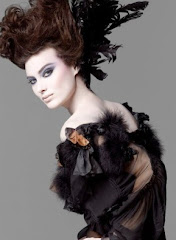
It's hard to see how any woman could feel remotely British if these are the things she's meant to enthuse about. If on the other hand, Britishness referred to lip gloss, cupcakes, pencil skirts and chihuahuas....
Sunday, 10 February 2013
Friday, 8 February 2013
Breakfast
Nick eats his breakfast.
Granola, then bread and marmalade.
Hartleys Olde English Thick Cut Marmalade.
With a lot of tooth-rotting sugar.
Nick has only 26 teeth.
Six were removed as a child because of his small jaws.
He still has all his own teeth.
Only one root filling, no crowns.
His 90 year old mother also has all her own teeth.
He thinks his sister too has all her own teeth.
As he eats he remembers something curious.
As a child he never had a rocking horse.
He thinks it would have been soothing and calming
to rock the horse gently back and forth
back and forth
back and forth
But he doesn't feel the lack of a rocking-horse experience.
He doesn't feel emotionally deprived in any way.
He doesn't feel the victim of poor parenting.
He had never even reflected before
on the absence of this popular children's plaything.
Nick has had the same breakfast for many years.
Granola, then bread and marmalade.
He sees no need to change it.
It suits him perfectly.
It never disappoints him.
It's an ideal combination of tastes.
He seldom thinks about his six missing teeth.
The remaining 26 do an excellent job.
Granola, then bread and marmalade.
Hartleys Olde English Thick Cut Marmalade.
With a lot of tooth-rotting sugar.
Nick has only 26 teeth.
Six were removed as a child because of his small jaws.
He still has all his own teeth.
Only one root filling, no crowns.
His 90 year old mother also has all her own teeth.
He thinks his sister too has all her own teeth.
As he eats he remembers something curious.
As a child he never had a rocking horse.
He thinks it would have been soothing and calming
to rock the horse gently back and forth
back and forth
back and forth
But he doesn't feel the lack of a rocking-horse experience.
He doesn't feel emotionally deprived in any way.
He doesn't feel the victim of poor parenting.
He had never even reflected before
on the absence of this popular children's plaything.
Nick has had the same breakfast for many years.
Granola, then bread and marmalade.
He sees no need to change it.
It suits him perfectly.
It never disappoints him.
It's an ideal combination of tastes.
He seldom thinks about his six missing teeth.
The remaining 26 do an excellent job.
Labels:
breakfast,
Granola,
marmalade,
missing teeth,
rocking horses,
teeth
Tuesday, 5 February 2013
Hush or blush
I love private terms of endear-ment, they’re great fun. But I
would never ever reveal most of them in public – they would promptly become
blushingly embarrassing rather than amusingly intimate. The same goes for hearing
other couples’ love-names.
My loved one and I have all sorts of private pet-names but
mostly they stay firmly private. The only one I would use publicly is the essentially
descriptive “sweetheart” and even then only in a sympathetic gathering.
You can speculate furiously but my lips are sealed over the
others. At least we like them all, unlike some pet-names that one partner or the
other hates with a vengeance and tolerates with gritted teeth.
The most loathed term among women is supposedly babe
or baby, closely followed by baby girl, baby doll, pudding and pumpkin. As for
terms like sweetcheeks, snookums and
muffin, I can’t imagine who could actually use them with a straight
face.
Then there’s the question of how you refer to your loved one
in the first place. Personally we loathe the words husband and wife and the
negative associations they still carry, so they’re used strictly as a standing joke. We prefer partner, but some people
dislike the corporate overtones.
“This is my man/woman” is apparently common in Scotland and
Italy. “Lover” was modish at one time but seems to have lost favour. “Boyfriend”
and “girlfriend” are still popular though strangely innocent-sounding in an age
of sexual licence. “Spouse” is horribly formal and somehow vaguely insulting. “Cohabitee”
sounds oddly clinical. One of my blogmates refers to her Significant Other.
Or you can just be super-subtle and say “This is Natalie” or
“This is Damien” , leaving the assembled company to investigate the exact
nature of the relationship for themselves.
As for extra-marital couplings, let’s not even go there.
Though I always had a secret hankering to refer casually to my concubine. And watch
people’s faces.
Friday, 1 February 2013
Emotional riddle
I'm not an overly emotional person. I don't rant and rave. I don't collapse in floods of tears. I don't throw things. I don't hurl torrents of abuse. I'm never sure if that's because I'm not prone to over-reacting or because I'm repressing my emotions.
I see people steaming with anger, bitterness, hostility and violence over some perceived insult, festering away for hours with righteous indignation. In the same situation I would probably just dismiss the remark as a bit mean and nasty and then carry on with what I was doing. No rip-roaring emotional avalanche, just a hint of puzzlement and chagrin.
I see people stricken with grief over some appalling tragedy halfway across the world and I think, yes, how awful, a bomb explosion, an earthquake, a mass shooting. But while I sympathise with the hapless victims, I wonder how people can be so overwhelmed by emotion for complete strangers as opposed to their own loved ones. Can they really be that devastated?
Though I have to say that boiling rage is my typical reaction to any kind of deliberate brutality or sadism, be it in Belfast or thousands of miles away. Especially violence against women. So maybe that vicarious grief is as genuine as my vicarious anger.
Then again, I see people consumed by disappointment over a ruined dress or a disastrous holiday, sunk in gloom and recrimination as if their life has collapsed. Their distress seems out of all proportion to what happened. Sure, I would be disappointed too, but I wouldn't be knocked for six by it. I'd just be a bit miffed and wanting to stop it happening again.
Am I lacking some basic emotional reflexes? Some essential human sensitivity? Or am I just too sanguine and philosophical to get worked up into a blistering lather over things that simply don't deserve it? Am I a cold fish or a cool cookie?
I see people steaming with anger, bitterness, hostility and violence over some perceived insult, festering away for hours with righteous indignation. In the same situation I would probably just dismiss the remark as a bit mean and nasty and then carry on with what I was doing. No rip-roaring emotional avalanche, just a hint of puzzlement and chagrin.
I see people stricken with grief over some appalling tragedy halfway across the world and I think, yes, how awful, a bomb explosion, an earthquake, a mass shooting. But while I sympathise with the hapless victims, I wonder how people can be so overwhelmed by emotion for complete strangers as opposed to their own loved ones. Can they really be that devastated?
Though I have to say that boiling rage is my typical reaction to any kind of deliberate brutality or sadism, be it in Belfast or thousands of miles away. Especially violence against women. So maybe that vicarious grief is as genuine as my vicarious anger.
Then again, I see people consumed by disappointment over a ruined dress or a disastrous holiday, sunk in gloom and recrimination as if their life has collapsed. Their distress seems out of all proportion to what happened. Sure, I would be disappointed too, but I wouldn't be knocked for six by it. I'd just be a bit miffed and wanting to stop it happening again.
Am I lacking some basic emotional reflexes? Some essential human sensitivity? Or am I just too sanguine and philosophical to get worked up into a blistering lather over things that simply don't deserve it? Am I a cold fish or a cool cookie?
Labels:
brutality,
emotions,
over-reaction,
repression,
sympathy,
vicarious grief
Tuesday, 29 January 2013
Flash mob
Restaurants in New York are getting so pissed off with
diners taking photos of their food and annoying other customers that some of
them have banned photography altogether.
Diners think nothing of taking constant flash photos,
putting camera tripods on tables, and standing on chairs to snap their meals from
above. Other diners complain about their selfish behaviour and the way they
intrude on other people’s conversation and enjoyment.
Sometimes they anger their dining companions as well. One woman
complained that when she eats out with her father he takes endless photos of
the food but never takes photos of his family. And they can’t start eating
until he’s finished with his camera.
The photographers of course can’t see what the fuss is
about. They say their pics are a tribute to the food and the chef, as well as
free advertising for the restaurants. They say they just want to share their
pleasure with friends.
Fortunately this photo-fetish doesn’t seem to have spread to
Belfast yet. It’s still possible to enjoy a meal out without half the diners
wanting to record the meals for posterity – or their Facebook friends. People
are happy to enjoy what’s on their plate and leave it at that.
It’s a very modern syndrome that people feel free to do
something that is obviously inconsiderate to others, and be oblivious to the
angry glares and muttered protests. Even if the photo shows little but a shapeless
heap of something-or-other, they’re still intent on recording it.
And in between all the fancy camerawork, do they actually
enjoy the food? Or are they too busy weighing up different camera angles for
the next course to appreciate the delicate flavours of whatever they’re eating?
What are all these clever photos even conveying? They can’t
reproduce the actual taste of these sumptuous dishes, only what they looked
like. All they can do is make people envious of the diners and their haute
cuisine. But perhaps that’s the whole idea.
Friday, 25 January 2013
The urge to soothe
There are people who
like to calm things down, and people who like to stir things up. I’ve always
had the urge to calm things down; too much tumult and uproar badly unsettles
me.
As soon as other
people start arguing and squaring up, my immediate impulse is to lower the
temperature and smooth the ruffled feathers. I don’t find displays of
aggression at all attractive, I find them ugly and intimidating.
But an awful lot of
people delight in stirring things up, causing quarrels and bad feeling where
previously there was none. They like nothing better than to nudge some placid,
gentle soul into a burst of ill-temper and belligerence, and then enjoy the
commotion they’ve caused.
I remember one
workmate who was an expert stirrer. He knew everyone’s weak points and would
provoke one person after another until the whole place was a frenzy of hurt
feelings, resentments and reckless insults. He visibly smirked and tittered as
his victims rose to the bait. A calm, relaxed atmosphere was like a red rag to
a bull.
I’m totally the
opposite. When people are laying into each other, I’m straightaway looking for
the common ground, looking for a way of reconciling them. I want them to live
and let live, to agree to disagree, to settle their differences. I’ll seek out
the fire extinguisher rather than fanning the flames. I’ll build bridges rather
than blowing them up.*
Some people say my
soothing-tendency is a cop-out, that I’m just avoiding argument, concealing my
real opinions, repressing my emotions. I don’t think so. If I have strong views
I’ll express them. If I disagree with someone I’ll say so. But I won’t let a
simple clash of views flare into a claws-out catfight if I can possibly help
it. I’d much rather be the oblivious cat lazing on the windowsill.
* And I’ll happily mix metaphors if necessary
Labels:
aggression,
arguments,
common ground,
keeping calm,
stirring the pot
Tuesday, 22 January 2013
Veggie woes
I never cease to be astonished at how bemused meat eaters
are by my vegetarianism. My very simple preference for foods that don’t include
meat is met with anything from wide-eyed puzzlement to seething hostility, as
if I’m asking for something utterly outlandish. Freshly grilled newborn babies
maybe or honey roasted virgin’s vagina.
Whatever reason I give for my aversion to meat, it’s usually
regarded as slightly bonkers, or stubbornly perverse, or deliberately awkward.
Seldom do people understand the quite valid reason for my attitude – that I don’t
want animals to be killed to provide me with food, when there are hundreds of delicious
non-animal alternatives readily available. And a lot cheaper.
I’ve been a vegetarian for 37 years, but the general
bafflement at my choice is as strong as ever. The idea that meat is not only vital
for health but is obviously tastier than any other type of food is a long time
dying. The fact that most people are eating vegetarian dishes every day of the
week – macaroni cheese anyone? – seems to make no difference.
So I wasn’t too surprised to read 20 stories of
vegetarians being insulted and patronised and sneered at in umpteen different
countries. The reactions are all too typical - insisting ham or chicken aren’t
really meat, serving totally inedible meatless dishes, declaring anything other
than meat to be mere animal feed, assuming a secret yearning for meat. And so
on and so on.
So many meals became an all-out battle between diners who
just wanted something meat-free and cooks and wait-staff determined to give
them something meaty, even if it had to be stealthily concealed among the other
items on the plate.
One woman who was constantly harangued by meat-eaters in
West Africa finally stumbled on a foolproof tactic. When she explained that her
dying grandfather had forbidden her to eat meat, to her delight she found that
nobody dared question her grandfather’s final wishes.
I really don’t know why meat-eaters get so defensive and angry
at those of us who don’t share their particular passion. A guilty conscience
perhaps over the thousands of animals who’ve died for their gastric pleasure?
Thursday, 17 January 2013
Gang warfare
More and more people seem to think that freedom of expression means not the freedom to put your opinion and have it heard but the freedom to gang up against anyone who offends you. That's not my idea of what it means.
Nowadays the media is full of angry hordes declaring that they've been insulted and belittled by some columnist or other and laying into the unfortunate person with unbridled viciousness as if they have no right to express their opinion at all.
The attacks go way beyond simple hostility to include demands for sackings and resignations, death threats and venomous personal smears.
The columnist Julie Burchill has been the focus of a sustained campaign of hatred after her article last weekend which dropped a number of unkind and unsympathetic remarks about transsexuals.
A tidal wave of offended readers complained loudly about the article, calling her bigoted and transphobic, threatening her with all sorts of dire fates, and even calling for the article to be deleted and the paper's editor to be sacked (and yes, believe it or not, the article WAS deleted).
Whatever you think of Julie Burchill and her constant aim to be as controversial as possible, it seems to me that the reaction to this article is way over the top and completely inexplicable.
Surely she's entitled to express her opinion, even if it offends people; she's entitled to dislike transsexuals and insult them, however idiotic her prejudices; and she's entitled to a fair hearing without attempts to shut her up and censor her writing.
I find the concerted bullying and intimidation from her critics far more disturbing than the original article, which was just a typical example of loud-mouthed, potshotting journalism, not to be taken too seriously.
What worries me is that this sort of vitriolic mass vendetta is no longer isolated but is becoming routine. And freedom of expression is being abused in a most sinister way.
PS: An excellent article on freedom of expression by Suzanne Moore (who has also been attacked for saying that women aspire to be like Brazilian transsexuals)
PPS: The Press Complaints Commission is to launch an inquiry into Julie Burchill's article, after receiving 800 complaints.
Pic: Lea T, the Brazilian transsexual model
Nowadays the media is full of angry hordes declaring that they've been insulted and belittled by some columnist or other and laying into the unfortunate person with unbridled viciousness as if they have no right to express their opinion at all.
The attacks go way beyond simple hostility to include demands for sackings and resignations, death threats and venomous personal smears.
The columnist Julie Burchill has been the focus of a sustained campaign of hatred after her article last weekend which dropped a number of unkind and unsympathetic remarks about transsexuals.
A tidal wave of offended readers complained loudly about the article, calling her bigoted and transphobic, threatening her with all sorts of dire fates, and even calling for the article to be deleted and the paper's editor to be sacked (and yes, believe it or not, the article WAS deleted).
Whatever you think of Julie Burchill and her constant aim to be as controversial as possible, it seems to me that the reaction to this article is way over the top and completely inexplicable.
Surely she's entitled to express her opinion, even if it offends people; she's entitled to dislike transsexuals and insult them, however idiotic her prejudices; and she's entitled to a fair hearing without attempts to shut her up and censor her writing.
I find the concerted bullying and intimidation from her critics far more disturbing than the original article, which was just a typical example of loud-mouthed, potshotting journalism, not to be taken too seriously.
What worries me is that this sort of vitriolic mass vendetta is no longer isolated but is becoming routine. And freedom of expression is being abused in a most sinister way.
PS: An excellent article on freedom of expression by Suzanne Moore (who has also been attacked for saying that women aspire to be like Brazilian transsexuals)
PPS: The Press Complaints Commission is to launch an inquiry into Julie Burchill's article, after receiving 800 complaints.
Pic: Lea T, the Brazilian transsexual model
Saturday, 12 January 2013
Not a coward
Is it wrong to call someone a coward? Is it just mean and unfair and insulting? If someone doesn't want to do something that's dangerous, shouldn't we respect their decision and not simply condemn them for it?
We all have different personalities. We each have our strengths and weaknesses, our particular resources and lack of them. Isn't it up to us to decide if we're capable of dealing with something, to estimate the dangers and consequences, and if we don't feel confident enough, to opt out and say we're not going to take the risk?
It's pretty high-handed and presumptuous of other people to say that someone is a coward, that they should have done what was expected of them regardless of their personal fears and uncertainties, that they should have jumped in and hoped for the best, and if they came a cropper that was just bad luck.
But if say, a woman was being gang-raped on a train by a bunch of particularly nasty-looking men, would we say it was our duty to tackle the rapists even if they might attack us too? If we saw someone inside a burning building, would it be our duty to run in and try to rescue them, even at the risk of being burnt alive? Surely that's the individual's decision and for someone else to accuse them of cowardice is impudent and uncalled-for. It's really an incredibly rude thing to say.
The flipside is that we heap lavish praise on someone we see as brave and courageous and fearless, as if they're some sort of super-hero, when in reality they may only have been doing their job, or only showing their natural strength and resilience. Why is someone "brave" given so much more respect than someone who's been less than brave - or not brave at all? Can't we just respect people's different capabilities and shortcomings? Why must cowardice be a cause for shame?
We all have different personalities. We each have our strengths and weaknesses, our particular resources and lack of them. Isn't it up to us to decide if we're capable of dealing with something, to estimate the dangers and consequences, and if we don't feel confident enough, to opt out and say we're not going to take the risk?
It's pretty high-handed and presumptuous of other people to say that someone is a coward, that they should have done what was expected of them regardless of their personal fears and uncertainties, that they should have jumped in and hoped for the best, and if they came a cropper that was just bad luck.
But if say, a woman was being gang-raped on a train by a bunch of particularly nasty-looking men, would we say it was our duty to tackle the rapists even if they might attack us too? If we saw someone inside a burning building, would it be our duty to run in and try to rescue them, even at the risk of being burnt alive? Surely that's the individual's decision and for someone else to accuse them of cowardice is impudent and uncalled-for. It's really an incredibly rude thing to say.
The flipside is that we heap lavish praise on someone we see as brave and courageous and fearless, as if they're some sort of super-hero, when in reality they may only have been doing their job, or only showing their natural strength and resilience. Why is someone "brave" given so much more respect than someone who's been less than brave - or not brave at all? Can't we just respect people's different capabilities and shortcomings? Why must cowardice be a cause for shame?
Wednesday, 9 January 2013
Sometimes brave
I'm a strange mixture of extreme cowardice and surprising bravery. A group of youths on a street corner can make me cringe nervously. But I'll take on a ruthless boss who wants to undermine my working conditions.
Any kind of visible aggression makes me very jittery, and that can include angry expressions, threatening postures, gloating laughter, even lads kicking footballs. A huddle of teenage males usually exudes enough aggressive undertones for me to cross the street to avoid them.
In the workplace though I've often challenged managers who want to mess about with my working hours or salary or work routines. If I feel unfairly treated, I'll square up to them. I spent four years as a trade union rep doing the same for my workmates.
I've often been the lone voice in a gathering of diehards, expressing my own heretical opinions whether they like it or not. I'll voice my atheism to a bunch of dyed-in-the-wool believers. I'll tell a roomfull of meat-chompers that I'm a vegetarian. I'll lob my socialism into a bevy of hardline conservatives.
But I can also get absurdly shy at social events. Faced with a sea of unfamiliar faces, I get tongue-tied, my brain freezes, my self-confidence withers, I don't know what to say.
Public speaking is equally scary. I've never given a formal speech or presentation in my life, and I hope I never have to. I'm sure I'd say all the wrong things and seriously embarrass myself.
And in restaurants, like most people, I'm loathe to complain about the food, even if it's virtually inedible. I just valiantly gulp it down or leave it. I don't like to make a fuss or be the centre of attention.
I guess what all this amounts to is that I have a very unpredictable response to danger. Sometimes I flee, sometimes I walk straight into it. And sometimes I don't even notice it, I just do what I have to do.
Any kind of visible aggression makes me very jittery, and that can include angry expressions, threatening postures, gloating laughter, even lads kicking footballs. A huddle of teenage males usually exudes enough aggressive undertones for me to cross the street to avoid them.
In the workplace though I've often challenged managers who want to mess about with my working hours or salary or work routines. If I feel unfairly treated, I'll square up to them. I spent four years as a trade union rep doing the same for my workmates.
I've often been the lone voice in a gathering of diehards, expressing my own heretical opinions whether they like it or not. I'll voice my atheism to a bunch of dyed-in-the-wool believers. I'll tell a roomfull of meat-chompers that I'm a vegetarian. I'll lob my socialism into a bevy of hardline conservatives.
But I can also get absurdly shy at social events. Faced with a sea of unfamiliar faces, I get tongue-tied, my brain freezes, my self-confidence withers, I don't know what to say.
Public speaking is equally scary. I've never given a formal speech or presentation in my life, and I hope I never have to. I'm sure I'd say all the wrong things and seriously embarrass myself.
And in restaurants, like most people, I'm loathe to complain about the food, even if it's virtually inedible. I just valiantly gulp it down or leave it. I don't like to make a fuss or be the centre of attention.
I guess what all this amounts to is that I have a very unpredictable response to danger. Sometimes I flee, sometimes I walk straight into it. And sometimes I don't even notice it, I just do what I have to do.
Labels:
aggression,
bosses,
bravery,
cowardice,
diehards,
restaurants,
socialising,
speeches
Friday, 4 January 2013
Just in case
Just in case you ask me what I was doing this afternoon, I can report the following:
I wasn't walking the dog.
I wasn't eating chocolate.
I wasn't reading War and Peace.
I wasn't building a model of the Taj Mahal out of matchsticks.
I wasn't buying a bra.
I wasn't writing a sado masochistic soft porn novel.
I wasn't feeding the baby.
I wasn't making a birthday cake.
I wasn't dialling 999.
I wasn't watering the aspidistra.
I wasn't laughing till I wet myself.
I wasn't filling in my tax return.
Oh no, my afternoon was singularly uneventful. It was distinctly prosaic. It was noticeably humdrum. I could have invented some highly amusing incident. Or a bizarre pastime. Or a terrible disaster. But they would be lies. They would be wicked fabrications. Having perpetrated such untruths, I would be unable to live with myself. I would be unable to show my face in decent society. I would have to hide from public view. I would be a pariah.
Of course I always suspected 2013 would be like this. Uneventful, prosaic afternoons. Not walking the dog. Not dialling 999. Once again not discovering the meaning of life. Once again not knowing where that strange whistling noise is coming from. Once again not understanding the term "fiscal cliff". That's what 2013 was bound to be like. You could see it coming a mile off. There was no mistaking it.
Just in case you ask me what I was doing this afternoon....
I wasn't walking the dog.
I wasn't eating chocolate.
I wasn't reading War and Peace.
I wasn't building a model of the Taj Mahal out of matchsticks.
I wasn't buying a bra.
I wasn't writing a sado masochistic soft porn novel.
I wasn't feeding the baby.
I wasn't making a birthday cake.
I wasn't dialling 999.
I wasn't watering the aspidistra.
I wasn't laughing till I wet myself.
I wasn't filling in my tax return.
Oh no, my afternoon was singularly uneventful. It was distinctly prosaic. It was noticeably humdrum. I could have invented some highly amusing incident. Or a bizarre pastime. Or a terrible disaster. But they would be lies. They would be wicked fabrications. Having perpetrated such untruths, I would be unable to live with myself. I would be unable to show my face in decent society. I would have to hide from public view. I would be a pariah.
Of course I always suspected 2013 would be like this. Uneventful, prosaic afternoons. Not walking the dog. Not dialling 999. Once again not discovering the meaning of life. Once again not knowing where that strange whistling noise is coming from. Once again not understanding the term "fiscal cliff". That's what 2013 was bound to be like. You could see it coming a mile off. There was no mistaking it.
Just in case you ask me what I was doing this afternoon....
Labels:
aspidistras,
awkward questions,
fabrications,
pariahs,
this afternoon
Tuesday, 1 January 2013
In a bubble
Why do so many people hate politicians? Why do they have scarcely a good word to say about them? One MP has actually taken the trouble to ask people why they feel so venomous.
Gloria de Piero asked hundreds of people to be brutally frank about their aversion to politicians, and they didn't mince their words.
They mentioned all the MPs who were found to be fiddling their expenses; the unruly disputes in the House of Commons; the frequent attacks on welfare claimants and "shirkers"; their elitism; their jargon; their lies; their self-interest; their privileged backgrounds.
Above all, they were seen as living in a bubble, detached from the real world and unable to understand ordinary people who were struggling to stay afloat in desperate economic circumstances.
Tanya, 34, told the MP "They've gone to different schools that you've not gone to, and they don't struggle with childcare."
Two warehouse workers said politicians didn't have to survive on the minimum wage or benefits while shop prices were rising.
If only more politicians would ask voters the sort of direct questions Gloria de Piero is asking, they might actually find out why so many of them are held in contempt and they might stop claiming to be baffled at such lack of appreciation.
They might even step out of their Westminster bubble and make a serious attempt to understand all those under-privileged folk who didn't go to Eton, aren't millionaires, haven't inherited fortunes, aren't members of BUPA, don't have chauffeurs and don't live in mansions. And they might even do a bit more to help them.
Pic: Labour MP Gloria de Piero
Gloria de Piero asked hundreds of people to be brutally frank about their aversion to politicians, and they didn't mince their words.
They mentioned all the MPs who were found to be fiddling their expenses; the unruly disputes in the House of Commons; the frequent attacks on welfare claimants and "shirkers"; their elitism; their jargon; their lies; their self-interest; their privileged backgrounds.
Above all, they were seen as living in a bubble, detached from the real world and unable to understand ordinary people who were struggling to stay afloat in desperate economic circumstances.
Tanya, 34, told the MP "They've gone to different schools that you've not gone to, and they don't struggle with childcare."
Two warehouse workers said politicians didn't have to survive on the minimum wage or benefits while shop prices were rising.
If only more politicians would ask voters the sort of direct questions Gloria de Piero is asking, they might actually find out why so many of them are held in contempt and they might stop claiming to be baffled at such lack of appreciation.
They might even step out of their Westminster bubble and make a serious attempt to understand all those under-privileged folk who didn't go to Eton, aren't millionaires, haven't inherited fortunes, aren't members of BUPA, don't have chauffeurs and don't live in mansions. And they might even do a bit more to help them.
Pic: Labour MP Gloria de Piero
Saturday, 29 December 2012
In two minds
I always feel ambivalent about other people’s
miseries. On the one hand I want to help them and make them feel better. On the
other, I don’t want their misery to deflate my own happiness.
Should I respond altruistically or selfishly? Should I
think of their well-being or my own? Should I leave them to sort out their own
negative feelings or ride to the rescue?
I think this ambivalence is quite common. Although
there’s a huge market for books about people’s miserable past, about the abuse
and neglect and poverty and self-hatred, in our daily life we may turn away
from a stranger’s rambling hard luck story with a dismissive shrug. It may be
too much to handle if we’re already wrestling with a dozen problems of our own.
Some people’s misery is so personal, so rooted in
their own psyche and their way of seeing things, that it can be hard to relieve
it however much we try. Any amount of sympathetic listening, intelligent advice
or tough talking may cheer them up for half an hour but then the misery
returns.
Also, misery can be very multi-layered. It can take
time to dig out the exact cause. What someone tells us to begin with may be
only the most trivial bits, the bits that are easiest to talk about. It may
take a lot of patient coaxing to get to the heart of what’s clawing at them.
If it’s someone we love, that patience is easily
come-by. But if it’s a mere acquaintance, we’re nervous about what we might be
getting into and we’re more cautious with our concern.
And of course people often hide their misery. It’s
embarrassing to confess that they don’t enjoy life. They see it as a personal
failure, a temperamental flaw. They’d rather keep this awful affliction to
themselves. We may guess at their private sorrow, but there’s no way they’ll
talk about it.
But if it’s possible to ease someone’s misery and make
them a little happier, it’s one of the most satisfying feelings in the world.
What more can you do for another human being?
Labels:
altruism,
ambivalence,
misery,
patience,
selfishness,
well-being
Thursday, 27 December 2012
Tall dark stranger
As is
customary at this time of year, I always ask the renowned psychic and
clairvoyant Esme Plunge what the new year has in store for me. Swallowing my earlier doubts about her psychic gifts, I ventured once more into her garish
consulting room, trying not to stare at her ample bosom.
Nick: So,
Esme, darling, what’s 2013 got up its sleeve?
Esme:
Well, sweetheart, I see you being swept off your feet by a tall dark
charismatic stranger.
Nick: But
I’m a happily-married man.
Esme: Ha,
that’s what they all say.
Nick: So,
this tall dark charismatic stranger. Does she have a lot of money?
Esme: I’m
not sure. My crystal ball’s getting a bit cloudy.
Nick: So
is she cultured, well-read, sophisticated, witty?
Esme:
Sorry, it’s really fogging up now, I can’t see a thing. Ask me another.
Nick: So
is she red-hot under the sheets?
Esme: I
can’t answer that. This is a decent, God-fearing, family business. But my psychic
channels say she’s definitely not the shy, retiring type.
Nick: I
see. So do I face any unexpected catastrophes in 2013?
Esme: Yes
indeed. Your cosmic aura tells me that following a very messy and acrimonious
divorce, your new mistress will desert you for a 22-year-old lesbian and you’ll
be well and truly washed-up, eking out a miserable existence in a scummy
bedsit.
Nick: Oh
dear. But can I prevent all this?
Esme: Of
course you can. Just ignore the tall dark charismatic stranger, take plenty of
cold showers and remember your marriage vows. Tell yourself that temptation can
always be resisted.
Nick: But
then 2013 might also be a bit boring.
Esme: Not
at all. I also foresee a hugely successful series of sado-masochistic soft porn
novels, written by your wife, her whirlwind romance with a tall dark
charismatic journalist, and a messy and acrimonious divorce followed by….
Nick:
That’s quite enough. I don’t want to hear any more. I love my wife dearly.
Nothing must ever come between us. Our union is unshakeable. The bonds between
us are stronger than life itself.
Esme:
Whatever. That’ll be £51, cash only, sweetheart.
Pic: the legendary Esme Plunge
Labels:
clairvoyance,
divorce,
Esme Plunge,
marriage vows,
new year,
tall dark stranger
Sunday, 23 December 2012
Letting rip
Criticising other people is all the rage nowadays, isn't it? Pick someone who looks a bit vulnerable, or someone who looks a bit smug, and then tear them to pieces. Why not? It's all good clean fun.
The media gave the green light years ago by laying into every celeb they could find. Women in particular. She's too thin/ too fat/ badly dressed/ needs a hairdo/ looks a mess/ neglects her kids. Nothing's too petty to complain about.
Then the internet trolls joined in, waging hate campaigns against anyone they fancied, celebs and nonentities alike. Even when they've turned their victims into nervous wrecks, still they persist.
Even everyday bullying seems to be on the increase, be it of school pupils, employees, immigrants, the elderly, hospital patients or claimants.
I don't know if it's the thumbs-up given by so many carping journalists or just the idea that treating other people decently no longer matters, but gratuitous criticism now looks to be routine. If you don't like someone's behaviour, don't maintain a tactful silence, don't try to understand why they're behaving like that, just say exactly what you think and fuck the consequences.
Shop assistants aren't polite enough. Waiters aren't speedy enough. The young aren't respectful enough. Nurses aren't compassionate enough. The jobless aren't enterprising enough. Tradespeople aren't punctual enough. The slightest faux pas and someone somewhere will have a go at you. Absolutely nothing makes the grade.
What the hell's going on? We seem to be losing the ability to appreciate what we've got, to recognise that other people may be doing their best in very trying circumstances, to accept that it's an imperfect world, and to let other people live their own lives in their own way.
A little more tolerance and empathy and common courtesy wouldn't come amiss.
NB: I'm not referring to criticism of the rich and powerful. They deserve all the criticism they get.
The media gave the green light years ago by laying into every celeb they could find. Women in particular. She's too thin/ too fat/ badly dressed/ needs a hairdo/ looks a mess/ neglects her kids. Nothing's too petty to complain about.
Then the internet trolls joined in, waging hate campaigns against anyone they fancied, celebs and nonentities alike. Even when they've turned their victims into nervous wrecks, still they persist.
Even everyday bullying seems to be on the increase, be it of school pupils, employees, immigrants, the elderly, hospital patients or claimants.
I don't know if it's the thumbs-up given by so many carping journalists or just the idea that treating other people decently no longer matters, but gratuitous criticism now looks to be routine. If you don't like someone's behaviour, don't maintain a tactful silence, don't try to understand why they're behaving like that, just say exactly what you think and fuck the consequences.
Shop assistants aren't polite enough. Waiters aren't speedy enough. The young aren't respectful enough. Nurses aren't compassionate enough. The jobless aren't enterprising enough. Tradespeople aren't punctual enough. The slightest faux pas and someone somewhere will have a go at you. Absolutely nothing makes the grade.
What the hell's going on? We seem to be losing the ability to appreciate what we've got, to recognise that other people may be doing their best in very trying circumstances, to accept that it's an imperfect world, and to let other people live their own lives in their own way.
A little more tolerance and empathy and common courtesy wouldn't come amiss.
NB: I'm not referring to criticism of the rich and powerful. They deserve all the criticism they get.
Labels:
bullying,
celebs,
common courtesy,
complaints,
criticism,
nervous wrecks
Thursday, 20 December 2012
Tug of war
The English High Court is having to resolve the deadlock between a couple who have totally different views on treatment for their sick son.
This must be a situation every parent dreads - heated disagreement on how to deal with a crisis in their child's life, and no obvious way of ending the dispute. Meanwhile the crisis intensifies and the child is left in a limbo.
Sally Roberts, mother of 7 year old Neon, who has a brain tumour, didn't want him to have either radiotherapy, chemotherapy or a second brain operation, fearing that the treatments would leave him disabled or otherwise damaged.
His father Ben however supports the treatments as without them doctors say Neon could be dead in a matter of months.
The judge ordered that the second brain operation should go ahead, but his mother was firmly opposed and was gathering evidence on alternative treatments. She said she didn't trust British doctors.
I think this sort of parental conflict over their children is much more common than we realise. Not just on medical treatment but on things like schooling, discipline, choice of friends, internet use, religion, diet - any number of issues. If the conflict isn't quickly resolved, a lot of harm can be done.
My own parents were divided on what secondary school I should go to. My father insisted on a boarding school but my mother didn't like the idea. Eventually his view prevailed and I was packed off to a boarding school where I was thoroughly miserable.
I hated the school's emphasis on religion but although my mother sympathised with my wish to opt out my father decided I should go along with it to avoid being an "oddball". Once again his view held sway.
The result of course was me forever resenting my father's obstinacy and insensitivity and ineptness. But at least it didn't end up in the High Court.
Pic: Sally Roberts
This must be a situation every parent dreads - heated disagreement on how to deal with a crisis in their child's life, and no obvious way of ending the dispute. Meanwhile the crisis intensifies and the child is left in a limbo.
Sally Roberts, mother of 7 year old Neon, who has a brain tumour, didn't want him to have either radiotherapy, chemotherapy or a second brain operation, fearing that the treatments would leave him disabled or otherwise damaged.
His father Ben however supports the treatments as without them doctors say Neon could be dead in a matter of months.
The judge ordered that the second brain operation should go ahead, but his mother was firmly opposed and was gathering evidence on alternative treatments. She said she didn't trust British doctors.
I think this sort of parental conflict over their children is much more common than we realise. Not just on medical treatment but on things like schooling, discipline, choice of friends, internet use, religion, diet - any number of issues. If the conflict isn't quickly resolved, a lot of harm can be done.
My own parents were divided on what secondary school I should go to. My father insisted on a boarding school but my mother didn't like the idea. Eventually his view prevailed and I was packed off to a boarding school where I was thoroughly miserable.
I hated the school's emphasis on religion but although my mother sympathised with my wish to opt out my father decided I should go along with it to avoid being an "oddball". Once again his view held sway.
The result of course was me forever resenting my father's obstinacy and insensitivity and ineptness. But at least it didn't end up in the High Court.
Pic: Sally Roberts
Tuesday, 18 December 2012
Flag fury
Anyone outside Northern Ireland must be wondering what the
flying fuck is going on in this country right now. They may well ask. The ongoing
mayhem and anarchy makes little sense even to most of us living here.
The fascist thugs who are orchestrating the chaos would like
us to believe they’re furious because a Union Jack is now flying over Belfast
City Hall 17 days a year rather than 365. No, you haven’t misread that. A
single Union Jack no longer flying permanently, only occasionally.
No matter that there are already thousands of Union Jacks
flying across Northern Ireland every day of the week on buildings, on streets,
on private homes, everywhere you look. Just drive for half an hour and you’ll
see hundreds of them. But a single flag not flying so often is apparently the
end of civilisation as we know it, a vicious attack on personal identity, and a
valid excuse for unlimited rioting and destruction.
Ah, but it’s the symbolism, they shriek. The Union Jack
symbolises everything that’s British, it symbolises our fundamental identity. Take
it away and we’re nothing, our very heritage has been destroyed. Well, funnily
enough, I’m British myself and I find I can assert my identity quite easily
without a flag anywhere in sight.
But that’s not all. The rioters are also directly attacking the
democratic institutions and politicians that made the decision about the City
Hall Union Jack two weeks ago. The Alliance Party politicians who supported the
decision have been subjected to a ruthless campaign of intimidation, including
arson, death threats, attacks on property and verbal abuse. The flag-wavers
want to smash the party and its non-sectarianism and drive it out of politics.
The senior Unionist politicians who encouraged the
opposition to Belfast Council’s decision in the first place by sanctioning
40,000 inflammatory leaflets are now looking the other way and pretending the
mayhem is nothing to do with them. Their reluctant and half-hearted pleas for
the protests to end are having no impact whatever. The police are being equally
laid-back and have arrested only a tiny number of rioters.
All the rioters are doing is wrecking their own
lives and communities. The chaos is threatening thousands of businesses and
jobs, driving people away from Belfast and Northern Ireland, and turning
loyalism into a dirty word. But they just can’t see it. They’re convinced they’re
fighting for some noble cause. Whether common sense will eventually prevail is
anyone’s guess.
Labels:
Belfast City Hall,
democracy,
flags,
loyalism,
protests,
Union Jack
Thursday, 13 December 2012
Rare emotion
It was a surprise to realise I can't recall a single time in my adult life when I've felt humiliated. Humiliation is not an emotion I'm prone to.
To feel humiliated, I would have to feel that my fundamental sense of self-worth had been shattered, and that has never been the case. However serious the situation, whatever its personal impact, it has never been enough to destroy my belief in myself.
I might feel insulted, or rejected, or got-at, or belittled, or unappreciated, but never humiliated. That would be too extreme a reaction.
There was one particular occasion when I was working in a bookshop and my boss jumped on me for being late for work. Not only was I formally disciplined but my trade union colleagues didn't support me. I could have felt humiliated, but the way I was treated didn't affect my underlying self-esteem. I didn't feel I'd done anything seriously reprehensible or irresponsible. So I never felt more than victimised and isolated and unlucky.
There was another occasion at Newark Airport, New York, when a zealous security official emptied out the entire contents of my suitcase in front of dozens of other travellers. She was happily rummaging through my underwear and personal possessions, searching for God knows what. But I didn't feel humiliated. Her intrusive rummaging didn't damage my self-respect. I felt embarrassed and awkward and exposed but that was it.
Maybe if she'd discovered a stack of porn mags or a corset or a copy of Mein Kampf. But she didn't.
My childhood was a different matter. My father would routinely humiliate me by suggesting I was stupid or lazy or cruel or selfish and my self-worth was being battered every day of the week. The same applied at boarding school where I was bullied persistently for four years. Thankfully that sort of merciless denigration stopped when I moved out of the family home and got a place of my own.
Given my treatment as a child, it's strange that at some point my self-esteem became quite solid and hard to shake. I don't need constant reassurance that I'm a worthwhile person. I believe in my own values and attitudes and I don't constantly doubt myself. I may be endlessly anxious, but it's not my own self I'm anxious about.
To feel humiliated, I would have to feel that my fundamental sense of self-worth had been shattered, and that has never been the case. However serious the situation, whatever its personal impact, it has never been enough to destroy my belief in myself.
I might feel insulted, or rejected, or got-at, or belittled, or unappreciated, but never humiliated. That would be too extreme a reaction.
There was one particular occasion when I was working in a bookshop and my boss jumped on me for being late for work. Not only was I formally disciplined but my trade union colleagues didn't support me. I could have felt humiliated, but the way I was treated didn't affect my underlying self-esteem. I didn't feel I'd done anything seriously reprehensible or irresponsible. So I never felt more than victimised and isolated and unlucky.
There was another occasion at Newark Airport, New York, when a zealous security official emptied out the entire contents of my suitcase in front of dozens of other travellers. She was happily rummaging through my underwear and personal possessions, searching for God knows what. But I didn't feel humiliated. Her intrusive rummaging didn't damage my self-respect. I felt embarrassed and awkward and exposed but that was it.
Maybe if she'd discovered a stack of porn mags or a corset or a copy of Mein Kampf. But she didn't.
My childhood was a different matter. My father would routinely humiliate me by suggesting I was stupid or lazy or cruel or selfish and my self-worth was being battered every day of the week. The same applied at boarding school where I was bullied persistently for four years. Thankfully that sort of merciless denigration stopped when I moved out of the family home and got a place of my own.
Given my treatment as a child, it's strange that at some point my self-esteem became quite solid and hard to shake. I don't need constant reassurance that I'm a worthwhile person. I believe in my own values and attitudes and I don't constantly doubt myself. I may be endlessly anxious, but it's not my own self I'm anxious about.
Labels:
denigration,
extreme emotions,
humiliation,
self esteem,
underwear
Tuesday, 11 December 2012
Ghost writers
Apparently it’s getting quite common for well-known authors
to farm out the writing process to other people and avoid the gruelling
ordeal of actually producing a book. Quite often the ghost writer’s name is not
even on the book so the public has no idea they’re being cheated.
It’s claimed that all crime writer James Patterson does is
send four line chapter summaries to a co-writer who then fleshes them out into a
complete book. Which is how he managed to publish 14 new titles in one year.
Personally I wouldn’t read a book that I knew was largely
written by someone else. It’s that particular author‘s style and flavour I
appreciate and I wouldn’t want to read another writer’s probably inferior
attempts at copying it.
Though if the author’s writing style was so prosaic and run-of-the-mill
that any halfway competent writer could copy it slickly enough to fool the
public, I wouldn’t want to read it in the first place. I would stick to someone
original enough that any cheap imitation simply wouldn’t be convincing.
I also think that if a ghost writer is being used, not only
should they be credited on the cover of the book but it should be made clear
just how much of the book they’re responsible for. To deliberately pass off a
book as entirely the work of someone who has merely produced a plot outline is
outrageous.
I also wonder why on earth someone like James Patterson
needs to resort to such subterfuge when he is said to earn around $94 million a
year. If he’s tired of writing, why doesn’t he just retire gracefully and do
something more enjoyable with his time?
Of course any author with any integrity would throw their
hands up in horror at the idea of hiring a ghostwriter, and would never ever
hand over the writing to another person. They‘re far too protective of their
own individual style to entrust it to anyone else, however talented they may
be.
There is absolutely no truth in the rumour that
Nickhereandnow is written entirely by a team of unpaid teenage interns based in
an ugly office block in Chipping Norton. I can’t understand where such vicious
smears come from. I can assure you this tedious rubbish is entirely my own work
from start to finish.
My thanks to Genevieve
Hassan of the BBC, whose article this post is indebted to.
Labels:
authors,
cheating,
ghost writers,
integrity,
writing style
Friday, 7 December 2012
Smug and patronising
The story so far: Nick is accused of being smug and patron-ising. He is in a quandary. How exactly should he respond?
1) He could mount a long-winded and defensive explanation of why he isn't at all smug and patronising and never has been.
2) He could pretend he doesn't care less, that the accusations are ridiculous, and anyway it's all water off a duck's back.
3) He could get very upset and hurt, cry on and off for days, wallow in self-pity, and vow never to write another blog post.
4) He could drink himself stupid, take off all his clothes, and run up and down the street shouting "The end of the world is nigh. Prepare to meet thy doom".
5) He could accuse his accusers of being smug and patronising themselves and projecting their own faults onto someone else.
6) He could whistle loudly and go "La la la la la, can't hear you."
7) He could utterly despair of the decency of the human race and their ability to treat other people fairly and sympathetically.
8) He could decide it's all too much, he just can't take it any more, and commit an especially gruesome form of suicide.
9) He could cheer himself up by buying some new nail polish and lipstick and dying his hair blonde.
10) He could take to his bed and refuse to get up until the astrological alignments are more favourable.
Which response will be opt for? How will he resolve this tangled situation? Will his hair turn grey? Will he lose his sanity? Will he resort to cup cakes? Don't miss the next gripping instalment....
1) He could mount a long-winded and defensive explanation of why he isn't at all smug and patronising and never has been.
2) He could pretend he doesn't care less, that the accusations are ridiculous, and anyway it's all water off a duck's back.
3) He could get very upset and hurt, cry on and off for days, wallow in self-pity, and vow never to write another blog post.
4) He could drink himself stupid, take off all his clothes, and run up and down the street shouting "The end of the world is nigh. Prepare to meet thy doom".
5) He could accuse his accusers of being smug and patronising themselves and projecting their own faults onto someone else.
6) He could whistle loudly and go "La la la la la, can't hear you."
7) He could utterly despair of the decency of the human race and their ability to treat other people fairly and sympathetically.
8) He could decide it's all too much, he just can't take it any more, and commit an especially gruesome form of suicide.
9) He could cheer himself up by buying some new nail polish and lipstick and dying his hair blonde.
10) He could take to his bed and refuse to get up until the astrological alignments are more favourable.
Which response will be opt for? How will he resolve this tangled situation? Will his hair turn grey? Will he lose his sanity? Will he resort to cup cakes? Don't miss the next gripping instalment....
Subscribe to:
Posts (Atom)