Thursday, 1 November 2012

Secret knowledge

I can't for the life of me remember how I found out about sex. I mean, how you did it. What it involved. I picked it up somewhere obviously, but the actual source is lost in the fog of childhood memory.

It certainly wasn't from my parents. In those days, most parents were acutely embarrassed about the subject in front of their children. My parents would only refer to it in the most roundabout way, through double entendres and cryptic euphemisms.

In the 22 years I lived with them I never saw any evidence of their sex life. They kept it very carefully hidden, strictly confined to the bedroom and never shared with us kids. We knew "something" was going on, but what exactly that something was, we could only guess.

I didn't learn anything from my teachers either. At that time sex education was unheard of, and decent schools would never get involved with "that sort of thing". Maths and grammar naturally, but sex? Not at all appropriate for a school curriculum. And of course most teachers were as embarrassed about it as the parents.

Nor did I glean anything from other boys. If they were up to anything sexual, they didn't mention it to me. It was a guilty secret they kept to themselves. Even in the sweaty intimacy of changing rooms and dormitories, the subject never cropped up. Or was my sheltered and prudish mind simply blocking out whatever I heard?

Somewhere along the line I put two and two together and worked out what this sex thing was all about. But the when and the who and the how is lost to memory. No wonder my first sexual experiences entailed a great deal of fumbling and panic and semi-ignorance. I'd just about discovered the basics but there was an awful lot I still had to learn.

What a great advance it is that today's kids are brought up in a more enlightened atmosphere and can learn more easily and naturally about this very basic aspect of life without all the squeamish secrecy and sheepishness of an earlier age.

Monday, 29 October 2012

Party poopers

I used to belong to the Labour Party, but these days I have little inclination to join any political party. The perennial problem with political parties is that for every person whose views I wholeheartedly share there are probably an equal number whose views I utterly detest. In other words, the problem of belonging to a broad church.

Whenever an especially loathsome view is expressed by some renegade party member, of course the leadership stresses that the person concerned isn't voicing the official party view, that they're speaking for themself, that they were speaking off the record and so on. The fact remains that the view was loathsome and I wouldn't want to be associated with it.

MPs from all parties for example regularly come up with appallingly sexist and misogynist views, causing widespread embarrassment to party supporters. A Labour MP has just told a Tory MP that she shouldn't disagree with her husband in public and she wasn't being a "good little girl". Why would I want to be in the same party as someone who says things like that?

If other people are prepared to put up with such throwbacks for the sake of some collective goal, the best of luck, but I'd rather not. I couldn't simply pretend they don't exist or make excuses for them. I'd want to keep their nasty opinions as far away from me as possible.

Saturday, 27 October 2012

Small mouse

Another triumph for Tanzi Twitch, the renowned conceptual artist, who has again won the Scunthorpe Award for International Art with her startling new work "The Small Mouse Is Slightly Confused But Nevertheless Finds The Cheese Number 23."

Art connoisseur Sophie Slingback asked her about the controversial painting, which has been heavily attacked by critics and the general public alike.

SS: Critics have pointed out that the title seems to bear no relation to the painting, which depicts a dusty room empty of everything except a tin of baked beans. There is no visible mouse or cheese or mousetrap. Is this discrepancy saying something about confusion?

TT: The critics all hate me. They hate that I'm rich and famous and beautiful while they're ugly nonentities living in seedy basement flats. That's why they're attacking my painting. It's all just spite and malice.

SS: They have a point though, don't they? I mean, there's no mouse to be seen anywhere in the painting. Neither a confused mouse or a clear-headed mouse. Neither a small mouse or a large mouse. The mouse has gone missing, whereabouts unknown.

TT: The critics are all parasites leeching off the artistic estate. They wouldn't know a masterpiece if it bit them on the arse. They wouldn't know genius if they had it for lunch. Their opinions are worthless, only fit for toilet paper.

SS: The critics also suggest that the anonymity of the mouse, the lack of an identifiable name, is insulting and demousifying and recalls Nazism at its worst.

TT: The mouse prefers to remain anonymous. She finds names confusing. She might forget if her name was Mirabelle or Goldilocks. Or Tinkerbelle or Anastasia. She would be running around all day in a panic, terrified she might be called Sharon.

SS: There are persistent rumours that the mouse was brutally disposed of when the painting was complete. It was chopped into pieces and dumped at dead of night in remote woodland. There are witnesses.

TT: Another grotesque lie. The mouse is alive and well in a mouse retirement home in Budleigh Salterton. She spends her days knitting and playing sudoku. She is blissfully happy and proud of her unique contribution to the global artistic heritage.

SS: Brilliant! Sheer genius! A talent to be reckoned with.

TT: Christ, I could do with a fag.

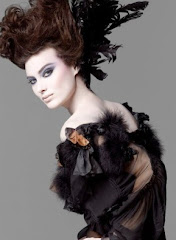
Picture of Tanzi Twitch courtesy of the Plunkett Gallery, Cork Street, London 

Tuesday, 23 October 2012

Self righteous, moi?

I'm accused sometimes of being self-righteous, but I don't quite get that. Okay, I have strong opinions but I'd never say my opinions are more valid than someone else's. If I'm presented with an argument that's more convincing, more sensible, better thought-out, or better researched, I'm happy to adopt it and dump my own opinion in a second.

For example, I used to think prostitution was acceptable until I read that most prostitutes show signs of post traumatic stress disorder, which changed my mind instantly. I used to think it was healthier to be thin, but dropped that idea when I heard that slightly plump people are actually less prone to serious illnesses.

I'm also accused of being opinionated, which might or might not be true. True if opinionated simply means having strong opinions on most subjects. Not true if it also means I foist my opinions on others and expect them to agree.

I express strong opinions in my blog but I don't expect others to swallow them. On the contrary I welcome totally opposite opinions that make me think through my own views more carefully.

In my non-blog existence I usually keep my opinions to myself unless someone specifically asks me what I think about something. Of course that might just mean I don't want my dubious and half-baked opinions to be challenged by anyone else.

If I'm really self-righteous and opinionated, I've obviously missed my vocation. I should have been a politician.

Sunday, 21 October 2012

Two of me

It's fascinating (and amusing) how differently my blogmates see me. Sometimes in quite contra-dictory ways.

I'm too pro-women.
I'm not pro-women enough.
I'm too masculine.
I'm too feminine.
I'm over-emotional.
I'm under-emotional.
I'm too judgmental.
I'm too objective and tolerant.
I'm too personal.
I'm too impersonal.
I worry too much about other people's opinions.
I'm insensitive to other people's opinions.
I'm cautious and timid.
I'm reckless and tactless.
I make sweeping generalisations.
I refer to one-off individuals.
I'm too conventional.
I'm too unconventional.
I'm self-righteous.
I back down too easily.

Just saying.
Will the real me please stand up?

Thursday, 18 October 2012

Noxious busybodies

How often do women have to say "It's my decision what to do with my body, not yours" before other people finally take notice?

How often do women have to tell the huge army of busybodies, nosy parkers and interferers to butt out and mind their own business before they actually do so?

A private sexual health and abortion clinic, the Marie Stopes Clinic, has just opened in Belfast. And predictably enough, all the usual anti-abortion, anti-choice factions are protesting against it and trying to close it down.

Too bad if women out there are desperate for an abortion, for all sorts of very good reasons, and believe it's entirely their decision to go ahead.

It's their body, their womb, their embryo, their potential parental responsibility. All the implications are personal ones. All the long-term consequences are personal ones. Yet other people think they have the right to tell them what to do or not to do with the child inside them.

People who justify their offensive interference by citing religion, or respect for life (does that include the mother's life?), or opposing mass murder. Whatever the (dubious) pretext, it apparently entitles them to permanent rights over a woman's womb and whatever is inside it.

Well, here's my advice. Why don't they try looking after their own affairs, which no doubt are far from perfect, and stop poking their self-righteous noses into other people's?

Pic: protest outside the Marie Stopes Clinic

Sunday, 14 October 2012

Pigeon holed

Someone suggested the other day that the label "eccentric" was out of date, that the people we used to call eccentric would nowadays be diagnosed with a range of mental health problems.

A recluse would be identified as agoraphobic, a hoarder as having OCD, a social clod as having a personality disorder, and so on. They'd all be neatly pigeon-holed by therapists and given a suitable course of treatment.

Well, I think that's absurd. Of course there are people who're eccentric, meaning strange or unusual or wacky, and to reduce them all to mental health categories would be dehumanising nonsense.

It denies the full richness and uniqueness of their identity, as well as implying they aren't just strange but psychologically damaged.

I'm sure we all know a few individuals we would call eccentric - because of their odd clothes, or opinions, or way of talking, or domestic habits. But we wouldn't dismiss them as mentally ill, we'd just see them as a bit dysfunctional, not quite all there.

Attitudes to eccentrics have changed though. A few decades ago people would have enjoyed being seen as eccentric. They would have revelled in it, and tried to be even more outlandish. People like Screaming Lord Sutch, Kenneth Williams and Su Pollard.

But nowadays most people find the label embarrassing, almost a liability. Even if they're privately as eccentric as a pink banana, they take care not to show it but to pass as a normal, unobtrusive citizen. Only if you know them well do you realise they're nutty as fruitcake.

Which means it's hard to think of any contemporary eccentrics. Grayson Perry is about the only one who comes to mind.

But there are plenty out there, lurking behind the grey suits and the sensible dresses. Just doing their thing and trying not to be diagnosed.

Pic: Emilie Autumn, the American singer-songwriter

Wednesday, 10 October 2012

Aren't I wonderful?

I'm not narciss-istic. I'm not obsessed with myself or my appear-ance. I don't spend hours gazing critically into the mirror. I would say I examine myself just enough to be a healthy, well-adjusted human being.

I don't endlessly deliberate if I should reshape my nose or dye my hair or wax my back. I don't slather myself with moisturisers and perfume and exfoliants. I don't dwell over every detail of my behaviour. I don't swell with pride over my achievements or wallow in self-pity over my failures. I don't hold forth about every ongoing personal saga. I don't imagine I'm astonishingly talented or charismatic.

Of course a bit of self-analysis and self-awareness is essential if I'm to relate intelligently and considerately to others. Those embarrassing individuals who never examine themselves and have little insight into their own motives or the messages they're sending out are already too numerous.

But those tiresome me-worshippers who find their own existence far more fascinating than the trivial lives of anyone else are pretty infuriating.

Every so often I have the misfortune to be at a social gathering where one self-absorbed guest is blathering on about the ins and outs of their humdrum everyday life as if every detail is front-page news, while the other guests listen politely and wonder how long this interminable monologue might last. If they manage to interrupt the flow for long enough to broach a change of subject, Mr or Ms Aren't-I-Wonderful will either find some personal slant on the new topic or ignore it altogether.

If anything, I'm the opposite of narcissistic, I tend to be too self-effacing and too intrigued by other people's conversation to make a proper contribution of my own. I find my life fascinating but I'm never entirely convinced that others might think the same. I need a lot of persuading that people actually want to know about me and my tangled personality. I'm quite capable of lengthy silences if I'm not totally confident of other people's genuine interest.

Apart from anything else, it must take so much effort to be narcissistic. Constantly talking yourself up, screening out criticism, tweaking the unflattering reality into something more impressive. You can't let up for a moment, or the mask will slip and the mere mortal will re-emerge. Unthinkable!

Sunday, 7 October 2012

Unpopular bosses

A lot of people - both men and women - complain about female bosses and female workmates. Supposedly they can be harder to work with than men - tougher and less forgiving. Strangely enough, I've never found that myself.

I've worked with plenty of women, both as bosses and workmates, and I've never had any problems with them. The bosses in particular were very easy to get on with and even a joy to work for. I've had much worse male bosses - bullies, dimwits, nit-pickers, egotists, neurotics, penny-pinchers, you name it. Bosses I was glad to get shot of. So I'm baffled by all these complaints. Am I just lucky or what?

Maybe I'm generous towards women, I give them the benefit of the doubt. Maybe the women indulged me because I was a bloke. Maybe I was happy to do what they asked me without too much fuss. Maybe I thought they had better ideas than the guys. Whatever the reason, there was never any serious friction. So what is this antipathy others keep referring to?

Is a lot of it just sexism? Are there still hordes of men out there who resent women having high-powered jobs and telling them what to do? Do women themselves secretly think women bosses aren't up to the job and a man would do it better? Is it that old cliché that women have to do the job twice as well as a man just to be seen as competent?

All I can say is, thanks to Kate, Iris, Sheila, Ulli, Ruth and all the other female bosses I've had. I enjoyed working with you and I'd be very happy to work with you again. No hard feelings whatever. No grudges, no rancour, no unfinished business. What's the big deal?

Friday, 5 October 2012

Knight errant

I'm shocked and totally disgusted that during the several decades that Sir Jimmy Savile was abusing girls and young women, everyone around him knew about it but did precisely nothing. People at the BBC, other presenters, the media, they all knew but kept their mouths firmly shut.

All this time the public were still blissfully ignorant, seeing him as a funny, lovable eccentric who raised millions of pounds for charity and was a role model for alienated rebels everywhere. They hadn't a clue what he was really up to behind the innocent facade.

Why is there always this entrenched conspiracy of silence about these perverts, particularly the ones in high places? Why does nobody say a word for fear that they're the ones who'll be jumped on and not the little toerag they're exposing?

The journalist Janet Street Porter, revealing on BBC's Question Time how widely Savile's abuse was known about, defended her own silence by saying that as a woman in a male-dominated workplace nobody would have taken her seriously.

Others were silent for a variety of reasons. Because Savile's public reputation seemed impregnable. Because they knew other people would close ranks. Because he threatened to stop helping charities if anyone told the truth. Because they feared some sort of retaliation.

But it's this endless conspiracy of silence that allows abusers to get away with it not just for years but often for decades. How on earth can keeping silent still be more normal than protecting vulnerable young women and girls from lasting psychological and emotional trauma?

In the name of common decency and humanity, these shameful cover-ups have to stop.

Tuesday, 2 October 2012

Stiff upper lip

Some people love stoicism. They think it gets them safely through a crisis without being washed away in a flood of unhelpful emotions. I'm not so sure about that. It can equally mean suppressing yourself and wading through a load of crap.

Sometimes those so-called unhelpful emotions are exactly what you need. They alert you to what you really want and to the fact that other people are blocking you from getting it. They stop you putting up with things that aren't in your interests.

It seems stoicism and the stiff upper lip are quite recent British traits. Centuries ago we were renowned for being over-emotional and lacking self-control. In fact it was considered essential in the best social circles. Gradually it became fashionable to control your feelings, grit your teeth and take whatever was thrown at you.

But why should we take anything that's thrown at us? Why should we put up with awful working conditions, or domestic violence, or relentless bullying in the name of stoicism and "not letting it get you down"?

Yes, there are times when a bit of self-control is necessary if you want to keep your job or save a relationship. But at other times letting go of your emotions is the best way to protect your self-esteem and stop other people trampling all over you.

I could have been stoical about the way my father insulted me and belittled me, even as a mature adult. Instead I kept away from him and refused to let him treat me badly. I didn't speak to him for years. But I kept my dignity and belief in myself.

I could have been stoical about the boss who persecuted me for a minor lapse in time-keeping. When he dragged me through a disciplinary hearing, I fought him every inch of the way. He still got what he wanted but I felt so much better for having challenged him.

Now and again I come across people who seem to have spent their entire lives being stoical - passively enduring dreadful jobs, tyrannical spouses, contemptuous children and interfering neighbours. And what good has it done them? They've let their identity be crushed and trodden-on and ended up an apologetic shadow of their true self. They've been all too willing to let the bastards grind them down.

Friday, 28 September 2012

A whiff of paranoia

In general I'm not a paranoid person. I trust people. I believe in them. I don't assume they're going to cheat me or betray me. I don't secretly question their intentions towards me. I don't imagine they're full of hidden hatreds and grudges. But with one exception - I'm very paranoid about friendships.

Even with a long-established friendship, when I should have every confidence that the other person is not just going to dump me overnight, I still get fretful and anxious and imagine the worst if there's too long a silence, or if I keep leaving messages and they're not returned.

Supposedly this is a particularly female trait. Women need constant reassurance that the relationship is still healthy, that the other person still likes/ loves them and isn't drifting away. Whereas a bloke is always sure the relationship is solid as a rock and doesn't bat an eyelid if there's no contact for weeks.

Well, how female am I, then. If there's too long a silence my imagination runs riot. He/ she has gone off me, or I said something offensive, or I'm boring, or too needy. I dream up a dozen reasons why I must have put my foot in it and that's the end of a beautiful friendship.

Then of course the other person contacts me and just carries on as normal without the slightest hint of anything untoward. And I realise my feverish imaginings were just that - feverish imaginings.

Some day I'll learn to have more faith in my friendships and not overreact to quite routine interruptions and silences. I'll learn that friendships are more durable than I think, that they don't just crumble over some tactless remark or tetchy outburst. Good friends are not that fickle.

Tuesday, 25 September 2012

Slumming it

The rise and rise of slum tourism - tourists visiting the poorest neighbourhoods to see how the worst-off survive rather than heading for the well-known sights - attracts mixed reactions. Some see it as positive, others as cynical exploitation.

It's nothing new of course. The trend was well under way in Victorian London over 130 years ago, when the upper class wanted to see for themselves the poverty in the East End. It took off again when Nelson Mandela was freed from jail in South Africa and tourists flocked to the townships and places linked to apartheid.

Now it's big business in cities like Mumbai, Rio de Janeiro, Beijing and even New York City, home of the Tenement Museum.

There's a similar trend in Belfast. Not so much slum tourism as conflict tourism. More and more tourists are curious about the areas that suffered heavily during the Troubles, as well as all the paramilitary murals and peace walls.

But opinions are divided over whether this fashion is good or bad. Those in favour say that as well as bringing money into desperately poor areas, it opens the eyes of people who may have lived in comfortable conditions all their lives and know nothing of serious hardship except what they see on TV.

Those against point out that a lot of the money raised doesn't go to the locals at all but to outsiders who've never set foot in the areas visited. And people's eyes may be opened for a few days but when they return to their normal privileged lives they soon forget what they've seen.

At its worst it's a voyeuristic search for cheap thrills and titillating squalor, taking away the dignity and privacy of those they're gawping at and not leaving them with any long-term benefit.

I'm of two minds about it all myself. Yes, there's little financial gain for the places the tourists visit, and little change to the prevailing poverty and degradation. But then again, I think many of those tourists are quite sincere in wanting to know about the wretched lives some people have to endure, and they return home genuinely enlightened and humbled.

The more people experience the grim reality of those forced to exist on the crumbs falling from the millionaires' well-stuffed mouths, the better.

My thanks to James Melik of the BBC for his article on the subject

Saturday, 22 September 2012

Opening time

If you've written a mediocre book and you want it to get a flood of undeserved attention, all you have to do is give it a sensational and instantly memorable title. Like "Vagina".

It works like a charm. Naomi Wolf has been basking for weeks in the white heat of media publicity, as everyone dips into her long-winded tome expecting some perceptive (and saucy) insights into the much-loved female orifice.

Unfortunately a bevy of reviewers and commentators seem agreed that far from yielding shrewd insights, the book is disappointingly conservative and anti-feminist. For example:

"Much of the book boils down to the not-exactly-radical idea that a woman just needs a good seeing-to."  Anna Carey, The Irish Times

"....insisting that women have a physiological need to take delivery of flowers, to sleep with powerful men, and to receive large amounts of semen...."  Rachel Cooke, The Observer

"Wolf specifically disqualifies masturbation as a method of achieving high orgasm."  Zoë Heller, New York Review of Books

"Vagina, then, is that very modern thing: a handbook for priggish sexual conformity masquerading as a manual for erotic liberation."  Laurie Penny, New Statesman

Not that any of the brickbats will bother Naomi overmuch. No doubt thousands of women (and men) are flocking to snap up the controversial text and see what all the fuss is about, proving once again that all publicity is good publicity.

It may be full of misunderstood science, mystical gibberish, slavish heterosexuality and trite platitudes, but what the hell? Everyone wants a "Vagina" on their coffee table.

What's the book actually about? Have a look here

Pic: Naomi Wolf

Tuesday, 18 September 2012

Winning formula

Zadie Smith, in an interview with John Self, asks an interesting question about what we expect when someone invites us round. "Once you're invited, what kind of hospitality is ideal?"

I guess we all have our own ideas about what makes for an enjoyable evening and what doesn't. I've been to a few agonisingly tedious get-togethers in my time but also plenty of witty, exhilarating ones I had to drag myself away from. So what's the difference, I wonder? Here's a few suggestions for the ideal formula:

1) A relaxed, informal atmosphere. As opposed to that uncomfortable feeling that the place has been specially cleaned and tidied, there'll be a big frost if you accidentally spill wine on the priceless Persian rug, and too many subjects are taboo in case they embarrass or offend the assembled company.

2) Original ideas and witty comments. As opposed to hours and hours of banal, predictable, deadpan conversation about property prices, childcare, the weather, holiday cottages and the price of heating oil.

3) Disarming personal confessions. There's nothing so riveting and touching as someone unexpectedly revealing that they get awful panic attacks, or they're terrified of the dark, or they used to go shoplifting, or they talk to themselves.

4) The other guests being genuinely intrigued by my own life and interests. As opposed to asking me a few polite, indifferent questions and then continuing to hold forth about themselves. Or ignoring me completely while finding someone else utterly fascinating.

5) Following from 4, an absence of those self-absorbed individuals who find their own lives totally mesmerising and could talk about themselves till dawn the next morning unless you forcefully shut them up or show them the door. If allowed a free run, they kill the conversation stone dead.

6) Positive, optimistic people who enjoy their lives. As opposed to the permanently-depressed moaners and whingers who never stop complaining about their bad luck, their overwhelming problems and burdens, and how everyone else is sabotaging them and undermining them.

It's not often that these things come together and you go home feeling quite deliriously entertained and inspired. But it does happen sometimes. And when it does, it's worth all the dreary, interminable occasions that preceded it.

Saturday, 15 September 2012

Rooting for Kate

Good for Kate Middleton, suing the French magazine Closer for publishing 11 topless pictures of her sunbathing in Provence.Why shouldn't she be entitled to her privacy like anyone else?

Of course there are still people blaming Kate for the intrusion rather than the cynical, salacious gutter press. They say she shouldn't be doing anything to encourage the voyeuristic media, and sunbathing topless was foolish and naive.

So once again the victim is being blamed for the actions of her predators. She has no right to enjoy her private life as she pleases, but the media have every right to stalk her and prey on her and flash titillating photos of her breasts across the world whenever they feel like it.

Apart from the ruthless invasion of privacy, I'm always struck by the utter hypocrisy of these little escapades. It's fine to publish photos of a celebrity's breasts, but if someone wanted to publish pictures of a newspaper editor's breasts, or her naked body, would she consent eagerly? Like hell she would. She would be racing to the courts just like Kate.

And then people say that when it comes to privacy, celebs are different. They're fair game because they court publicity in the first place and because they're always in the public eye. I totally disagree. Why does being a celeb mean your right to privacy can be instantly demolished? It's simply an excuse for poking your telephoto lenses into someone else's backyard and photographically raping them.

I'm rooting for Kate. Take them to the cleaners, honey. Sue them for everything they've got. Give them a good legal slap in the face. The prurient bastards.

Pic: not a picture of the royal breasts

Tuesday, 11 September 2012

Too much information

Talking frankly about your personal sexual history is still a dicey topic, isn't it? Who really wants their current lover or anyone else to know about their probably far from flattering debacles or embarrassments or fumblings? Not me for one, I'd rather draw a veil over quite a few awkward experiences.

And if anyone tells you all their sexual partners were utterly fantastic, brilliant in bed, completely attuned to their particular sexual tastes, and always ready for it, who's seriously going to believe them? Sex is a complicated business and we all make a mess of it from time to time.

And if we're already a bit nervous about our sexual skills, who wants to hear about the wonderful ex who always knew exactly what to do and how to trigger total bliss in ten seconds? Or for that matter the hopeless ex who hadn't a clue and inspired a new world record in faked orgasms? Who only makes us feel even more nervous.

Do we really want to be told how stunningly attractive they were (prompting immediate thoughts of our own over-large bum, wrinkles and disastrous hair)? Or how amusing and witty they were (reminding us of our habitually catatonic and hatchet-faced disposition)?

No, unless the other person is supremely self-confident and quite happy with their body, any distant tales from the bedroom are asking for trouble. Better to keep them to yourself along with other mood-dampeners like heavy periods and false teeth.

The often ham-fisted and blush-inducing details of our chequered sexual history should only be divulged to very close and trusted friends who won't be phased by our failings or excesses but will remind us of their own sexual quandaries and give us the shared understanding we need.

So don't even ask about the woman with breast implants or the woman with the hand mirror or the woman with the very long tongue. My lips are sealed.

Saturday, 8 September 2012

Happy bunny

I know I've been rather negative and angsty of late (one person even thought I sounded
"frantic") but I'd like to reassure anyone worried about my emotional or mental health, or convinced I was about to top myself, that I'm just fine, thanks very much, and there's absolutely no cause for concern.

In fact something very wonderful has happened to me recently (I'm sorry I can't give you any details because it's strictly private and confidential - but it has to do with an unexpected and very fruitful friendship) and actually at this moment I couldn't be happier.

Of course that cryptic little titbit will have your collective imaginations shooting off in a hundred directions, but I'm not saying any more. I'm not having an affair, I haven't met Penelope Cruz, I haven't run into a millionaire, I haven't found the perfect manicurist. But it's something just as joyful and special. In fact more so.

It's funny how every time I think my life is more or less complete, that I've done all the exciting and inspiring things I'll ever do, and that from here on in I'm just trundling steadily towards the old folk's home, suddenly something extraordinary happens that reinvents my life and makes me rethink everything from first principles.

And it happens when I'm not even looking for it. I'm just pottering about, minding my own business, doing the domestic chores, paying the window cleaner, wondering if that bar of chocolate has turned to fat, and whap, something explodes into my life like a meteor and sends everything flying. And what a lovely experience it is.

Tuesday, 4 September 2012

Parental dreams

I wonder why so many parents find it so tough to accept their children for what they are? They so often have hopes and assump-tions quite unrelated to what their children actually want out of life. Or what they're really suited for.

They imagine a grand career in some profession their child has zero talent for. They expect a dull, routine lifestyle for a child who is clearly rebellious and quirky. They hear the patter of tiny feet when their child has no desire whatever for an infant.

I've known so many people who say their parents don't understand them, don't appreciate what motivates them, and constantly undermine their true aims and ambitions. In short, their parents are more of a hindrance than a help.

Is it so hard to see your children as they are and encourage them in their true inclinations rather than a load of parental daydreams?

When I was young my mother and father had endless preconceptions about what sort of person I was and what I should do with my life, and they always found the reality hard to adjust to.

In the few years that I worked for a local paper, they saw me as some high-flying journalist jetting around the globe reporting world-shattering events. But it wasn't what I was cut out for or interested in.

They assumed I would share their very orthodox political views, and were baffled and upset when my views got increasingly left-wing and iconoclastic.

They expected me to have children and grandchildren, and couldn't understand why I opted out.

In general they saw me as Mr Normal, following a predictable, conventional, conservative lifestyle, probably on some new-build suburban estate where everyone mowed the lawn on Sundays and changed their car every three years.

I think they were permanently shell-shocked by my turning into the exact opposite of their stifling stereotypes. They looked on in disbelief as I adopted one radical cause after another - homosexuality, feminism, socialism, vegetarianism, premarital sex and abstract art, to name but a few. They probably wondered if some hospital blunder had left them with someone else's baby. They certainly saw me as as some alien being from another planet.

It must be very heaven to have parents who truly appreciate you for what you are.

Saturday, 1 September 2012

Dogged heroes

The popular idea of a hero or heroine is someone who has done something brave and life-threatening, but to me the real heroes are those who persist in something they believe in, or simply stay true to themselves, despite relentless harassment and persecution from other people.

They just stick to their chosen path with quiet determination, refusing to compromise and refusing to give in to the bullies and bigots.

To my mind, that can be more heroic than a person doing something that's courageous and risky but which is generally supported and applauded by the public and they aren't also fighting for the right to do what they're doing.

Certainly rescuing someone from a burning house is heroic, but what about insisting on your own identity in the teeth of violent opposition? Opposition you may have to endure for decades? Opposition that may extend to death threats and murder? Isn't that heroic too?

I think of people like Manal al-Sharif, who has campaigned in Saudi Arabia against the ban on women drivers, and has been hounded by the government and forced out of her job.

Or Karen Silkwood, who investigated claims of dangerous practices at a US nuclear plant and died in mysterious circumstances.

Or Amy Lees, stalked for nine months by her ex-boyfriend, who put her details on a sex website so strangers kept pestering her.

Or Paris Lees (no relation), the transsexual campaigner who has been constantly abused and attacked simply for rejecting her given gender.

Or Lydia Cacho, the Mexican journalist who writes on sex trafficking, prostitution and pornography and has been physically attacked, raped, tortured and had numerous death threats.*

These are my heroes, these are the people I really admire for their dogged persistence in the face of seething hostility and repeated attempts to shut them up.

In short, people who refuse to take the easy way out.

* Yes, they're all women. It just happened to be women who sprang to mind.

PIC: Manal al-Sharif