Wednesday, 19 February 2014

Duty free

I have trouble with the idea of duty. To me it implies something compulsory, something I'm expected to do whether I like it or not because that's the custom. Whether I want to do it, whether I'll enjoy doing it, is irrelevant.

I'm sorry but I just refuse to do something I haven't freely chosen, simply because other people expect it of me. They can talk about "duty" as much as they like, but I prefer to decide for myself what's the right thing to do.

People talk about the "duty" to look after your elderly parents, fight for your country, report road accidents, pay taxes, give evidence in court, serve on a jury, or vote in elections. But is it always right to do these things? No, of course not. In many instances there are very good reasons for not doing them, and self-respect and the public interest demand that you refuse.

Should I look after my elderly parents if they never loved me, always behaved badly to me and were glad to see me gone? Should I fight for my country if I believe the war is pointless, brutal and unwinnable? Should I give evidence in court at the risk of facing hostile lawyers and reliving an emotional trauma?

The decision should be up to the person concerned. They shouldn't feel pushed into something they have deep reservations about. They shouldn't be doing it just to look good or to avoid public disapproval. They should be doing it because they genuinely believe it's the correct thing to do.

I've done jury service twice, but not because it was seen as my duty. I did it because I believe people should be tried by their peers, by people like them, and not by someone remote from their own lives. I did it because I wanted to see if the jury process was as fair and objective as it's made out to be (and the answer was yes). I felt I had done it for the right reasons and not the wrong ones.

Forget duty. How about passion and commitment?

"What destroys a man more quickly than to work, think and feel without inner necessity, without any deep personal desire, without pleasure - as a mere automaton of duty?" - Friedrich Nietzsche.

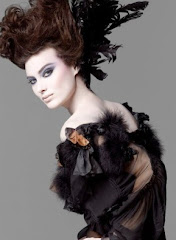
Pic: Witness Nicole Alvarez at the trial of Michael Jackson's physician.

Sunday, 16 February 2014

Forever hurt

One of the saddest things is people who've been hurt so much in their life that feeling hurt becomes the default emotion, the one you sense constantly if you're with them for any length of time.

They've got into the habit of feeling hurt,and have lost the ability to be happy. They see everyone around them as potentially hurting them and are permanently on the defensive.

I remember one woman I worked with - let's call her Beth - who looked forever beaten-down and subdued, hurt leaking out of her like sweat, always waiting for the next wounding remark, always complaining about the way people treated her.

I never discovered why she felt so hurt, who had done what to her to fatally undermine her resilience and self-esteem. But the emotional damage, the crushed psyche, was plain to see.

It was hard to befriend her because she was so suspicious of people's intentions, so sure that sooner or later she would be treated badly yet again. All I could do was handle her as gently as possible and not do anything to confirm her suspicions.

I can recall several women who carried this strong sense of hurt, but I can't recall any such men. I'm sure there are men who have been hurt just as much but are conditioned to hide the hurt and not show any sign of it. They may be in acute emotional pain but they put on a sanguine demeanour that gives nothing away.

I'm sure my father was full of hurt, but he would never admit it. He thought it was okay to be angry, or jealous, or possessive - healthy masculine emotions - but hurt was strictly taboo. A feminine thing, something for cissies, something humiliating. He bottled it all up and thought we couldn't see it.

He went to his grave still hurting. Because he was too ashamed to tell us.

Friday, 14 February 2014

Cupid's arrow

Holy haddock! Jenny and I have been together for nearly 33 years. How did that happen? How come we're still so besotted, so enamoured, so captivated? How come we never derailed, how come the train never left the tracks and plunged down a cliff? How come Cupid's still cheering us on?

It's extraordinary really. Jenny's never left me for another man (or woman). I've never left her for another woman (or man). We haven't got bored with each other. We haven't had the mother and father of all blazing rows and split up the next morning. We haven't disappointed each other (much). We haven't decided the other is a waste of space. Neither of us have drunk ourselves to death or gone nuts or taken an overdose. We're still the best of pals, giggling behind the bike shed.

How come the usual pitfalls that other couples succumb to seem to have passed us by? What's the magic ingredient? What's our special formula for continued romantic bliss? Er, dunno really, I'll get back to you on that. I just have to consult my astrologer, my therapist, my relationship adviser and my feng-shui analyst. And then I'll feed all the results into my super-powered, algorhythmic, multi-permutational software app and get the definitive route map. Or possibly the perfect recipe for kidney bean chili if something screws up.

But wow, we've been round the block a few times. We've weathered so many crises together. Using the wrong toothbrush. Leaving the toilet seat up (or down). Running out of knickers. Finding a giant spider in the bath. Not finding the giant spider and hoping it's not hiding under the duvet. Wondering if that strange noise is a deranged burglar with a freshly-sharpened machete or a creaking floorboard. Telling the Jehovah's Witness we're both Druids. Somehow we've dealt with them all and lived to tell the tale.

So miraculously, incredibly, thrillingly, we're still together after all these years. How many more, I wonder?

Happy Valentine's Day to all my lovely blog buddies.

Sunday, 9 February 2014

Hidden lives

We all know about Too Much Infor-mation. But what about Too Little Infor-mation? What about all those everyday things we'd love to ask people about but it's impossible to do so?

I'll see a woman in the street and I'll think, Does she have a boyfriend or a husband? Are they happy together? Are they unhappy? What do they love about each other? What do they dislike? Is she well-off? Is she broke? What's her favourite activity? What does she totally hate doing? What are her obsessions? What are her phobias?

I shall never know because I can't ask. She's a closed book, an enigma, just another person on the street I'll probably never even see again. The perpetual pang of unrequited curiosity.

Sometimes I feel other people are asking similar questions about me. They stare at me quizzically, appraisingly, as if there's something they're dying to know. I wonder what's going through their mind. But just as I can't question them, they can't question me.

Even when I'm alone with someone, they seldom tell me very much about themselves. Either they prefer to keep things private or they don't think I'm trustworthy or sympathetic enough. Unlike some people, who find that everywhere they go, they attract astonishingly intimate and heartfelt confessions. So much so, they start to think it might be less of a burden if they looked a bit more off-putting.

As it is, most of my information about other people comes from the media. I eagerly devour the agony columns, the gossipy interviews, the heartbreaking stories about refugees, flood victims, premature deaths. It's odd that I know more about all these complete strangers than I do about the next-door neighbour or the greengrocer. Or the sad, defeated-looking woman who just got off the bus.

PS: There's another explanation for people not confiding in me. They think I look over-sensitive and possibly easily upset by whatever harrowing story they might tell me. So they keep quiet.

Wednesday, 5 February 2014

A yen for risk

I'm fascinated by the way people crave risk as much as they crave safety. Human nature demands this strange contra-diction.

On the one hand we want safety. We want a home, a job, friends and family, things that make us feel protected and secure, things that ward off the horrors and uncertainties of the outside world.

But at the same time we don't want to feel too staid and set in our ways, we want a bit of excitement in our lives, so we also want risk. We drink too much, eat too much, drive recklessly and take dangerous drugs, busily compromising the very same safety and security we're striving for the rest of the time.

Some people go farther. The reliable bank clerk and home-owner who also has a yen for rock climbing, sky diving, bungee jumping or surfing. Or even a fervent desire to work in war-torn countries where they face death every day. They can only take so much safety and security before they crave the exact opposite, something that is physically threatening but gets the adrenaline going like nothing else.

Personally I have a strong yearning for safety, and I steer away from risk. I'm a timid soul who seldom does anything riskier than exceeding the speed limit or standing on a cliff-edge.

If I feel any sense of risk in my life, it's only the vicarious danger oozing from the media, with its screaming headlines about cancer epidemics, plane crashes, multiple pile-ups and mass shootings.

I guess that's one reason we're all such avid news-consumers. It gives us that exhilarating whiff of looming peril that livens up our usually predictable existence. It persuades us we're taking constant risks when in fact we've never been safer.

But I think I'll pass on the bungee-jumping for now, if that's all right with you.

Sunday, 2 February 2014

True or false?

So - time for some fun. How well do you think you know Nick? Here are twenty statements about me. Which are true and which are false? If you want to make it easier, just name three things you think are correct. I'll give you the answers in due course....

And the answer is: I've been very mischievous. Every statement is false. There's not a shred of truth in any of them. As for number one, it didn't happen to me but it happened to my father. There were a lot of very sensible guesses though!

1) I was born with two thumbs on my left hand, and one of them was surgically removed.
2) I'm allergic to avocados.
3) I once shared a taxi with John Lennon.
4) I often dream of burning buildings.
5) I blush frequently.
6) I have a heart-shaped birthmark on my left thigh.
7) I'm prone to fainting.
8) I used to have a terrible stammer.
9) I swear profusely when I'm drunk.
10) I used to be anorexic.
11) I'm afraid of flying.
12) For my 40th birthday party, I wore a blue minidress, black tights and blue 3 inch heels.
13) I detest broccoli.
14) I once lost two stone in a month.
15) I've never had any pubic hair.
16) I used to sleepwalk.
17) I first had sex in a London tube train.
18) I once hiccupped non-stop for three hours.
19) I've read "Crime and Punishment" eleven times.
20) I bruise easily.

Thursday, 30 January 2014

Pot shots

One of life's little mysteries is the way people condemn things out of hand. Things they don't understand and don't want to understand.

How can you decide that something is sinful or immoral or damaging purely on the basis of some knee-jerk reaction, some blind instinct totally detached from the facts?

People who slam a play without seeing it, or a book without reading it. People who condemn immigrants or refugees with no comprehension of the circumstances they find themselves in. People who sneer at alternative remedies or veganism or psychotherapy without knowing the first thing about them. People who knock teachers when they haven't set foot in a school in 40 years.

On the basis of a few tabloid headlines, or neighbourhood gossip, or a dinner-party anecdote, they casually let rip at anyone or anything they fancy, oblivious to the distress and alarm they might be causing to those on the receiving end. It never occurs to them that they might be totally misinformed, prejudiced, wrong-headed.

Personally I try not to condemn anything I know very well I'm ignorant about. If I'm not sure of the facts, I prefer to keep my mouth shut until such time as I am. I'm not going to pontificate simply to impress an audience.

If I don't understand something, I'll confess to being puzzled, or being uncertain, or being undecided, rather than feign knowledge I don't have. I'll try to find out a bit more about the subject and road-test whatever half-baked preconceptions and stereotypes are floating round my head.

But I think a lot of people actually feel embarrassed or uncomfortable at the idea that they're ignorant about something. Instead of admitting their ignorance, they parrot the latest fashionable opinion and hope nobody examines it too closely. All I can say is, I'd rather stay silent than talk out of my arse.

Monday, 27 January 2014

Ow, that hurts

I'm quite susceptible to little hurts. A dozen times a day I feel hurt that I've been rejected, or ignored, or slighted, or not appreciated, or not understood, or treated brusquely.

But they're only little hurts, a bit like nettle stings or pinpricks. They only last a minute or two and then they're forgotten. I'm too resilient to dwell on them for long. I don't magnify every little hurt into a tearful melodrama. I shrug them off as a trivial part of daily life, just a sign of the rough and tumble of a hectic world.

The big hurts are a different story. The sort of hurt when a long-time friend suddenly snubs me, or my professional competence is doubted, or someone questions my sincerity or integrity. That goes deeper, like a thorn in my flesh. It pierces through the usual resilience and lodges somewhere, constantly resurfacing in bursts of bewildered pain.

That's the sort of hurt that can't just be shrugged off, though I'm still able to see it philosophically as an unfortunate but inevitable part of being human. I'm not the type of person who deals with serious hurt by getting bitter and vengeful, trying to cause as much hurt as was done to me.

I know some people would say that's a cop-out, that I'm bottling up my feelings and it's far healthier to ease the hurt by flinging it back where it came from. But that's not the way I see it. I want to drain the hurt, not add to it. So I keep it to myself and let it run its natural course.

Then again there's the biggest hurt of all, which is grief. Luckily up till now I've never experienced major, all-consuming grief, and I hope I never have to. I can only imagine how I might cope with it. Very well? Very badly? Probably the latter. Such excruciating hurt would knock me for six.

Friday, 24 January 2014

A lick of paint

Why so much make-up? Why the unquest-ioned norm that a woman needs to be plastered with the stuff in order to look good? Why the constant assumption that a woman's natural face is so ugly, unsightly, off-putting that it needs a thick coating of expensive pastes and powders to be presentable?

A strategic dab of make-up here and there can be beneficial. A smear of lipstick. A smudge of mascara. But piling it on with a trowel until it becomes a kind of obliterating mask - what's the point?

When I see photos of celebs, they're always thick with make-up. To see them au naturelle would apparently be unthinkable, shocking, repulsive. Who would want to contemplate such a dreadful sight?

Yet to my mind, on the odd occasion when they're seen without their cosmetic veneer, they usually look much more real, much more interesting. Lady Gaga, for instance. Or Julia Roberts. Or Halle Berry.

Employers often expect women to wear make-up. Supposedly they look more professional, more trustworthy, more reassuring. A natural-looking woman would apparently frighten off the customers with some sort of unwholesome aura.

Personally I tend to see an employee in thick make-up as less trustworthy, not more. I associate a slick, glossy appearance, be it make-up, a flashy suit or a fancy hairdo, with phoneyness and sharp practice. Perverse maybe, but I'm sure I'm not the only one.

There was a brief feminist fashion in the seventies for going without make-up, or at least wearing the bare minimum. Unfortunately it didn't last, undermined by the combined pressures of advertising, gender stereotypes and self-aversion.

One thing's for sure - the cosmetics business is laughing all the way to the bank.

Tuesday, 21 January 2014

Wot, no kids?

Now and then I still feel a little embarr-assed that I don't have any children. Having children is seen so widely as the "normal" thing to do, that even after many years of being childless, and not in any way regretting it, I still feel it's a choice that needs to be somehow justified.

Nobody ever asks me why I don't have children, nobody ever gives any hint that it was an odd decision, but nonetheless I always feel slightly unusual, a bit of a maverick, a bit of a rebel.

I suppose it doesn't help that there are two schools close to our home, and twice a day dozens of children pour in and out of their parents' cars, the parents obviously doting on their little offspring and watching them protectively.

It also doesn't help that any woman who gets pregnant is promptly congratulated by all and sundry, everyone admires the gradually swelling belly, and when the baby finally appears, yet more congratulations are offered.

Unfortunately all the fervent enthusiasm and showers of baby-gifts, however natural they may seem, inevitably give the message that having a baby is much more impressive than not having one.

I can justify my child-free decision by pointing out how much extra cash I've had and how much that's improved my quality of life, but somehow that just makes me sound a little selfish and smug, as if other people's sacrifices for the sake of their children are worthless.

In fact being "selfish", not replenishing the human race but thinking only of our own pleasure, is what childless couples are often accused of. If I suggest that maybe the anticipated joy and reward of having children is itself a somewhat "selfish" desire, the reaction will be frosty to say the least.

I've never felt that I've missed out by not having the patter of tiny feet around the place. But it still seems a bit like the exception that proves the rule.

Friday, 17 January 2014

Bring it on

There's no such thing as Too Much Information. To my mind, the more information the better. I can never get too much of it. Information is always preferable to ignorance.

The more information I have, the more I know about the world, about other people's lives, about my own mind and emotions, about everything. The less I'm floundering about in a fog of confusion, speculation and misunderstandings.

I don't care if the information is outrageous, or obscene, or repulsive, or peculiar. I don't care if it upsets me, or embarrasses me, or alarms me. I can deal with my emotional reactions and I'm not going to push something away just because it temporarily unsettles me.

I'm an intensely curious person. I want to know. I need to know. I don't like being fobbed off with vague explanations and coy silences. What is so devastating, so shocking, that I mustn't know about it, I mustn't be exposed to such horror? There's not much in this world that's truly shocking, especially at the ripe old age of 66. Whatever you think would shake me to the core, probably would just leave me a bit puzzled.

Of course some people conceal things as being "Too Much Information" when what they really mean is that they're nervous of other people's reactions. They're afraid of being laughed at, or criticised, or simply facing a stunned silence. Which is understandable. I withhold certain facts about myself for just that reason.

But dismissing awkward topics as Too Much Information is absurdly squeamish. It's precisely those awkward or controversial remarks that give me precious insights into human nature and other people's complexities. Without them, my understanding of the world would be much more limited.

So tell me everything, I say. I don't care if it knocks me for six. I don't care how awful it is. To my mind, Too Much is always better than Too Little.

Monday, 13 January 2014

A tide of horror

I find the constant tide of violence and brutality and callousness pouring out of the world's media quite over-whelming at times.

I can only cope with it by siphoning off my emotions into some dark part of myself where they gradually dribble away and disappear.

If I allowed my feelings free rein, if I allowed the full weight of sadness and despair and sorrow to wash through me, I would soon be an emotional wreck.

I'm beyond shocked at the depraved and deranged things that human beings do to each other, apparently without a shred of remorse or guilt or self-loathing.

I'm endlessly amazed at those dogged individuals who still get up each day with a sense of optimism and self-belief despite years of harsh and degrading treatment. The Nelson Mandelas and Natascha Kampusches* of this world. And all those we've never heard of at all.

I can't share the cynicism and indifference of those people who shrug their shoulders, tell you it's just the way of the world and carry on with their daily activities as if it wasn't rape and slaughter they were responding to but a minor kitchen spillage.

And I cringe at all those governments that throw their hands up in horror but so often are unable to halt the barbarities going on in their country day in and day out.

We are not born violent and cruel. We are not born wanting to spill blood and spread terror. How does a child's tenderness get so casually crushed and replaced by something so malevolent?

* Natascha Kampusch was held in a secret cellar in Vienna by her kidnapper Wolfgang Priklopil for more than eight years

Thursday, 9 January 2014

Rough and ready

Someone accused me the other day of "undignified" behaviour. Well, frankly, I've never seen myself as especially "dignified" in the first place. I'm just a very ordinary person fumbling my way through life in a rough-and-ready fashion, probably more stupefied than dignified.

In fact I'm rather suspicious of anyone whose aim in life is to be dignified. It suggests someone who's rather stiff and starchy, rather defensive, afraid to be themself in case they do something embarrassing or stupid or laughable.

They would rather do nothing at all than see other people looking down their noses at their unseemly or uncouth conduct. They would rather be "dignified" than interesting or amusing or witty.

But surely to live your life, to be who you are, or simply to enjoy yourself, you have to risk losing your dignity every minute of the day? You have to risk the inevitable pratfalls and cock-ups that go hand in hand with spontaneity and experiment.

I associate "dignity" mainly with those public figures whose reputation seems to rest on being aloof and pompous and never saying anything candid or off-message. The only result is that hardly anyone trusts them because their "dignity" is more important to them than getting on with the job.

I also associate "dignity" with emotional repression - not showing your grief or rage or even wild excitement because it's "undignified". Bottling everything up and pretending everything's fine is more "appropriate" than letting it all spill out and maybe making other people uncomfortable.

So no, I'm probably not a very dignified person. But I'll settle for being a sometimes toe-curling plain speaker.

PS: Isn't dignity just another word for respectability? Or is it something more than that?

Sunday, 5 January 2014

The hair thing

It's a good thing men aren't expected to get rid of all their body hair. Some men have such jungles of the stuff it would be a Herculean labour to purge it all in favour of smooth, silky skin.

Not only that but all those men with beards and moustaches would be very reluctant to part with those cherished patches of hirsuteness (though why they cherish them so much is beyond me; for some reason beards and moustaches just make me want to laugh).

Luckily my own body hair is fairly sparse, so a sudden fashion for male depilation wouldn't be too much of a chore. But men are so proud of their corporeal undergrowth, even if it serves no purpose whatever, that I can't see a runaway desire to rip it all out any time soon.

A bit unfair though, isn't it, that men can leave all their body hair serenely intact while women are expected to remove every last trace of it (even the pubic shrubbery nowadays), with all the time and expense and nuisance that involves.

Some women go to absurd lengths to conceal those rampant thickets of body hair in places their menfolk* expect to be smooth as a baby's bottom. They dread the shock and revulsion their supposedly body-friendly bloke might suddenly display if they weren't scrupulously bald.

There's a sizeable minority of men, though, who do prefer to remove their body hair (sportsmen, gay men, models) and don't see anything odd about it. And there are quite a few women out there who like their men to be hair-free (although the men won't always oblige).

So who knows? Maybe one day men will be as preternaturally smooth-skinned as the opposite sex, and just as furtively slipping down to the beautician for an urgent waxing session.

*and womenfolk for that matter

Thursday, 2 January 2014

Love on the cheap

I do object to the way the word "love" is trivialised and misused and cheapened. I object to the way it's thrown about so casually, and used to glamourise more mundane emotions.

To my mind, love is a two-way thing, an active give and take between two people, something growing and developing, something fed by affection, empathy, understanding.

When people say they "love" Lady Gaga, or Ed Miliband, or J K Rowling, surely that's a misuse of the word? There's no two-way relationship, no give and take. They've probably not even met the person they "love". There's no giving, only taking, only consumption.

What they really mean is that they "admire" Lady Gaga, they're impressed by her, they take a close interest in her. That's something entirely different.

Or people say they "love" Italy or New York. Meaning for a week or two they consume Italy and New York. They don't give anything back except money and a few casual compliments to the locals. And I doubt if they love the mafia or the pan-handlers. The word love is a mere romantic flourish.

Love is a very serious emotion, a very serious connection between two people. It's something rich and deep and resonant. It's a communion of souls. To equate it with showbiz loyalty or tourist fads is to mock its true meaning. It's the cut-price imitation, the discount knock-off.

Okay, it shows we're passionate about something. It shows we're emotionally healthy. But passion isn't love. Passion isn't intimacy. Let's not confuse the two.

Thursday, 26 December 2013

All due respect

I totally disagree with that old cliché "respect has to be earned". I think everyone should be respected until such time as they do something that forfeits that respect.

A complete stranger is as worthy of respect as an old friend you've known for years. They deserve respect simply because they're another vulnerable human being, with the same feelings and needs and weaknesses.

If a person hasn't "earned" respect, does that mean I can treat them as badly as I like, kick them around, abuse them, until such time as they've qualified for better treatment? Whose barbaric idea is that?

This absurd principle is trotted out all the time to justify hostile attitudes towards immigrants, welfare claimants, single mothers and all sorts of minorities people don't want to treat decently.

It means people are regarded as second-class citizens unless they've jumped through all sorts of demeaning and ingratiating hoops to raise their status.

It's like saying people have to earn kindness, or courtesy, or fairness. Shouldn't these be the normal way to behave?

Do we say a new-born baby has to earn our respect? Do we say a dinner guest has to earn our respect? Of course not.

Everyone deserves an initial respect, be they malodorous beggars, beer-slurping couch potatoes or clock-watching pen-pushers. Surely respect should be the norm unless it's forfeited by something unforgivable or reprehensible? Or unless the person's actually attacking or robbing you.

To my mind, respect is the cornerstone of a civilised society. It's not some prize to be competed for. It's not a carrot on the end of a stick. It's a basic right.

Saturday, 21 December 2013

A foolish debacle

If there's any moral to draw from the Saatchi/ Lawson/ Grillo case, it's this - taking people to court isn't very wise. It can cause more harm than good and blacken your own reputation more than the person in the dock.

What exactly was gained by accusing the Grillo sisters of fraud? Elisabetta and Francesca have done well. They were cleared of fraud, there were no damaging claims about them except that they spent money rather freely, and several papers are now offering them large sums for their stories.

Charles Saatchi and Nigella Lawson on the other hand have not done so well. Saatchi was painted as a bad-tempered tyrant who terrorised his wife, the Grillos and his employees. Nigella was painted as a habitual drug user who was often "off her head", incapable of running the household properly, and addicted to pricey designer clothes.

None of these claims were substantiated, but they will stick in people's minds and be seen as facts even if they're half-truths or total lies. Charles and Nigella will forever be seen as an ill-matched couple constantly sniping at each other and prone to eccentric behaviour.

You do have to wonder why a court case was ever seen as the answer to the Grillos' lavish spending and why a simpler and more discreet solution couldn't be found. Like giving them a strict monthly spending limit. Like restricting their spending to certain items. Like taking away their credit cards altogether. Anything rather than drag them through the courts, with the inevitable media feeding frenzy and smear campaign that was bound to follow.

Not to mention the massive legal bills that just add to the huge sums spent by the Grillos. Good money after bad, you might say.

If you ask me, it's not the law that's an ass so much as those foolish people who put too much faith in it.

Pic: Elisabetta and Francesca Grillo

Sunday, 15 December 2013

The snare of jealousy

Jealousy and envy are healthy, says Caprice*, since they're both connected to that strong feeling of loving somebody. Well, I can't agree with her.

To my mind, jealousy always means begrudging what the other person has and wishing you had it yourself. It means wanting to stop them from having it, by violent means if necessary. It means hating them and hoping they come to a sticky end. It means thinking they don't deserve what they have, that they've somehow got it unfairly. How can all that be healthy?

I'm glad I'm not prone to jealousy. I'm glad I'm able to appreciate other people's talents or possessions or friends or good looks without wanting to destroy them or wish some misfortune on them. On the contrary, I'm pleased for them. I'm pleased that in a brutal and unpredictable world they're lucky enough to have something of value, something positive, something that's a source of joy and well-being.

I remember a workmate of mine many years ago who was always eaten up with jealousy over what she saw as the privileged lifestyle of her bosses. Every day she was seething with resentment and rage, and the other employees would steer clear of her dispiriting rants.

Celebrities seem especially susceptible to jealousy, to people so pissed-off at their success and popularity that they flood the internet with abusive bile aimed at bringing them down from their lofty pedestals. Straying sexual partners can attract similar venom from the person spurned, finding their clothes trashed, their cars vandalised, their laptops sabotaged.

Jealousy is an ugly and corrosive emotion. I can see nothing healthy about it. It sinks a corkscrew into your soul.

* Caprice Bourret - British model and businesswoman.

Tuesday, 10 December 2013

Ten questions

I was intrigued by the ten questions Jenny Woolf posed to her blogmates. So here are my answers, for what they're worth.

1. If there's one chocolate left in the box, do you have to eat it, or can you leave it sitting there?

I could leave it for years. I'm very strong-willed when it comes to food.

2. What do you want to remember most of all, if you survive to be very old?

My trips to Australia, all the fun times with Jenny, walking in the Mourne Mountains.

3. Would you enjoy being a very rich and famous celebrity?

No. Being pursued everywhere by the paparazzi and demanding fans would be a nightmare.

4. What piece of music do you personally find most emotionally moving?

There are so many, from Mozart's Piano Concerto Number 21 to Goldfrapp's Black Cherry album.

5.  How do you deal with depression, anxiety and bad times?

I never get depressed for longer than half an hour, but anxiety is my middle name. I've tried many many ways of controlling it but nothing works for very long.

6. What do you love doing that bores everyone else stiff?

Grinding coffee, washing up, chopping vegetables, washing my hair.

7. Did you ever encounter an inanimate object that seemed to have a will of its own?

Shoelaces. They knot and unknot whenever they feel like it.

8. What is your very favourite hotel or restaurant?

The San Cassiano Hotel in Venice. It's on the bank of the Grand Canal.

9. Do you think prisoners who have committed particularly vile crimes should be segregated in jail for their own safety?

That's for them to decide. Long-term segregation can be very psychologically damaging.

10. What do you wish you had known when you were 18?

I wish I'd known a lot more about sex!

(There was an eleventh question about the photos in her post, but since you can't see them....)

Saturday, 7 December 2013

Off trend

I couldn't be pretentious to save my life. I do what I want to do, and if it isn't trendy or cultured or flashy enough, that's too bad.

I see other people with their Armani jeans and iPads and Lady Gaga tickets and the Morrissey book and I think, well, that's fine, whatever turns you on, but I'm not going to rush out and buy all the latest fashionable bits and bobs just to prove I'm a cutting-edge sophisticate who knows where it's at. Whatever It may be. And wherever It may be lurking.

I insist on buying cheap chain-store jeans, tickets for old-timers like K T Tunstall, books by obscure authors nobody's ever heard of, and comfort food scarcely mentioned by all the celebrity chefs. I know practically everything I do or say is thoroughly off-message, and I don't give a damn.

The few times I've actually tried to be up-to-the-minute, style-conscious and so-hip-it-hurts, it's been a dismal failure and whispered put-downs and stifled giggles are the order of the day. I just somehow lose the plot and look like a pathetic wannabe trailing hopelessly behind the smug pace-setters.

When I was at boarding school, I tried desperately to be as smoothly masculine and rugged as the other boys, but of course it didn't work. However hard I tried, I still ended up as the effeminate wimp who simpered when I should be growling, and let my hair flop everywhere instead of slicking it back like Elvis.

As a teenage dater, I sometimes tried to be the cool, monosyllabic guy with the perfect social poise, but inevitably I reverted to type and remained the bashful, stuttering greenhorn terrified that any intelligent woman would laugh hysterically at my mumbled request for a second date.

No, I leave the pretentious posing and posturing to others, and continue to go my own way, gazing curiously at the breathless trend-setters scurrying along several miles ahead.

Don't mind me. I'm quite happy where I am.