Showing posts with label violence. Show all posts

Tuesday, 3 March 2026

Devalued lives

I can't begin to understand how a person can place no value whatever on another human being's life. How other people become mere objects to be exploited.

Obviously I'm thinking of all the political leaders who're prepared to sacrifice thousands of lives in the name of some dubious cause or other - territory, power, religion, whatever. They show absolutely no sign of hesitation or conscience or shame but just carry on sending people to their death.

Of course it happens at every level of society, not just at the top. Husbands killing adulterous wives, gangsters murdering other gangsters, fanatics on shooting sprees, racist attacks, honour killings.

The devaluation of other humans implies also a belief in the potency of violence, and the idea that violence can solve problems, which it seldom does. Isn't it obvious that it just leads to more violence, and endless terror for whoever's on the receiving end?

The normal inhibitions that stop most of us resorting to violence are absent in these murderous individuals. Their inhibitions have somehow been suppressed, either by nature or nurture, and sooner or later they cause havoc.

Friday, 6 June 2025

Granny's advice

I'm not an angry person. I'm more of the "Keep calm and carry on" persuasion. I believe that anger is pointless and usually self-defeating.

Some of you may remember from earlier posts that at the age of ten my grandma urged me not to be like my father - habitually bad-tempered and out of control. I took her advice and I've been remarkably even-tempered ever since.

On the rare occasion that something riles me enough to make me angry, other people are taken by surprise. They're so used to me having a cool and measured approach to whatever situation I'm confronted with that they wonder what on earth's going on.

Of course some people say that anger is one of our basic emotions, the emotion that brings us to life, and that never being angry is a bit abnormal. On the contrary, I think anger is as negative as guilt or jealousy or bitterness. Someone who is regularly angry just makes other people wary and defensive.

Anger is very fashionable at the moment. Look at a newspaper or go online and there are any number of people getting furiously angry about something or other. Where they get the energy from I can't imagine.

I also resist anger because it so often leads to violence, especially misogynistic violence. Once you allow anger to flow freely, it easily morphs into something much more dangerous. Keep a lid on it, I say.

PS: Several blogmates have suggested I'm bottling up my emotions and that expressing anger is a normal human trait that I'm lacking. Well, expressing anger may be the psychological norm but norms don't apply to everyone and to my mind it's also normal to be an un-angry outlier. I've never felt that I'm bottling up my emotions, I just hardly ever feel angry.

Wednesday, 29 March 2023

False impressions

When Jenny and I first moved to Belfast in 2000, a lot of people were puzzled by our decision. Why Belfast, they asked? What was wrong with London? So do you think you'll be staying there for good or might you be moving back to England?

Well, we couldn't understand all the fuss. We'd had holidays in Northern Ireland several times and really liked the country and the people. There were beauty spots everywhere, property was much much cheaper than London, and there wasn't the ubiquitous congestion - on the roads, on the trains, on the buses.

Londoners constantly fed news headlines about terrorism, bombs and paramilitaries assumed we would be dicing with death every time we popped out to the shops. The reality of course is that there are small pockets of violence but 95 per cent of the country is as safe as anywhere in England. Actually crime levels where we live in East Belfast are almost zero compared with crime levels in Islington, North London, where we used to live. In Islington car thefts, muggings and burglaries were routine occurrences.

I mention all this because the new TV drama Blue Lights, which focuses on the police force in Belfast, suggests that Belfast is nothing but a hotbed of violence and disorder that the police struggle to cope with.

In fact the drama is set mainly in a specific area of West Belfast where violence and disorder are indeed a constant feature. But other parts of Belfast, like our own East Belfast neighbourhood, are almost embarrassingly sedate and sleepy. The only sign of violence is a grand old house being noisily demolished.

We would say that our quality of life here is a lot better than in London. The Big Smoke is vastly overrated - and totally unaffordable.

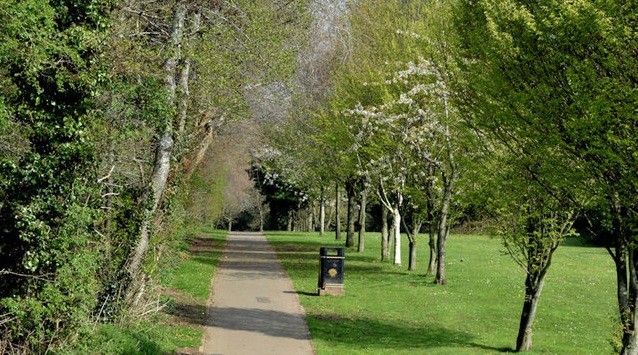
Pic: The lovely Belmont Park, five minutes' walk from our house.

Monday, 16 January 2023

Not likeable

The new film Tár, about the (fictitious) downfall of Lydia Tár, a feted female conductor, has attracted some very odd criticism. In particular that such a predatory and abusive character should have been portrayed as a man and not a woman, and that the character "isn't likeable".

Good grief. When did characters in movies (or TV dramas or books) have to be likeable? If that was the case, hundreds of movies and books would have to be pulped immediately. Mean and nasty characters are commonplace, from Hannibal Lecter to Lord Voldemort to Humbert Humbert.

Fictional characters aren't meant to be likeable. Crazy or mysterious or plain horrible but not necessarily likeable. In children's books perhaps but not in adult reading.

The other gripe some people have about fictional characters is that they're not "realistic". Heaven help us. If you want realistic, you should be heading for the mass media, not books or movies. In any case, one person's realistic is another's totally incredible, so you can't win on that one.

One criticism I would share is the objection to gratuitous violence. People recoiled from Bonnie and Clyde because of its graphic savagery. The New York Times complained that the movie's brutal killings were "pointless and lacking in taste". The suggestion of violence, or simply a powerful sense of menace, can be just as effective as explicit violence.

But I guess daft criticism, like poverty, is always with us.

Pic: Cate Blanchett as Lydia Tár

Saturday, 1 October 2022

Trigger puzzle

I don't understand how the TV companies decide on trigger warnings. They give frequent warnings about things that seem trivial, but ignore things that seem much more important.

Most TV dramas start with a warning that the programme contains strong language and violence. But how likely are these things to trigger a seriously distressing or traumatic reaction?

Surely most people are well used to strong language and aren't going to collapse if they hear the words "fuck" or "arsehole" or "bastard". Likewise they're well used to scenes of violence and won't have a meltdown if they see a punch-up.

On the other hand there are no warnings about, say, rape or torture or self-harming, which I would have thought could be genuinely distressing if you've had personal experience of any of those things.

I've seen some quite horrific scenes in TV dramas that deserved serious trigger warnings, but there weren't any and such scenes come as a total surprise. So as I say, why are some things flagged up while others are ignored?

Furthermore, why are trigger warnings only given on TV dramas? News bulletins and newspapers are probably far more likely to include disturbing scenes and reports, yet there are no trigger warnings.

Do they assume news watchers are immune from emotional distress and need no warnings? Or else there are so many things likely to upset them it would be impractical to list every single possibility?

Or is there a tendency to avoid trigger warnings in case too many people stop watching?

Trigger warning: this blog may contain dodgy opinions and inebriated nonsense. You are advised not to show it to gullible children or snooty aunts.

Sunday, 27 March 2022

A long way to go

A lot of people assume that since the Belfast Peace Agreement of 1998, the toxic legacy of sectarianism is gradually dying out. However this isn't the case and people are still being picked on for their religion (or perceived religion).

Just last Wednesday 13-year-old Louis Kerr from north Belfast was subjected to sectarian abuse by a gang of around ten youths as he made his way to football training. He was also physically attacked and given two black eyes and a bruised head.

He was attacked simply because he lives in a protestant area. He probably isn't even actively religious but his presumably catholic attackers didn't care about that. He was just seen as a "wrong 'un" who was "in the wrong place".

There are plenty of community workers, teachers and others trying to replace sectarianism with more normal attitudes, but progress is slow, especially when such attitudes are passed down through the generations.

Thankfully our neighbourhood in east Belfast doesn't see any such incidents. This is a very mixed area with people of different religions, skin colours and sexual preferences living peacefully together. A more middle-class area, in short.

Unfortunately our politicians aren't above aiming sectarian remarks at each other, which hardly encourages ordinary folk to mend their ways.

It's hard to see what more could be done to eradicate these noxious attitudes. So called integrated schools (schools that take pupils from all religions) are slowly increasing in number but they're still few and far between. Again certain politicians do their best to stop them opening.

Regrettably sectarianism will be with us for a long time yet.

Pic: Louis Kerr

Monday, 11 January 2021

Not for me

Sometimes I ask myself, what is the worst possible job I could have done? What would I have absolutely hated doing? What would I have been utterly unsuited for?

There are plenty of contenders, plenty of jobs where I would have been floundering desperately or totally humiliating myself or wondering why on earth I took the job. Or all three.

One thing I would hate to be right now is a police officer. They have a thankless job at the best of times, but in the midst of the pandemic they're being asked to do the impossible.

On top of all their existing tasks, they're expected to police all the new laws and restrictions and stop people from disobeying them. How on earth can they do that with a chronically under-funded police force and thousands of people determined to ignore all the restrictions and do whatever the hell they like?

But there are so many things that would stop me taking the job, however generous the salary. For example:

  • Enforcing laws I don't necessarily agree with, like possessing drugs or producing obscene publications or being drunk and disorderly
  • Facing violent opposition from bystanders like brick-throwing, kickings, or being pinned to the ground
  • The widespread hostility towards the police, based more on blind prejudice than what the police are actually doing
  • Being blamed for "heavy-handed" behaviour, when often the police are deliberately provoked by aggressive crowds
Of course the police can sometimes be their own worst enemies, picking on black people (and killing them), laying into peaceful demonstrators, stopping people for trivial offences, roughing up detainees and so on. But they do a very difficult job and have to contend with some extremely ugly situations.

Would I fancy joining the forces of law and order? Thanks but no thanks.

Thursday, 10 December 2020

Health warning

I was startled to read that so many footballers and rugby players have developed dementia at an early age, probably as a result of heading balls (the former) and violent tackles (the latter) and being concussed. Clearly these sports are more dangerous than we realise.

I was especially interested because I played both football and rugby at school and because I have a very poor memory. But I doubt if there's any link between the two. As far as I remember (!!) I've always had a poor memory. And I never had more than minor injuries when I was on the field.

In fact I loathed the two games so much I did everything I could to avoid both the ball and the other players. I never headed a football and I never made any violent rugby tackles. I was always against violence of any sort. Being a well-brought-up young man, I was more likely to tap the other player on the shoulder and ask if he would be kind enough to give me the ball for a minute or two.

If I do ever develop dementia, the cause is more likely to be bashing my head on door frames because they're not high enough for me. I remember getting quite a thwack on a door in a holiday cottage that presumably was built for much shorter occupants a century or so ago.

Otherwise I've never had head injuries of any kind - not from cycling or car accidents or from accidents at home. So hopefully I'm fairly safe from any head injury-related dementia.

How soon before fathers stop encouraging their sons to play football and warn them against it?

Saturday, 23 March 2019

No fisticuffs

I've never been in favour of violence, be it political, personal or otherwise. It may occasionally bring results, but nine times out of ten it's simply harmful and unpro-ductive.  And violence generally breeds more violence.

I've known plenty of people who believe political violence is necessary, that non-violent protests get nowhere and are usually ignored by the powers that be. They're always ready for a dust-up, ready to throw bricks at the police, smash shop windows or set fire to cars. All they do is alienate the public and discredit those of us who prefer peaceful, law-abiding protest.

I was on a march once in central London (I think it was the Anti Nazi League) when we were suddenly confronted by a very nasty-looking mob of National Front supporters. Some people were obviously prepared for a fight with them but not me. I had no wish to get involved and left the march in a hurry.

I know political violence does sometimes work - the poll tax was abandoned soon after serious rioting - but mostly it just means protesters being injured and maybe less inclined to join other protests in the future.

I've never indulged in personal violence either. I've never kicked anyone, punched anyone, threatened anyone. If it looks like a conversation is getting aggressive, I simply walk away from it. Luckily alcohol makes me soporific and easy-going rather than belligerent.

Luckily also I'm not an angry person. I can't imagine being so enraged by someone's opinions that I'm tempted to punch them in the face or knock them down. Even if someone's been blatantly rude to me (which doesn't happen very often) I wouldn't respond with violence, I would just be rude back. Or assume they were having a bad day and felt like taking it out on the nearest person.

Brickbats are safer than bricks.

I'll leave the fisticuffs to others.

Tuesday, 1 August 2017

Let it rip

If there's one major cause of so many problems in the world it's all those people who enjoy violence. While most of us shudder at the thought of violence and do our best to avoid it, there are plenty of people who not only see it as a normal part of life but positively enjoy it.

Needless to say, it's mainly men who find violence so attractive, though women can be drawn to it as well. For those men obsessed with being masculine, violence is the classic way to show your manliness and show how tough and ruthless you can be. Being kind and gentle is strictly for wimps.

So the world is plagued by wars, gangland murders, sexual aggression, terrorist attacks, honour killings, internet abuse and all those other things rooted in the sick thrill of violence. Of course there's always some bogus excuse for it - it's necessary to teach someone a lesson, satisfy your sexual needs, gain political control, or defend your territory.

They'll never admit it, but often it's all down to the sheer enjoyment of violence. The sheer pleasure of terrifying someone, beating them up or finishing them off. The euphoric sense of just letting rip, breaking all the rules.

Who knows what causes someone to relish violence rather than recoiling from it? Is it genetic, is it childhood conditioning, is it a mental disorder, is it a response to the way others have treated you? It's hard to say. I suspect it usually stems from a miserable childhood devoid of parental love and affection. The resulting anger and bitterness all too easily turns to violence.

But whatever the cause, it's sickening to read daily horror stories of people who laugh and gloat as they inflict appalling violence. Even when they're taken to court, they show no remorse but act lackadaisical about what they did.

I can't begin to imagine what's going on in their minds.

Pic: A protest against the molestation of a Tanzanian girl in Bangalore, India in February 2016

Saturday, 23 July 2016

Console me

I need consolation
It's a horrible world out there
a world of brutality and violence
I need to be soothed
I need to be told
that it isn't as bad as all that
that there are good things
positive things
that there is joy and happiness
that the ugliness
is wildly exaggerated
I need to be treated
with gentleness and affection
with tender loving care
that calms my heart
and my churning emotions
I need a friendly port in a storm
a holy sanctuary
a quiet refuge
a place of safety
where I can leave the horror behind
and rediscover
my purest self
I need consolation
I need a cauterising balm
I need a healing hand

Friday, 15 April 2016

Stop the world

Stop the world, I want to get off.
Also, I demand a refund. It's not what I expected.
Too much hatred and violence.
Too much corruption.
There must be other worlds I can try.
Can you send me your full brochure?

What do you mean, I've spent 69 years here, it's a bit late in the day to ask for a refund?
How did I know things would get so awful?
It all looked very promising fifty years ago.
So kindly apply the brakes and I'll just quietly alight.
And then I'll float languidly round the cosmos admiring the view.

What do you mean, I can't get off until my time is up?
That could be another twenty years.
Nobody warned me it would be so long.
And not even an interval.

What do you mean, all the other worlds are full?
People are dying all the time, aren't they? There must be room for more.
Surely you can squeeze me in somewhere?
I'm quite thin. I don't take up much space.
I'll make it worth your while.

Just give me a break, all right?

Thursday, 15 October 2015

Crazy thoughts

Getting unwanted and peculiar thoughts is more usual than you might imagine. But most people don't like to admit to them because they don't want to appear crazy or irresponsible or dangerous.

It's very common to think about doing violence to other people - murdering them, attacking them, poisoning them, setting fire to them, or being sexually violent. Or you might be convinced you've run someone over, or unwittingly harmed them, or made them ill. Or you imagine your house is about to collapse, or you're dying of terminal cancer, or your car has a deadly fault.

Apparently the vast majority of parents have unwanted thoughts about harming their children (no doubt when little Rebecca is being especially arsey), but they wouldn't dare tell anyone else - unless the other person has confided first.

I have my fair share of bizarre thoughts I'd rather not share. After all, I want to be seen as sensible and responsible, not as some raving lunatic who wants to knife the next-door neighbour.

But when you bear in mind the sort of stresses and strains (and obstreperous people) we all have to cope with in our daily lives, it's hardly surprising our imaginations go a bit wild and start dreaming up outrageous solutions. How convenient it would be if that workmate who criticises everything you do suddenly vanished.

If you keep those odd thoughts to yourself and don't act on them, then it's no problem, it's just the normal workings of the human brain. What's alarming is those individuals who not only have odd thoughts but act on them and cause mayhem. Like the gunman who runs amok in a college, or the nurse who secretly poisons her elderly patients.

Goodness knows what that little old lady on the bus is quietly plotting....

Monday, 13 January 2014

A tide of horror

I find the constant tide of violence and brutality and callousness pouring out of the world's media quite over-whelming at times.

I can only cope with it by siphoning off my emotions into some dark part of myself where they gradually dribble away and disappear.

If I allowed my feelings free rein, if I allowed the full weight of sadness and despair and sorrow to wash through me, I would soon be an emotional wreck.

I'm beyond shocked at the depraved and deranged things that human beings do to each other, apparently without a shred of remorse or guilt or self-loathing.

I'm endlessly amazed at those dogged individuals who still get up each day with a sense of optimism and self-belief despite years of harsh and degrading treatment. The Nelson Mandelas and Natascha Kampusches* of this world. And all those we've never heard of at all.

I can't share the cynicism and indifference of those people who shrug their shoulders, tell you it's just the way of the world and carry on with their daily activities as if it wasn't rape and slaughter they were responding to but a minor kitchen spillage.

And I cringe at all those governments that throw their hands up in horror but so often are unable to halt the barbarities going on in their country day in and day out.

We are not born violent and cruel. We are not born wanting to spill blood and spread terror. How does a child's tenderness get so casually crushed and replaced by something so malevolent?

* Natascha Kampusch was held in a secret cellar in Vienna by her kidnapper Wolfgang Priklopil for more than eight years

Wednesday, 6 March 2013

A diet of brutality

I'm a gentle, sensitive soul. I try to treat other people with compassion and courtesy, and I hope they will do the same with me. I recoil at any type of violence, I find it very hard to handle.

So I have a big problem with the daily diet of violence and brutality that's served up by the media. I find the endless reports of wars and repression and bigotry so disturbing, but there's no simple way to deal with them.

There's little or nothing I can do to reduce the violence, since it's other people who are responsible. I'm left feeling helpless and hopeless, just passively looking on at the carnage. There's such a constant deluge of violence that I become slightly numbed to it, only half-aware of the full horror and misery. It becomes almost like watching a film, and I have to keep reminding myself that these are real people and real sufferings, not just something hammed up for the cameras.

I could try to ignore the media altogether, so I'm not exposed to all the violence and the tangled emotions it stirs up in me. But it's important to know what's going on in the world, what's happening to other people. I can't just put my head in the sand as if nobody else exists. In any case, the media is now so ubiquitous, so far-reaching, that it's virtually impossible to get away from it. The latest atrocity is beamed instantly into every departure lounge and every health centre.

I could throw myself into all the public protest - signing petitions, going to rallies, talking to my MP, writing to the papers. If I'm feeling exceptionally troubled by something, I'll do that, but at the end of the day, governments usually go their own sweet way and ignore public opinion if it suits them. And no public protest will have any effect on all the unaccountable terrorists, freedom fighters, religious zealots and assorted militants who are pursuing their own notions of justice and adding to the savagery.

Sometimes I think of that old slogan "Stop the world, I want to get off...."

Pic: a woman injured at a rally in Athens over a 15 year old student murdered by police

Monday, 24 August 2009

Eternal optimist

One of the challenges of being older is to stay optimistic about life when long experience of people's rampant nastiness and stupidity can easily lead to engrained cynicism.

After 62 years of watching relentless violence, carnage, greed and selfishness, it would be easy to conclude that humanity is doomed and expecting anything better is just self-delusion.

But despite everything I remain a stubborn optimist still convinced that if enough people saw the futility of their behaviour and changed course, the world could still turn into a better and more civilised place than it is right now.

It's completely irrational, I know, to think like this when every day the media are reporting new atrocities and depravities and millions are dying of preventable illnesses, but history is full of irrational people who believed in something that on the face of it was utterly impossible.

Yes, on the one hand I think of the tens of thousands who have died unnecessarily in Iraq. But five minutes later I think of the invention of antibiotics, the ending of apartheid in South Africa, or the arrival of electricity.

For every example of wanton destruction, there's another example of inspired creativity or selfless compassion, much of it hidden from view because the news headlines are dominated by tragedy and horror.

In my own life I can think of people who have unstintingly cared for those with disabling illnesses, people who have worked tirelessly to improve their local communities, or people who have battled fearlessly against prejudice and corruption.

I refuse to believe human beings are so degenerate they can only end up wiping themselves from the face of the planet. People have predicted that many times before but they were always wrong.

"Not only is another world possible, she is on her way. On a quiet day, I can hear her breathing" - Arundhati Roy

Sunday, 6 July 2008

Butt in or butt out?

After several horrific fatal stabbings in London, people are asking themselves what they would do if they saw something dreadful happening as they walked down the street.

What would I do? If I saw a man attacking a woman or threatening someone with a knife, if I saw a woman wrecking her ex's car or hitting her child, would I intervene or would I hurry past telling myself it was dangerous to interfere?

I've often seen mildly disturbing scenes like a man and woman screaming at each other or a woman swearing at her little boy, but I've never seen anything so violent or sickening that I've thought seriously of trying to stop it and protect the victim.

It's hard to predict what I would do if I suddenly found myself in that situation. I like to think I would do the altruistic thing and intervene but I might simply be too scared to act. Especially if the attacker looked really vicious or was brandishing a weapon.

I do remember though an occasion many years ago when Jenny and I were in a London supermarket and saw the manager knock to the ground a frail elderly man who was walking out with a stolen packet of cheese.

We were so disgusted we complained heatedly to the cashier and abandoned the basket of groceries we had been about to buy. Afterwards we both felt very public-spirited and glad we had made our anger known.

But when I hear about people who've tried to stop some act of violence, and ended up seriously injured or even dead, it does make me think twice about being a Good Samaritan. When it came to it, would I just cut and run?

Thursday, 24 April 2008

Ungrateful patients

I sound like an old fogey when I bemoan the lack of personal responsibility, but the way people treat nurses and paramedics simply trying to do their job disgusts me.

They get punched and kicked, threatened with weapons, insulted and abused, and even have cigarettes stubbed out on them.

There are an estimated 75,000 attacks on NHS medical staff every year in the UK, mostly caused by binge-drinking and drug use. But only a minute number of people are convicted of an offence.

We're talking about health professionals doing the absolutely vital job of treating the sick and injured, yet there are thousands of people out there who think the best reward for that is a punch in the face or a menacing knife blade.

For them, gone are the days when you respected medical staff and courteously accepted treatment. Let alone not getting so high on drink or drugs that you are no longer in control of your actions and violence is inevitable.

The idea of personal responsibility, that you act sensibly and considerately and behave to others as you expect them to behave to you, is lost on them. Their needs come first and nobody else matters.

The problem is that nurses and doctors are reluctant to refuse treatment, even if a person is being totally uncooperative. They are committed to doing their work even when their personal safety is at risk.

We're lucky so many NHS staff are willing to continue working in such conditions and don't just walk out in favour of a more civilised workplace. But they are determined to provide a crucial service despite being permanently under seige. They all deserve medals.