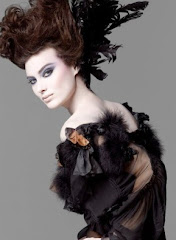
Why so much make-up? Why the unquest-ioned norm that a woman needs to be plastered with the stuff in order to look good? Why the constant assumption that a woman's natural face is so ugly, unsightly, off-putting that it needs a thick coating of expensive pastes and powders to be presentable?
A strategic dab of make-up here and there can be beneficial. A smear of lipstick. A smudge of mascara. But piling it on with a trowel until it becomes a kind of obliterating mask - what's the point?
When I see photos of celebs, they're always thick with make-up. To see them au naturelle would apparently be unthinkable, shocking, repulsive. Who would want to contemplate such a dreadful sight?
Yet to my mind, on the odd occasion when they're seen without their cosmetic veneer, they usually look much more real, much more interesting. Lady Gaga, for instance. Or Julia Roberts. Or Halle Berry.
Employers often expect women to wear make-up. Supposedly they look more professional, more trustworthy, more reassuring. A natural-looking woman would apparently frighten off the customers with some sort of unwholesome aura.
Personally I tend to see an employee in thick make-up as less trustworthy, not more. I associate a slick, glossy appearance, be it make-up, a flashy suit or a fancy hairdo, with phoneyness and sharp practice. Perverse maybe, but I'm sure I'm not the only one.
There was a brief feminist fashion in the seventies for going without make-up, or at least wearing the bare minimum. Unfortunately it didn't last, undermined by the combined pressures of advertising, gender stereotypes and self-aversion.
One thing's for sure - the cosmetics business is laughing all the way to the bank.
Friday, 24 January 2014
Tuesday, 21 January 2014
Wot, no kids?
Now and then I still feel a little embarr-assed that I don't have any children. Having children is seen so widely as the "normal" thing to do, that even after many years of being childless, and not in any way regretting it, I still feel it's a choice that needs to be somehow justified.
Nobody ever asks me why I don't have children, nobody ever gives any hint that it was an odd decision, but nonetheless I always feel slightly unusual, a bit of a maverick, a bit of a rebel.
I suppose it doesn't help that there are two schools close to our home, and twice a day dozens of children pour in and out of their parents' cars, the parents obviously doting on their little offspring and watching them protectively.
It also doesn't help that any woman who gets pregnant is promptly congratulated by all and sundry, everyone admires the gradually swelling belly, and when the baby finally appears, yet more congratulations are offered.
Unfortunately all the fervent enthusiasm and showers of baby-gifts, however natural they may seem, inevitably give the message that having a baby is much more impressive than not having one.
I can justify my child-free decision by pointing out how much extra cash I've had and how much that's improved my quality of life, but somehow that just makes me sound a little selfish and smug, as if other people's sacrifices for the sake of their children are worthless.
In fact being "selfish", not replenishing the human race but thinking only of our own pleasure, is what childless couples are often accused of. If I suggest that maybe the anticipated joy and reward of having children is itself a somewhat "selfish" desire, the reaction will be frosty to say the least.
I've never felt that I've missed out by not having the patter of tiny feet around the place. But it still seems a bit like the exception that proves the rule.
Nobody ever asks me why I don't have children, nobody ever gives any hint that it was an odd decision, but nonetheless I always feel slightly unusual, a bit of a maverick, a bit of a rebel.
I suppose it doesn't help that there are two schools close to our home, and twice a day dozens of children pour in and out of their parents' cars, the parents obviously doting on their little offspring and watching them protectively.
It also doesn't help that any woman who gets pregnant is promptly congratulated by all and sundry, everyone admires the gradually swelling belly, and when the baby finally appears, yet more congratulations are offered.
Unfortunately all the fervent enthusiasm and showers of baby-gifts, however natural they may seem, inevitably give the message that having a baby is much more impressive than not having one.
I can justify my child-free decision by pointing out how much extra cash I've had and how much that's improved my quality of life, but somehow that just makes me sound a little selfish and smug, as if other people's sacrifices for the sake of their children are worthless.
In fact being "selfish", not replenishing the human race but thinking only of our own pleasure, is what childless couples are often accused of. If I suggest that maybe the anticipated joy and reward of having children is itself a somewhat "selfish" desire, the reaction will be frosty to say the least.
I've never felt that I've missed out by not having the patter of tiny feet around the place. But it still seems a bit like the exception that proves the rule.
Friday, 17 January 2014
Bring it on
There's no such thing as Too Much Information. To my mind, the more information the better. I can never get too much of it. Information is always preferable to ignorance.
The more information I have, the more I know about the world, about other people's lives, about my own mind and emotions, about everything. The less I'm floundering about in a fog of confusion, speculation and misunderstandings.
I don't care if the information is outrageous, or obscene, or repulsive, or peculiar. I don't care if it upsets me, or embarrasses me, or alarms me. I can deal with my emotional reactions and I'm not going to push something away just because it temporarily unsettles me.
I'm an intensely curious person. I want to know. I need to know. I don't like being fobbed off with vague explanations and coy silences. What is so devastating, so shocking, that I mustn't know about it, I mustn't be exposed to such horror? There's not much in this world that's truly shocking, especially at the ripe old age of 66. Whatever you think would shake me to the core, probably would just leave me a bit puzzled.
Of course some people conceal things as being "Too Much Information" when what they really mean is that they're nervous of other people's reactions. They're afraid of being laughed at, or criticised, or simply facing a stunned silence. Which is understandable. I withhold certain facts about myself for just that reason.
But dismissing awkward topics as Too Much Information is absurdly squeamish. It's precisely those awkward or controversial remarks that give me precious insights into human nature and other people's complexities. Without them, my understanding of the world would be much more limited.
So tell me everything, I say. I don't care if it knocks me for six. I don't care how awful it is. To my mind, Too Much is always better than Too Little.
The more information I have, the more I know about the world, about other people's lives, about my own mind and emotions, about everything. The less I'm floundering about in a fog of confusion, speculation and misunderstandings.
I don't care if the information is outrageous, or obscene, or repulsive, or peculiar. I don't care if it upsets me, or embarrasses me, or alarms me. I can deal with my emotional reactions and I'm not going to push something away just because it temporarily unsettles me.
I'm an intensely curious person. I want to know. I need to know. I don't like being fobbed off with vague explanations and coy silences. What is so devastating, so shocking, that I mustn't know about it, I mustn't be exposed to such horror? There's not much in this world that's truly shocking, especially at the ripe old age of 66. Whatever you think would shake me to the core, probably would just leave me a bit puzzled.
Of course some people conceal things as being "Too Much Information" when what they really mean is that they're nervous of other people's reactions. They're afraid of being laughed at, or criticised, or simply facing a stunned silence. Which is understandable. I withhold certain facts about myself for just that reason.
But dismissing awkward topics as Too Much Information is absurdly squeamish. It's precisely those awkward or controversial remarks that give me precious insights into human nature and other people's complexities. Without them, my understanding of the world would be much more limited.
So tell me everything, I say. I don't care if it knocks me for six. I don't care how awful it is. To my mind, Too Much is always better than Too Little.
Labels:
coy silences,
curiosity,
ignorance,
squeamishness,
too much information
Monday, 13 January 2014
A tide of horror
I find the constant tide of violence and brutality and callousness pouring out of the world's media quite over-whelming at times.
I can only cope with it by siphoning off my emotions into some dark part of myself where they gradually dribble away and disappear.
If I allowed my feelings free rein, if I allowed the full weight of sadness and despair and sorrow to wash through me, I would soon be an emotional wreck.
I'm beyond shocked at the depraved and deranged things that human beings do to each other, apparently without a shred of remorse or guilt or self-loathing.
I'm endlessly amazed at those dogged individuals who still get up each day with a sense of optimism and self-belief despite years of harsh and degrading treatment. The Nelson Mandelas and Natascha Kampusches* of this world. And all those we've never heard of at all.
I can't share the cynicism and indifference of those people who shrug their shoulders, tell you it's just the way of the world and carry on with their daily activities as if it wasn't rape and slaughter they were responding to but a minor kitchen spillage.
And I cringe at all those governments that throw their hands up in horror but so often are unable to halt the barbarities going on in their country day in and day out.
We are not born violent and cruel. We are not born wanting to spill blood and spread terror. How does a child's tenderness get so casually crushed and replaced by something so malevolent?
* Natascha Kampusch was held in a secret cellar in Vienna by her kidnapper Wolfgang Priklopil for more than eight years
I can only cope with it by siphoning off my emotions into some dark part of myself where they gradually dribble away and disappear.
If I allowed my feelings free rein, if I allowed the full weight of sadness and despair and sorrow to wash through me, I would soon be an emotional wreck.
I'm beyond shocked at the depraved and deranged things that human beings do to each other, apparently without a shred of remorse or guilt or self-loathing.
I'm endlessly amazed at those dogged individuals who still get up each day with a sense of optimism and self-belief despite years of harsh and degrading treatment. The Nelson Mandelas and Natascha Kampusches* of this world. And all those we've never heard of at all.
I can't share the cynicism and indifference of those people who shrug their shoulders, tell you it's just the way of the world and carry on with their daily activities as if it wasn't rape and slaughter they were responding to but a minor kitchen spillage.
And I cringe at all those governments that throw their hands up in horror but so often are unable to halt the barbarities going on in their country day in and day out.
We are not born violent and cruel. We are not born wanting to spill blood and spread terror. How does a child's tenderness get so casually crushed and replaced by something so malevolent?
* Natascha Kampusch was held in a secret cellar in Vienna by her kidnapper Wolfgang Priklopil for more than eight years
Thursday, 9 January 2014
Rough and ready
Someone accused me the other day of "undignified" behaviour. Well, frankly, I've never seen myself as especially "dignified" in the first place. I'm just a very ordinary person fumbling my way through life in a rough-and-ready fashion, probably more stupefied than dignified.In fact I'm rather suspicious of anyone whose aim in life is to be dignified. It suggests someone who's rather stiff and starchy, rather defensive, afraid to be themself in case they do something embarrassing or stupid or laughable.
They would rather do nothing at all than see other people looking down their noses at their unseemly or uncouth conduct. They would rather be "dignified" than interesting or amusing or witty.
But surely to live your life, to be who you are, or simply to enjoy yourself, you have to risk losing your dignity every minute of the day? You have to risk the inevitable pratfalls and cock-ups that go hand in hand with spontaneity and experiment.
I associate "dignity" mainly with those public figures whose reputation seems to rest on being aloof and pompous and never saying anything candid or off-message. The only result is that hardly anyone trusts them because their "dignity" is more important to them than getting on with the job.
I also associate "dignity" with emotional repression - not showing your grief or rage or even wild excitement because it's "undignified". Bottling everything up and pretending everything's fine is more "appropriate" than letting it all spill out and maybe making other people uncomfortable.
So no, I'm probably not a very dignified person. But I'll settle for being a sometimes toe-curling plain speaker.
PS: Isn't dignity just another word for respectability? Or is it something more than that?
Labels:
bottled up,
dignity,
emotional repression,
public figures,
risk,
spontaneity
Sunday, 5 January 2014
The hair thing
It's a good thing men aren't expected to get rid of all their body hair. Some men have such jungles of the stuff it would be a Herculean labour to purge it all in favour of smooth, silky skin.
Not only that but all those men with beards and moustaches would be very reluctant to part with those cherished patches of hirsuteness (though why they cherish them so much is beyond me; for some reason beards and moustaches just make me want to laugh).
Luckily my own body hair is fairly sparse, so a sudden fashion for male depilation wouldn't be too much of a chore. But men are so proud of their corporeal undergrowth, even if it serves no purpose whatever, that I can't see a runaway desire to rip it all out any time soon.
A bit unfair though, isn't it, that men can leave all their body hair serenely intact while women are expected to remove every last trace of it (even the pubic shrubbery nowadays), with all the time and expense and nuisance that involves.
Some women go to absurd lengths to conceal those rampant thickets of body hair in places their menfolk* expect to be smooth as a baby's bottom. They dread the shock and revulsion their supposedly body-friendly bloke might suddenly display if they weren't scrupulously bald.
There's a sizeable minority of men, though, who do prefer to remove their body hair (sportsmen, gay men, models) and don't see anything odd about it. And there are quite a few women out there who like their men to be hair-free (although the men won't always oblige).
So who knows? Maybe one day men will be as preternaturally smooth-skinned as the opposite sex, and just as furtively slipping down to the beautician for an urgent waxing session.
*and womenfolk for that matter
Not only that but all those men with beards and moustaches would be very reluctant to part with those cherished patches of hirsuteness (though why they cherish them so much is beyond me; for some reason beards and moustaches just make me want to laugh).
Luckily my own body hair is fairly sparse, so a sudden fashion for male depilation wouldn't be too much of a chore. But men are so proud of their corporeal undergrowth, even if it serves no purpose whatever, that I can't see a runaway desire to rip it all out any time soon.
A bit unfair though, isn't it, that men can leave all their body hair serenely intact while women are expected to remove every last trace of it (even the pubic shrubbery nowadays), with all the time and expense and nuisance that involves.
Some women go to absurd lengths to conceal those rampant thickets of body hair in places their menfolk* expect to be smooth as a baby's bottom. They dread the shock and revulsion their supposedly body-friendly bloke might suddenly display if they weren't scrupulously bald.
There's a sizeable minority of men, though, who do prefer to remove their body hair (sportsmen, gay men, models) and don't see anything odd about it. And there are quite a few women out there who like their men to be hair-free (although the men won't always oblige).
So who knows? Maybe one day men will be as preternaturally smooth-skinned as the opposite sex, and just as furtively slipping down to the beautician for an urgent waxing session.
*and womenfolk for that matter
Labels:
beards,
body hair,
hirsuteness,
moustaches,
shaving,
smooth skin
Thursday, 2 January 2014
Love on the cheap
I do object to the way the word "love" is trivialised and misused and cheapened. I object to the way it's thrown about so casually, and used to glamourise more mundane emotions.
To my mind, love is a two-way thing, an active give and take between two people, something growing and developing, something fed by affection, empathy, understanding.
When people say they "love" Lady Gaga, or Ed Miliband, or J K Rowling, surely that's a misuse of the word? There's no two-way relationship, no give and take. They've probably not even met the person they "love". There's no giving, only taking, only consumption.
What they really mean is that they "admire" Lady Gaga, they're impressed by her, they take a close interest in her. That's something entirely different.
Or people say they "love" Italy or New York. Meaning for a week or two they consume Italy and New York. They don't give anything back except money and a few casual compliments to the locals. And I doubt if they love the mafia or the pan-handlers. The word love is a mere romantic flourish.
Love is a very serious emotion, a very serious connection between two people. It's something rich and deep and resonant. It's a communion of souls. To equate it with showbiz loyalty or tourist fads is to mock its true meaning. It's the cut-price imitation, the discount knock-off.
Okay, it shows we're passionate about something. It shows we're emotionally healthy. But passion isn't love. Passion isn't intimacy. Let's not confuse the two.
To my mind, love is a two-way thing, an active give and take between two people, something growing and developing, something fed by affection, empathy, understanding.
When people say they "love" Lady Gaga, or Ed Miliband, or J K Rowling, surely that's a misuse of the word? There's no two-way relationship, no give and take. They've probably not even met the person they "love". There's no giving, only taking, only consumption.
What they really mean is that they "admire" Lady Gaga, they're impressed by her, they take a close interest in her. That's something entirely different.
Or people say they "love" Italy or New York. Meaning for a week or two they consume Italy and New York. They don't give anything back except money and a few casual compliments to the locals. And I doubt if they love the mafia or the pan-handlers. The word love is a mere romantic flourish.
Love is a very serious emotion, a very serious connection between two people. It's something rich and deep and resonant. It's a communion of souls. To equate it with showbiz loyalty or tourist fads is to mock its true meaning. It's the cut-price imitation, the discount knock-off.
Okay, it shows we're passionate about something. It shows we're emotionally healthy. But passion isn't love. Passion isn't intimacy. Let's not confuse the two.
Labels:
communion of souls,
love,
passion,
showbiz loyalty,
tourist fads
Thursday, 26 December 2013
All due respect
I totally disagree with that old cliché "respect has to be earned". I think everyone should be respected until such time as they do something that forfeits that respect.
A complete stranger is as worthy of respect as an old friend you've known for years. They deserve respect simply because they're another vulnerable human being, with the same feelings and needs and weaknesses.
If a person hasn't "earned" respect, does that mean I can treat them as badly as I like, kick them around, abuse them, until such time as they've qualified for better treatment? Whose barbaric idea is that?
This absurd principle is trotted out all the time to justify hostile attitudes towards immigrants, welfare claimants, single mothers and all sorts of minorities people don't want to treat decently.
It means people are regarded as second-class citizens unless they've jumped through all sorts of demeaning and ingratiating hoops to raise their status.
It's like saying people have to earn kindness, or courtesy, or fairness. Shouldn't these be the normal way to behave?
Do we say a new-born baby has to earn our respect? Do we say a dinner guest has to earn our respect? Of course not.
Everyone deserves an initial respect, be they malodorous beggars, beer-slurping couch potatoes or clock-watching pen-pushers. Surely respect should be the norm unless it's forfeited by something unforgivable or reprehensible? Or unless the person's actually attacking or robbing you.
To my mind, respect is the cornerstone of a civilised society. It's not some prize to be competed for. It's not a carrot on the end of a stick. It's a basic right.
A complete stranger is as worthy of respect as an old friend you've known for years. They deserve respect simply because they're another vulnerable human being, with the same feelings and needs and weaknesses.
If a person hasn't "earned" respect, does that mean I can treat them as badly as I like, kick them around, abuse them, until such time as they've qualified for better treatment? Whose barbaric idea is that?
This absurd principle is trotted out all the time to justify hostile attitudes towards immigrants, welfare claimants, single mothers and all sorts of minorities people don't want to treat decently.
It means people are regarded as second-class citizens unless they've jumped through all sorts of demeaning and ingratiating hoops to raise their status.
It's like saying people have to earn kindness, or courtesy, or fairness. Shouldn't these be the normal way to behave?
Do we say a new-born baby has to earn our respect? Do we say a dinner guest has to earn our respect? Of course not.
Everyone deserves an initial respect, be they malodorous beggars, beer-slurping couch potatoes or clock-watching pen-pushers. Surely respect should be the norm unless it's forfeited by something unforgivable or reprehensible? Or unless the person's actually attacking or robbing you.
To my mind, respect is the cornerstone of a civilised society. It's not some prize to be competed for. It's not a carrot on the end of a stick. It's a basic right.
Labels:
civilised values,
kindness,
minorities,
respect,
status
Saturday, 21 December 2013
A foolish debacle
If there's any moral to draw from the Saatchi/ Lawson/ Grillo case, it's this - taking people to court isn't very wise. It can cause more harm than good and blacken your own reputation more than the person in the dock.
What exactly was gained by accusing the Grillo sisters of fraud? Elisabetta and Francesca have done well. They were cleared of fraud, there were no damaging claims about them except that they spent money rather freely, and several papers are now offering them large sums for their stories.
Charles Saatchi and Nigella Lawson on the other hand have not done so well. Saatchi was painted as a bad-tempered tyrant who terrorised his wife, the Grillos and his employees. Nigella was painted as a habitual drug user who was often "off her head", incapable of running the household properly, and addicted to pricey designer clothes.
None of these claims were substantiated, but they will stick in people's minds and be seen as facts even if they're half-truths or total lies. Charles and Nigella will forever be seen as an ill-matched couple constantly sniping at each other and prone to eccentric behaviour.
You do have to wonder why a court case was ever seen as the answer to the Grillos' lavish spending and why a simpler and more discreet solution couldn't be found. Like giving them a strict monthly spending limit. Like restricting their spending to certain items. Like taking away their credit cards altogether. Anything rather than drag them through the courts, with the inevitable media feeding frenzy and smear campaign that was bound to follow.
Not to mention the massive legal bills that just add to the huge sums spent by the Grillos. Good money after bad, you might say.
If you ask me, it's not the law that's an ass so much as those foolish people who put too much faith in it.
Pic: Elisabetta and Francesca Grillo
What exactly was gained by accusing the Grillo sisters of fraud? Elisabetta and Francesca have done well. They were cleared of fraud, there were no damaging claims about them except that they spent money rather freely, and several papers are now offering them large sums for their stories.
Charles Saatchi and Nigella Lawson on the other hand have not done so well. Saatchi was painted as a bad-tempered tyrant who terrorised his wife, the Grillos and his employees. Nigella was painted as a habitual drug user who was often "off her head", incapable of running the household properly, and addicted to pricey designer clothes.
None of these claims were substantiated, but they will stick in people's minds and be seen as facts even if they're half-truths or total lies. Charles and Nigella will forever be seen as an ill-matched couple constantly sniping at each other and prone to eccentric behaviour.
You do have to wonder why a court case was ever seen as the answer to the Grillos' lavish spending and why a simpler and more discreet solution couldn't be found. Like giving them a strict monthly spending limit. Like restricting their spending to certain items. Like taking away their credit cards altogether. Anything rather than drag them through the courts, with the inevitable media feeding frenzy and smear campaign that was bound to follow.
Not to mention the massive legal bills that just add to the huge sums spent by the Grillos. Good money after bad, you might say.
If you ask me, it's not the law that's an ass so much as those foolish people who put too much faith in it.
Pic: Elisabetta and Francesca Grillo
Sunday, 15 December 2013
The snare of jealousy
Jealousy and envy are healthy, says Caprice*, since they're both connected to that strong feeling of loving somebody. Well, I can't agree with her.
To my mind, jealousy always means begrudging what the other person has and wishing you had it yourself. It means wanting to stop them from having it, by violent means if necessary. It means hating them and hoping they come to a sticky end. It means thinking they don't deserve what they have, that they've somehow got it unfairly. How can all that be healthy?
I'm glad I'm not prone to jealousy. I'm glad I'm able to appreciate other people's talents or possessions or friends or good looks without wanting to destroy them or wish some misfortune on them. On the contrary, I'm pleased for them. I'm pleased that in a brutal and unpredictable world they're lucky enough to have something of value, something positive, something that's a source of joy and well-being.
I remember a workmate of mine many years ago who was always eaten up with jealousy over what she saw as the privileged lifestyle of her bosses. Every day she was seething with resentment and rage, and the other employees would steer clear of her dispiriting rants.
Celebrities seem especially susceptible to jealousy, to people so pissed-off at their success and popularity that they flood the internet with abusive bile aimed at bringing them down from their lofty pedestals. Straying sexual partners can attract similar venom from the person spurned, finding their clothes trashed, their cars vandalised, their laptops sabotaged.
Jealousy is an ugly and corrosive emotion. I can see nothing healthy about it. It sinks a corkscrew into your soul.
* Caprice Bourret - British model and businesswoman.
To my mind, jealousy always means begrudging what the other person has and wishing you had it yourself. It means wanting to stop them from having it, by violent means if necessary. It means hating them and hoping they come to a sticky end. It means thinking they don't deserve what they have, that they've somehow got it unfairly. How can all that be healthy?
I'm glad I'm not prone to jealousy. I'm glad I'm able to appreciate other people's talents or possessions or friends or good looks without wanting to destroy them or wish some misfortune on them. On the contrary, I'm pleased for them. I'm pleased that in a brutal and unpredictable world they're lucky enough to have something of value, something positive, something that's a source of joy and well-being.
I remember a workmate of mine many years ago who was always eaten up with jealousy over what she saw as the privileged lifestyle of her bosses. Every day she was seething with resentment and rage, and the other employees would steer clear of her dispiriting rants.
Celebrities seem especially susceptible to jealousy, to people so pissed-off at their success and popularity that they flood the internet with abusive bile aimed at bringing them down from their lofty pedestals. Straying sexual partners can attract similar venom from the person spurned, finding their clothes trashed, their cars vandalised, their laptops sabotaged.
Jealousy is an ugly and corrosive emotion. I can see nothing healthy about it. It sinks a corkscrew into your soul.
* Caprice Bourret - British model and businesswoman.
Tuesday, 10 December 2013
Ten questions
I was intrigued by the ten questions Jenny Woolf posed to her blogmates. So here are my answers, for what they're worth.
1. If there's one chocolate left in the box, do you have to eat it, or can you leave it sitting there?
I could leave it for years. I'm very strong-willed when it comes to food.
2. What do you want to remember most of all, if you survive to be very old?
My trips to Australia, all the fun times with Jenny, walking in the Mourne Mountains.
3. Would you enjoy being a very rich and famous celebrity?
No. Being pursued everywhere by the paparazzi and demanding fans would be a nightmare.
4. What piece of music do you personally find most emotionally moving?
There are so many, from Mozart's Piano Concerto Number 21 to Goldfrapp's Black Cherry album.
5. How do you deal with depression, anxiety and bad times?
I never get depressed for longer than half an hour, but anxiety is my middle name. I've tried many many ways of controlling it but nothing works for very long.
6. What do you love doing that bores everyone else stiff?
Grinding coffee, washing up, chopping vegetables, washing my hair.
7. Did you ever encounter an inanimate object that seemed to have a will of its own?
Shoelaces. They knot and unknot whenever they feel like it.
8. What is your very favourite hotel or restaurant?
The San Cassiano Hotel in Venice. It's on the bank of the Grand Canal.
9. Do you think prisoners who have committed particularly vile crimes should be segregated in jail for their own safety?
That's for them to decide. Long-term segregation can be very psychologically damaging.
10. What do you wish you had known when you were 18?
I wish I'd known a lot more about sex!
(There was an eleventh question about the photos in her post, but since you can't see them....)
1. If there's one chocolate left in the box, do you have to eat it, or can you leave it sitting there?
I could leave it for years. I'm very strong-willed when it comes to food.
2. What do you want to remember most of all, if you survive to be very old?
My trips to Australia, all the fun times with Jenny, walking in the Mourne Mountains.
3. Would you enjoy being a very rich and famous celebrity?
No. Being pursued everywhere by the paparazzi and demanding fans would be a nightmare.
4. What piece of music do you personally find most emotionally moving?
There are so many, from Mozart's Piano Concerto Number 21 to Goldfrapp's Black Cherry album.
5. How do you deal with depression, anxiety and bad times?
I never get depressed for longer than half an hour, but anxiety is my middle name. I've tried many many ways of controlling it but nothing works for very long.
6. What do you love doing that bores everyone else stiff?
Grinding coffee, washing up, chopping vegetables, washing my hair.
7. Did you ever encounter an inanimate object that seemed to have a will of its own?
Shoelaces. They knot and unknot whenever they feel like it.
8. What is your very favourite hotel or restaurant?
The San Cassiano Hotel in Venice. It's on the bank of the Grand Canal.
9. Do you think prisoners who have committed particularly vile crimes should be segregated in jail for their own safety?
That's for them to decide. Long-term segregation can be very psychologically damaging.
10. What do you wish you had known when you were 18?
I wish I'd known a lot more about sex!
(There was an eleventh question about the photos in her post, but since you can't see them....)
Labels:
celebrity,
chocolates,
depression,
memories,
music,
questions
Saturday, 7 December 2013
Off trend
I see other people with their Armani jeans and iPads and Lady Gaga tickets and the Morrissey book and I think, well, that's fine, whatever turns you on, but I'm not going to rush out and buy all the latest fashionable bits and bobs just to prove I'm a cutting-edge sophisticate who knows where it's at. Whatever It may be. And wherever It may be lurking.
I insist on buying cheap chain-store jeans, tickets for old-timers like K T Tunstall, books by obscure authors nobody's ever heard of, and comfort food scarcely mentioned by all the celebrity chefs. I know practically everything I do or say is thoroughly off-message, and I don't give a damn.
The few times I've actually tried to be up-to-the-minute, style-conscious and so-hip-it-hurts, it's been a dismal failure and whispered put-downs and stifled giggles are the order of the day. I just somehow lose the plot and look like a pathetic wannabe trailing hopelessly behind the smug pace-setters.
When I was at boarding school, I tried desperately to be as smoothly masculine and rugged as the other boys, but of course it didn't work. However hard I tried, I still ended up as the effeminate wimp who simpered when I should be growling, and let my hair flop everywhere instead of slicking it back like Elvis.
As a teenage dater, I sometimes tried to be the cool, monosyllabic guy with the perfect social poise, but inevitably I reverted to type and remained the bashful, stuttering greenhorn terrified that any intelligent woman would laugh hysterically at my mumbled request for a second date.
No, I leave the pretentious posing and posturing to others, and continue to go my own way, gazing curiously at the breathless trend-setters scurrying along several miles ahead.
Don't mind me. I'm quite happy where I am.
Labels:
fashion,
pretensions,
stifled giggles,
trendiness,
wannabes,
wimps
Monday, 2 December 2013
Too much information
It may be weird, but I don't really understand the concept of Too Much Inform-ation. I'm happy for other people to tell me whatever they want about themselves, and if they feel comfortable with it, then so am I. I don't care how strange the subject, if it's important to them, I'm glad they told me.
But of course it doesn't work the other way round. I say things I'm comfortable with, only to discover that other people are NOT comfortable with them and clearly think I've Gone Too Far. I have to hastily retreat and apologise and withdraw the awkward remark. Which I hasten to add, I don't mind doing; I don't want anyone to be squirming at something I've casually blurted out, oblivious to other people's sensibilities.
The thing is, there's very little about me I wouldn't want others to know. I know I'm full of faults and shortcomings and oddities but so is everyone else, so why be nervous about sharing them? Other people don't see it that way though; they feel there are certain things that shouldn't be shared, that they don't want to know, and if I do share them they cringe.
I do in fact keep quiet about a lot of things I'm pretty sure other people wouldn't want to hear. But then I mention something else that seems to me quite innocent and unremarkable and I find I've Said The Wrong Thing. And I scratch my head and wonder what caused such a frisson.
If anything, I would say most people give me Too Little Information. They're so afraid of embarrassing themselves, or embarrassing me, or looking crazy, or being self-centred, or exposing something too intimate, that they stick to neutral, well-trodden topics that avoid anything genuinely revealing. I think we're all far more guarded than we need to be.
But of course it doesn't work the other way round. I say things I'm comfortable with, only to discover that other people are NOT comfortable with them and clearly think I've Gone Too Far. I have to hastily retreat and apologise and withdraw the awkward remark. Which I hasten to add, I don't mind doing; I don't want anyone to be squirming at something I've casually blurted out, oblivious to other people's sensibilities.
The thing is, there's very little about me I wouldn't want others to know. I know I'm full of faults and shortcomings and oddities but so is everyone else, so why be nervous about sharing them? Other people don't see it that way though; they feel there are certain things that shouldn't be shared, that they don't want to know, and if I do share them they cringe.
I do in fact keep quiet about a lot of things I'm pretty sure other people wouldn't want to hear. But then I mention something else that seems to me quite innocent and unremarkable and I find I've Said The Wrong Thing. And I scratch my head and wonder what caused such a frisson.
If anything, I would say most people give me Too Little Information. They're so afraid of embarrassing themselves, or embarrassing me, or looking crazy, or being self-centred, or exposing something too intimate, that they stick to neutral, well-trodden topics that avoid anything genuinely revealing. I think we're all far more guarded than we need to be.
Thursday, 28 November 2013
The agony of divorce
If you think staying married can be tricky, try getting divorced. It often leads to the most horrendous and tangled proceedings you could imagine. Bitter squabbles over every aspect of the break-up, from children to property to money to how much each spouse contributed to the marriage.
A High Court judge said recently he was filled with "nothing but despair" over a wealthy couple who had already spent some £700,000 on divorce proceedings which had barely started, such were the labyrinthine arguments about aspects of the relationship. He decried the "unedifying" sight of a family "tearing itself apart."
It seems virtually impossible for a couple to divorce amicably and sensibly, with the bare minimum of fuss. The long-standing anger and resentment that led to the split in the first place seem to boil over in the courtroom and create one impasse after another. Each partner is afraid of giving too much away, losing out, appearing to be weak, and they keep upping the ante.
I know of several couples whose divorce was a horrific experience, with one or the other digging their heels in, refusing to compromise, and making life as difficult as possible for the soon-to-be ex-spouse. Very profitable for the lawyers but a nightmare for the warring couple.
There have been many attempts to replace ugly court cases with informal mediation arrangements, but quite often they lead to much the same stubborn wrangling.
My parents were sometimes bruised enough to talk about getting divorced. But they never did. In the end they stuck together as that's what most couples did in those days. "For the sake of the children" as they usually explained it. Maybe they should have divorced, but I'm glad they didn't. I can only imagine the tearful and rancorous scenes it would have involved and the misery for each parent as they tried to move on.
A shame there isn't some kind of foolproof psychological test couples can take before they marry, to determine if they're truly compatible or in the throes of some grand romantic illusion. It could save an awful lot of agony later on if things turn nasty.
A High Court judge said recently he was filled with "nothing but despair" over a wealthy couple who had already spent some £700,000 on divorce proceedings which had barely started, such were the labyrinthine arguments about aspects of the relationship. He decried the "unedifying" sight of a family "tearing itself apart."
It seems virtually impossible for a couple to divorce amicably and sensibly, with the bare minimum of fuss. The long-standing anger and resentment that led to the split in the first place seem to boil over in the courtroom and create one impasse after another. Each partner is afraid of giving too much away, losing out, appearing to be weak, and they keep upping the ante.
I know of several couples whose divorce was a horrific experience, with one or the other digging their heels in, refusing to compromise, and making life as difficult as possible for the soon-to-be ex-spouse. Very profitable for the lawyers but a nightmare for the warring couple.
There have been many attempts to replace ugly court cases with informal mediation arrangements, but quite often they lead to much the same stubborn wrangling.
My parents were sometimes bruised enough to talk about getting divorced. But they never did. In the end they stuck together as that's what most couples did in those days. "For the sake of the children" as they usually explained it. Maybe they should have divorced, but I'm glad they didn't. I can only imagine the tearful and rancorous scenes it would have involved and the misery for each parent as they tried to move on.
A shame there isn't some kind of foolproof psychological test couples can take before they marry, to determine if they're truly compatible or in the throes of some grand romantic illusion. It could save an awful lot of agony later on if things turn nasty.
Labels:
bitterness,
divorce,
mediation,
relationships,
splitting up
Friday, 22 November 2013
It could be worse
I have to laugh at all those reassuring clichés that people trot out when someone's in a tight spot or feeling a bit pissed off. They make you feel better for about ten seconds until you start thinking about them and realise they're total bollocks.
"You should be grateful for small mercies." Why? I want big mercies. The bigger the better.
"It could be worse." So if my house has fallen down, my wife's died and the car's been stolen, that's okay because it could be worse.
"The meek will inherit the earth." No they won't, they'll be shat on by every ruthless bastard who sees them coming.
"Your day will come." Probably not. The odds are it's already come and gone without you noticing.
"Always look on the bright side." Suppose there isn't one? Suppose it's a total calamity and all you can do is climb from the wreckage? (Another version of "It could be worse")
"You'll feel better in the morning." More likely you'll feel worse as you start blaming yourself for the disaster that was caused entirely by your own stupidity.
"It's all good experience." No it's not, it's a crap-fest that teaches you nothing except not to jump into things feet first.
"It'll all work out in the end." Or alternatively it'll turn into a bigger and bigger mess until you just want to top yourself.
"Every cloud has a silver lining." Not necessarily. It might be a budget version with a cheap and nasty polyester lining.
"We've all been there." Have you? Do you have the slightest inkling how shattering and demoralising this was? (Another version of "I feel your pain.")
Of course nobody truly believes all this nonsense. The real point is that it expresses the other person's sympathy and concern and kindness, and that's what counts when you're feeling knocked for six.
So the next time I'm down in the dumps, by all means tell me it could be worse. I'll know what you're really saying. I'll know all those silly words are really just a big hug and a loving kiss.
"You should be grateful for small mercies." Why? I want big mercies. The bigger the better.
"It could be worse." So if my house has fallen down, my wife's died and the car's been stolen, that's okay because it could be worse.
"The meek will inherit the earth." No they won't, they'll be shat on by every ruthless bastard who sees them coming.
"Your day will come." Probably not. The odds are it's already come and gone without you noticing.
"Always look on the bright side." Suppose there isn't one? Suppose it's a total calamity and all you can do is climb from the wreckage? (Another version of "It could be worse")
"You'll feel better in the morning." More likely you'll feel worse as you start blaming yourself for the disaster that was caused entirely by your own stupidity.
"It's all good experience." No it's not, it's a crap-fest that teaches you nothing except not to jump into things feet first.
"It'll all work out in the end." Or alternatively it'll turn into a bigger and bigger mess until you just want to top yourself.
"Every cloud has a silver lining." Not necessarily. It might be a budget version with a cheap and nasty polyester lining.
"We've all been there." Have you? Do you have the slightest inkling how shattering and demoralising this was? (Another version of "I feel your pain.")
Of course nobody truly believes all this nonsense. The real point is that it expresses the other person's sympathy and concern and kindness, and that's what counts when you're feeling knocked for six.
So the next time I'm down in the dumps, by all means tell me it could be worse. I'll know what you're really saying. I'll know all those silly words are really just a big hug and a loving kiss.
Monday, 18 November 2013
Going backwards
If you thought today's young men were more pro-women and less misogynistic, then think again. A lot of them thoroughly enjoy abusing women and laugh at any woman who objects. Feminism seems to have passed them by.
Apparently British universities are becoming notorious for male students who take every opportunity to harass and intimidate women and still think rape is a hilarious joke. One especially shocking video of University of Stirling students enjoying misogynistic chants on a bus has been viewed tens of thousands of times.
In the video the male students are making jokes about miscarriages, feeling up women and screwing them, while women passengers sit silently, hoping not to be picked on. A student union officer walks away without trying to stop the abuse.
This is just an extreme example of what's going on routinely every day on uni campuses. The Everyday Sexism Project has received more than 100 reports of similar incidents from different universities, suggesting it's now typical male behaviour.
Jokes about rape and sexual violence, rude comments about women's bodies and clothes, unwanted physical contact - you name it. The now sickeningly familiar "It's not rape because...." jokes are trotted out.
One 16 year old says she's scared of going to university, not because of exam stress but because of the horror stories she's heard about male attitudes to women. "I'm scared. I'm actually scared of being a female."
How is it possible that rampant, unapologetic sexism has become so rife on uni campuses? Why aren't those in authority doing more to stop it? What are the student unions doing? What are the university staff doing? What are those men who object to it doing? Why aren't the woman-hating arseholes being thrown out of university?
I can only assume that those sitting on their hands instead of taking action secretly agree with the misogynist line that those women who complain are just frigid, uptight bitches who can't take a joke. "Where's your sense of humour, love? Boys will be boys, eh?"
Apparently British universities are becoming notorious for male students who take every opportunity to harass and intimidate women and still think rape is a hilarious joke. One especially shocking video of University of Stirling students enjoying misogynistic chants on a bus has been viewed tens of thousands of times.
In the video the male students are making jokes about miscarriages, feeling up women and screwing them, while women passengers sit silently, hoping not to be picked on. A student union officer walks away without trying to stop the abuse.
This is just an extreme example of what's going on routinely every day on uni campuses. The Everyday Sexism Project has received more than 100 reports of similar incidents from different universities, suggesting it's now typical male behaviour.
Jokes about rape and sexual violence, rude comments about women's bodies and clothes, unwanted physical contact - you name it. The now sickeningly familiar "It's not rape because...." jokes are trotted out.
One 16 year old says she's scared of going to university, not because of exam stress but because of the horror stories she's heard about male attitudes to women. "I'm scared. I'm actually scared of being a female."
How is it possible that rampant, unapologetic sexism has become so rife on uni campuses? Why aren't those in authority doing more to stop it? What are the student unions doing? What are the university staff doing? What are those men who object to it doing? Why aren't the woman-hating arseholes being thrown out of university?
I can only assume that those sitting on their hands instead of taking action secretly agree with the misogynist line that those women who complain are just frigid, uptight bitches who can't take a joke. "Where's your sense of humour, love? Boys will be boys, eh?"
Friday, 15 November 2013
Talking yourself up
Wow, I can see I explained myself really badly in my last post. That's why so many of you claim you never try to impress anybody, which I very much doubt!
My mistake was to focus on the crudest and most blatant ways of trying to impress - name dropping, place dropping, clever references and all that. But of course there are much subtler ways of "putting on the style", ways we usually take for granted.
By trying to impress, all I mean is that instead of simply being ourselves, we emphasise things, we flag things up, we steer people towards aspects of our personality we think they'll appreciate, in the hope they'll warm to us and like us more.
We don't have to name drop. All we need do is make a point of how sensitive, sympathetic and generous we are. Or how open-minded, tolerant and non-judgmental we are. Or how practical, efficient and well-organised we are. And of course we're hoping those listening will think "Oh, just my sort of person. I must get to know her better. I might have a great new friend here."
How many people choose to chatter pointlessly about the weather or their faulty vacuum cleaner, when they could be angling the conversation towards something that makes them look good, something that flatters them, something that paints them as a desirable human being? Not many, I would say.
Certainly not me, and I don't mind admitting it. I like people to like me, and I make a conscious attempt to bring that about. Apart from anything else, pointless small talk is an insult to the other person's intelligence. It says "Why waste any effort on this person? They'll listen to anything, however banal."
So I hope that makes my point of view a bit clearer. Obviously I made a real dog's dinner of it the first time round. As George Bernard Shaw once said. Or was it Gertrude Stein?
PS: Of course women "dress to impress" all the time. Is that so wrong?
My mistake was to focus on the crudest and most blatant ways of trying to impress - name dropping, place dropping, clever references and all that. But of course there are much subtler ways of "putting on the style", ways we usually take for granted.
By trying to impress, all I mean is that instead of simply being ourselves, we emphasise things, we flag things up, we steer people towards aspects of our personality we think they'll appreciate, in the hope they'll warm to us and like us more.
We don't have to name drop. All we need do is make a point of how sensitive, sympathetic and generous we are. Or how open-minded, tolerant and non-judgmental we are. Or how practical, efficient and well-organised we are. And of course we're hoping those listening will think "Oh, just my sort of person. I must get to know her better. I might have a great new friend here."
How many people choose to chatter pointlessly about the weather or their faulty vacuum cleaner, when they could be angling the conversation towards something that makes them look good, something that flatters them, something that paints them as a desirable human being? Not many, I would say.
Certainly not me, and I don't mind admitting it. I like people to like me, and I make a conscious attempt to bring that about. Apart from anything else, pointless small talk is an insult to the other person's intelligence. It says "Why waste any effort on this person? They'll listen to anything, however banal."
So I hope that makes my point of view a bit clearer. Obviously I made a real dog's dinner of it the first time round. As George Bernard Shaw once said. Or was it Gertrude Stein?
PS: Of course women "dress to impress" all the time. Is that so wrong?
Wednesday, 13 November 2013
Pretentious, moi?
Funny how many of us are never quite happy with ourselves as we are. We feel it's not enough just to be us, we need a little extra something to make an impression, to stand out from the crowd.
It's hard to resist those familiar gambits that supposedly give us a little extra je-ne-sais-quoi but in practice make us look like pretentious, insecure gits. You think you're going down a treat when in reality everyone's wincing at your desperate attention-seeking. But it's so tempting, isn't it?
How about a bit of name-dropping? That famous actor you met last week. That bestselling author who sent you a letter. That prominent politician you had a go at.
Or maybe some place-dropping? You're just back from San Francisco. Which wasn't as cool as Chicago. And not nearly as glamorous as Sydney. And did I tell you about Los Angeles?
Or some obscure literary references? A pithy quote from Jane Austen. Or J D Salinger. Or Mary Wollstonecraft. Or The Diary Of A Nobody.
Or your visit to the trendiest restaurant in town? How you managed to get a table at Chez Rousseau when all your friends were told there was a six-month waiting list? And the champagne was on the house?
Well, no, actually I don't do any of that, though I'm probably pretentious in less obvious ways. I want to have the driest witticisms, the most original arguments, the slickest turn of phrase, the sharpest put-downs. Just saying what I think isn't enough, there has to be something more, something unexpected. I'm not just Mr Ordinary, Mr Average, I'm Mr How-about-that?
Come on, admit it, we're all trying to make an impression, aren't we? None of us wants to be bland and unforgettable, none of us wants to be an also-ran. We all want to make a mark of some kind, we all have ways of putting icing on the cake.
It's hard to resist those familiar gambits that supposedly give us a little extra je-ne-sais-quoi but in practice make us look like pretentious, insecure gits. You think you're going down a treat when in reality everyone's wincing at your desperate attention-seeking. But it's so tempting, isn't it?
How about a bit of name-dropping? That famous actor you met last week. That bestselling author who sent you a letter. That prominent politician you had a go at.
Or maybe some place-dropping? You're just back from San Francisco. Which wasn't as cool as Chicago. And not nearly as glamorous as Sydney. And did I tell you about Los Angeles?
Or some obscure literary references? A pithy quote from Jane Austen. Or J D Salinger. Or Mary Wollstonecraft. Or The Diary Of A Nobody.
Or your visit to the trendiest restaurant in town? How you managed to get a table at Chez Rousseau when all your friends were told there was a six-month waiting list? And the champagne was on the house?
Well, no, actually I don't do any of that, though I'm probably pretentious in less obvious ways. I want to have the driest witticisms, the most original arguments, the slickest turn of phrase, the sharpest put-downs. Just saying what I think isn't enough, there has to be something more, something unexpected. I'm not just Mr Ordinary, Mr Average, I'm Mr How-about-that?
Come on, admit it, we're all trying to make an impression, aren't we? None of us wants to be bland and unforgettable, none of us wants to be an also-ran. We all want to make a mark of some kind, we all have ways of putting icing on the cake.
Saturday, 9 November 2013
Misunderstanding
People sometimes suggest (because I like my own company I guess) that I hate other people.
That's very cheeky. And totally untrue.
Firstly, I don't hate anybody. Secondly, my attitude to other people depends entirely on the person. If they're intelligent and interesting and considerate to others, I warm to them. If they're dumb and boring and selfish, I give them a wide berth - but I don't hate them, I just wonder what made them like that.
I don't go out of my way to meet other people, I tend to keep to myself, but that's not because I hate people. It's because the chances of their being dumb, boring and selfish are alarmingly high.
And no, that doesn't mean I'm an elitist snob, it just means I don't want to spend my precious time humouring someone who's intent on airing their ignorant views about immigrants, homosexuals, lefties and welfare claimants. Or how long they had to wait for the bus, or the supermarket checkout, or the plumber.
Far from hating people, I'm hugely compassionate towards them. I want to understand other people's personal circumstances, I want to know why they're the way they are, I want to grasp the often traumatic and daunting situations they've been through that have influenced their personalities and their outlook on life.
We've all faced overwhelming and terrifying events at one time or another, and I can't hate people who've done their level best to overcome those obstacles and keep their lives on track. I can't hate people who're simply frail, vulnerable human beings trying to cope with the messy unpredictability of their daily existence.
I don't even hate rapists or murderers. They shock and sicken and bewilder me, but I don't hate them. I just want to know why on earth they did what they did, why they lacked the normal scruples and inhibitions that stop others doing the same. And I want them to be treated or rehabilitated rather than punished or ostracised.
I've seen enough vicious hatred in my life to know that hate achieves nothing except yet more hatred. I'm not that way inclined and never will be.
That's very cheeky. And totally untrue.
Firstly, I don't hate anybody. Secondly, my attitude to other people depends entirely on the person. If they're intelligent and interesting and considerate to others, I warm to them. If they're dumb and boring and selfish, I give them a wide berth - but I don't hate them, I just wonder what made them like that.
I don't go out of my way to meet other people, I tend to keep to myself, but that's not because I hate people. It's because the chances of their being dumb, boring and selfish are alarmingly high.
And no, that doesn't mean I'm an elitist snob, it just means I don't want to spend my precious time humouring someone who's intent on airing their ignorant views about immigrants, homosexuals, lefties and welfare claimants. Or how long they had to wait for the bus, or the supermarket checkout, or the plumber.
Far from hating people, I'm hugely compassionate towards them. I want to understand other people's personal circumstances, I want to know why they're the way they are, I want to grasp the often traumatic and daunting situations they've been through that have influenced their personalities and their outlook on life.
We've all faced overwhelming and terrifying events at one time or another, and I can't hate people who've done their level best to overcome those obstacles and keep their lives on track. I can't hate people who're simply frail, vulnerable human beings trying to cope with the messy unpredictability of their daily existence.
I don't even hate rapists or murderers. They shock and sicken and bewilder me, but I don't hate them. I just want to know why on earth they did what they did, why they lacked the normal scruples and inhibitions that stop others doing the same. And I want them to be treated or rehabilitated rather than punished or ostracised.
I've seen enough vicious hatred in my life to know that hate achieves nothing except yet more hatred. I'm not that way inclined and never will be.
Labels:
boredom,
compassion,
hate,
ignorance,
plumbers,
time wasters
Wednesday, 6 November 2013
Brand awareness
Don't vote, create a revolution instead. The British comedian Russell Brand is still getting huge coverage for his cry of disillusion, even though his views are less than original.
Reactions are sharply divided. Some agree entirely with his message that all the major parties are in hock to big business and the wealthy and do nothing for those at the bottom of the heap who're struggling to pay the bills and keep food on the table. Why vote for these corrupt politicians, he says, all you're doing is maintaining the whole addled system. We should create a totally different society where everyone is treated fairly - in other words, a revolution.
But others say, yes, of course the political class is rotten to the core, rapidly increasing inequality and elitism rather than ending them. However, not voting doesn't solve the problem, it only makes it worse. The same useless politicians will be elected by an even smaller percentage of the voters, and nothing much will change. We need to make the system work rather than opting out of it. And where is this wonderful revolution going to come from? Who's going to bring it about? And how?
I guess I'm one of the doubters. I wholly agree the current political set-up is corrupt through and through, but I don't share his rather nebulous faith in some spontaneous revolutionary uprising. It's much more likely that people will continue to curse the present system but do nothing about it except to make sure their own family and friends are doing okay. I still think the answer is for more people to engage with the current political machine and force it to work properly.
One thing I do like about Russell Brand though* is his openness, his honesty, his willingness to admit his own faults and mistakes, his lack of airs and graces. And I like it that he's opened up a really passionate debate about the future of our putrid, worm-eaten democracy.
* Apart from his drop-dead gorgeousness, of course
Reactions are sharply divided. Some agree entirely with his message that all the major parties are in hock to big business and the wealthy and do nothing for those at the bottom of the heap who're struggling to pay the bills and keep food on the table. Why vote for these corrupt politicians, he says, all you're doing is maintaining the whole addled system. We should create a totally different society where everyone is treated fairly - in other words, a revolution.
But others say, yes, of course the political class is rotten to the core, rapidly increasing inequality and elitism rather than ending them. However, not voting doesn't solve the problem, it only makes it worse. The same useless politicians will be elected by an even smaller percentage of the voters, and nothing much will change. We need to make the system work rather than opting out of it. And where is this wonderful revolution going to come from? Who's going to bring it about? And how?
I guess I'm one of the doubters. I wholly agree the current political set-up is corrupt through and through, but I don't share his rather nebulous faith in some spontaneous revolutionary uprising. It's much more likely that people will continue to curse the present system but do nothing about it except to make sure their own family and friends are doing okay. I still think the answer is for more people to engage with the current political machine and force it to work properly.
One thing I do like about Russell Brand though* is his openness, his honesty, his willingness to admit his own faults and mistakes, his lack of airs and graces. And I like it that he's opened up a really passionate debate about the future of our putrid, worm-eaten democracy.
* Apart from his drop-dead gorgeousness, of course
Labels:
corruption,
not voting,
politics,
revolution,
Russell Brand,
voting
Subscribe to:
Posts (Atom)