Showing posts with label disability. Show all posts

Friday, 14 January 2022

Unwelcome words

I keep up as best I can with all those linguistic changes to avoid offending one group or another in society, but sometimes I'm taken by surprise to learn that a particular word I'd never even thought about is highly offensive and needs to be replaced.

There's currently a big furore over the word "midget". Dr Erin Pritchard, a lecturer in disability studies, who herself has achondroplasia, a growth-stunting condition, says the word is offensive to short people and has a very derogatory origin in Victorian freak shows.

The outcry started after Marks and Spencer announced they were rebranding their sweet Midget Gems as Mini Gems to avoid offence. Several other companies have said they're considering doing the same.

Predictably enough, dozens of trolls have pitched in, saying it's wokery gone mad, or politically correct nonsense, or language policing, or just someone looking for something contentious to complain about.

Well, no, it's not just wokery gone mad. If a lot of people are so offended by a specific word that they avoid using it, then we should take note and avoid using it ourselves. How hard is it to make a simple change that would make other people more comfortable?

Dr Pritchard explains that the word's origin automatically dehumanises people like herself. "It was a word popularised during the Victorian freak show, where many disabled people, including people with dwarfism, were oppressed and exploited. When people scream the name at you in the street, it is only right that it is removed."

Yes, there are plenty of examples of "wokery gone mad" but this isn't one of them. This is a sensible request to phase out a disparaging word with a shameful history. Is that so hard to understand?

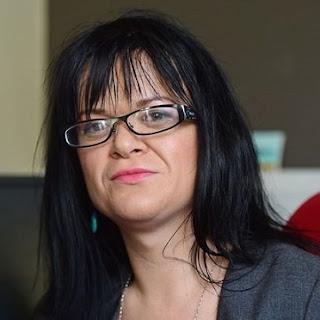
Pic: Doctor Erin Pritchard

Sunday, 6 December 2015

Like for like

Should a character in a play or movie with a defining trait be played by an actor with the same trait? Should a disabled person always be played by a disabled actor, or a transgender woman by a transgender woman, or a lesbian by a lesbian?

There's been a lot of controversy over this question recently. Activists objected strongly to transgender roles being taken by non-transgender actors. Flynn in "Breaking Bad", however, who has cerebral palsy, was played by Roy Frank Mitte, who himself has cerebral palsy. Yet nobody thought it strange that the two lesbians in "Carol" were portrayed by heterosexual women.

On the one hand, it's argued that the whole point of acting is to depict someone different from yourself, and it's your acting ability that makes the person convincing. The opposing view says that however good an actor you are, you can never be as convincing or as natural as the real thing - someone who is actually disabled, lesbian, or whatever.

My thinking is that you should use actors with the same trait as the character, as they do tend to be more authentic. But how far do you take it? You could apply the principle so widely it becomes not only absurd but impractical. Should you insist on a an actor who's a genuine anorexic, or alcoholic, or rapist, or hit-and-run driver? The casting process would be a nightmare. And suppose you wanted someone who was anorexic and a hit-and-run driver? The mind boggles.

On second thoughts, maybe you should just ask actors to do what they're supposed to do - act. Why spoil their fun?

Pic: transgender actor Rebecca Root